
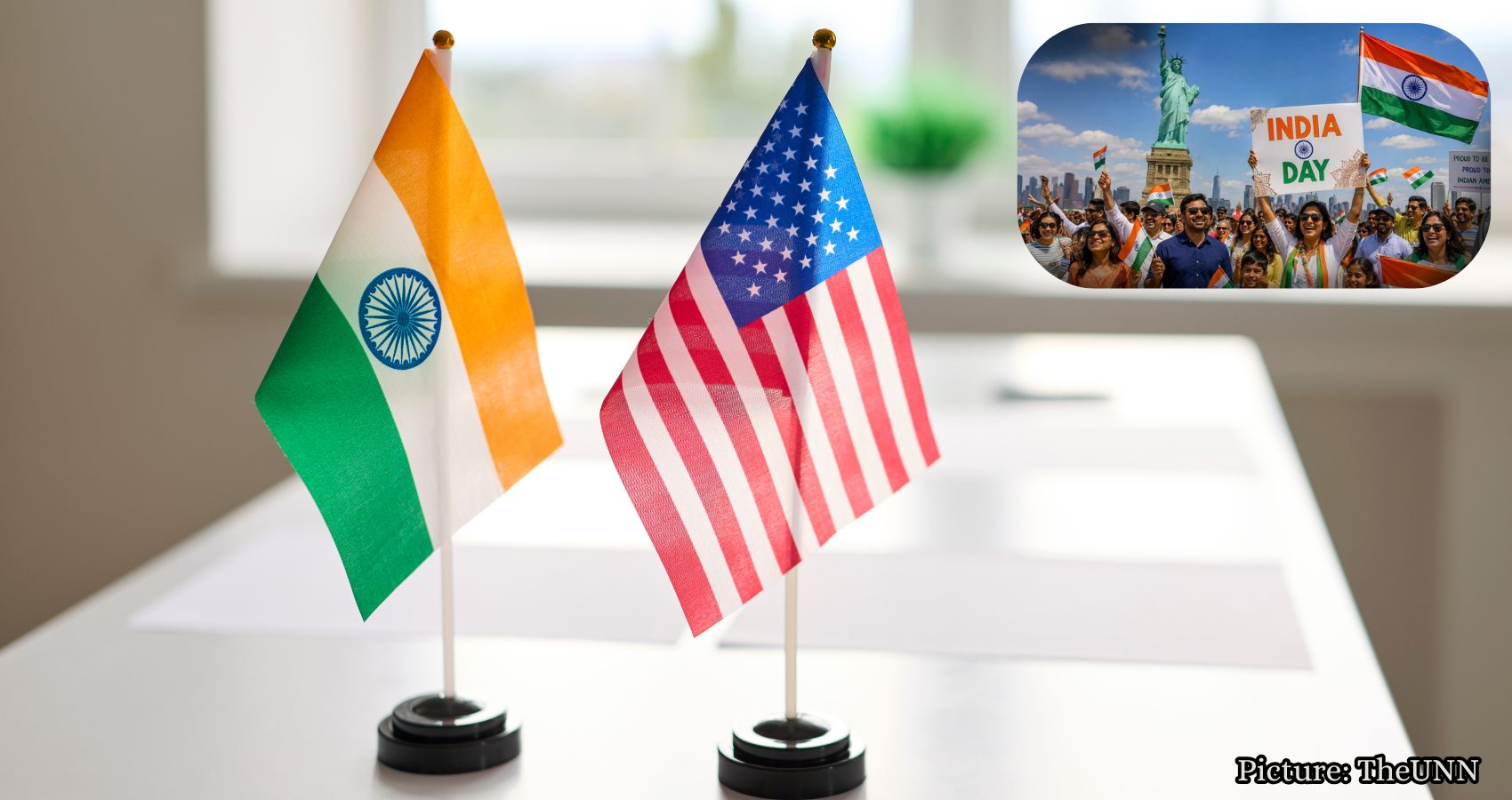
India’s transformation into a global powerhouse in various sectors marks a significant chapter in its history, showcasing its cultural richness and innovative spirit.
Few national narratives are as compelling as India’s rise in the twenty-first century. Emerging from a newly independent nation grappling with poverty, food insecurity, and limited industrial capacity, India has established itself as a formidable global force in economics, technology, healthcare, education, science, culture, sports, and diplomacy. Today, it stands as one of the world’s largest economies and the most populous nation, increasingly shaping global conversations and influencing international outcomes.
Former Prime Minister Atal Bihari Vajpayee aptly remarked, “India is not merely a nation, but a civilization.” This civilization, with its thousands of years of history, is now translating its cultural richness, human capital, and innovative spirit into unprecedented global influence.
Economic Growth: The Engine of Transformation
Economic progress has been the foundation of India’s rise. Once viewed as a slow-growing developing economy, India has transformed into one of the world’s most dynamic markets. International organizations consistently project India among the fastest-growing major economies, driven by domestic consumption, infrastructure development, manufacturing, and entrepreneurship.
India’s demographic dividend is a significant asset. With over 1.4 billion people and one of the world’s youngest populations, the country possesses an enormous reservoir of talent and potential. While many advanced economies face aging populations and labor shortages, India is poised to become the world’s workforce and innovation hub.
As economist and Nobel Laureate Amartya Sen observed, “India’s future lies in the expansion of human capabilities.” The nation’s economic success increasingly reflects that principle.
Technology: Building a Digital Superpower
India’s digital transformation has become a global case study. The Unified Payments Interface (UPI) has revolutionized financial transactions, processing approximately 228 billion transactions in 2025 alone and handling nearly ₹300 trillion in value. It is now one of the largest real-time digital payment systems in the world.
An anecdote often shared by foreign visitors illustrates this transformation perfectly. Tourists arriving in India are frequently amazed when a roadside tea seller, vegetable vendor, or taxi driver accepts instant QR-code payments. What appears routine to Indians symbolizes a remarkable level of financial inclusion and digital empowerment.
Cities such as Bengaluru, Hyderabad, Pune, and Gurgaon have become global centers of innovation. Thousands of startups are pioneering solutions in artificial intelligence, fintech, biotechnology, cybersecurity, and clean energy. Indian-origin leaders head some of the world’s most influential technology companies, demonstrating India’s intellectual footprint across the globe.
Dr. A.P.J. Abdul Kalam’s famous words resonate strongly with India’s technological journey: “Dream, dream, dream. Dreams transform into thoughts and thoughts result in action.”
Healthcare: Healing India and the World
India’s healthcare sector has evolved into one of its greatest strengths. Often referred to as the “Pharmacy of the World,” India supplies affordable medicines and vaccines to nations across every continent. During the COVID-19 pandemic, Indian pharmaceutical companies played a pivotal role in manufacturing and distributing vaccines and life-saving medicines globally.
India has also emerged as a major destination for medical tourism. Patients from Asia, Africa, Europe, and the Middle East travel to India seeking high-quality treatment at globally competitive costs. World-renowned hospitals in Delhi, Mumbai, Chennai, Hyderabad, and Bengaluru offer cutting-edge care in cardiology, oncology, transplantation, orthopedic surgery, and robotics.
The rapid expansion of telemedicine, digital health records, biotechnology research, and healthcare innovation is further strengthening the nation’s healthcare infrastructure.
Mahatma Gandhi wisely noted, “It is health that is real wealth and not pieces of gold and silver.” India’s healthcare achievements are increasingly becoming a source of both national pride and global service.
Education: Investing in Human Capital
No nation can rise sustainably without investing in education. India’s educational ecosystem has become a cornerstone of its progress.
Institutions such as the Indian Institutes of Technology (IITs), Indian Institutes of Management (IIMs), and All India Institute of Medical Sciences (AIIMS) have earned global recognition for academic excellence. Indian graduates contribute significantly to research, medicine, engineering, finance, and entrepreneurship around the world.
The country’s embrace of digital learning platforms and online education has expanded access to knowledge, helping millions of students across urban and rural areas.
Nelson Mandela’s timeless observation is especially relevant: “Education is the most powerful weapon which you can use to change the world.”
India’s growing emphasis on education is creating the skilled workforce required for future innovation and prosperity.
Space and Scientific Excellence
India’s achievements in science and space exploration have captured global attention. The successful Chandrayaan-3 mission in 2023 made India the first country to successfully land near the Moon’s south pole and only the fourth nation to achieve a soft lunar landing. This accomplishment showcased India’s capacity for high-impact scientific innovation at remarkably efficient costs.
ISRO has earned worldwide admiration for its frugal engineering, reliability, and innovation. India’s success in satellite launches, planetary exploration, and space technology demonstrates that scientific excellence can thrive even with modest resources.
The Chandrayaan mission inspired millions of young Indians and reinforced the belief that the country can compete with the best in the world.
Arts, Culture, and Heritage: India’s Soft Power
India’s influence extends beyond economics and technology. Its civilization has gifted the world yoga, classical music, literature, philosophy, architecture, spirituality, and artistic traditions that continue to inspire humanity.
Rabindranath Tagore’s famous aspiration remains deeply relevant: “Where the mind is without fear and the head is held high.”
Indian art, literature, crafts, dance forms such as Bharatanatyam and Kathak, and cultural festivals continue to attract global admiration. From the Taj Mahal to classical ragas, India’s cultural heritage remains one of its most enduring contributions to civilization.
Yoga, recognized and practiced worldwide, has become a powerful symbol of India’s philosophy of harmony and well-being.
Bollywood and Entertainment: A Global Cultural Force
Bollywood has become one of India’s strongest instruments of soft power. Indian films are watched across Asia, Africa, Europe, the Middle East, and North America.
Actors such as Amitabh Bachchan, Shah Rukh Khan, Deepika Padukone, Priyanka Chopra, and Aamir Khan have become global cultural icons. Films including *Dangal*, *Lagaan*, *3 Idiots*, and *RRR* have demonstrated that Indian storytelling can resonate with audiences regardless of language or geography.
Streaming platforms have further expanded India’s cultural reach, enabling audiences worldwide to experience Indian cinema, music, and storytelling.
What Hollywood is to America, Bollywood increasingly is to India: a powerful ambassador of national identity and values.
Fashion: Tradition Meets Global Luxury
India’s fashion industry reflects the country’s ability to blend heritage with innovation. Designers such as Sabyasachi Mukherjee, Rahul Mishra, and Manish Malhotra have elevated Indian craftsmanship to global prominence. Traditional textiles including Banarasi silk, Kanjeevaram silk, Chanderi, and Pashmina are appreciated worldwide for their beauty and artistry.
Global celebrities increasingly choose Indian couture, bringing international recognition to India’s centuries-old textile traditions and artisan communities.
Sports: A New Era of Confidence
India’s sporting achievements now extend far beyond cricket. While cricket remains a national obsession and the IPL is one of the world’s most valuable sporting leagues, Indian athletes have excelled in badminton, athletics, wrestling, boxing, shooting, and chess.
Olympic champion Neeraj Chopra, badminton star P.V. Sindhu, chess legend Viswanathan Anand, and numerous others have elevated India’s standing in international sports.
Neeraj Chopra’s inspiring words reflect a broader national mindset: “The biggest thing is to believe in yourself.” That belief increasingly defines India’s approach to global competition.
Diplomacy and Global Leadership
India’s growing stature is perhaps most visible in diplomacy. During its G20 Presidency in 2023, India successfully championed the inclusion of the African Union as a permanent G20 member, strengthening representation for developing nations and amplifying the voice of the Global South.
India increasingly serves as a bridge between developed and developing economies, contributing to discussions on climate change, trade, energy security, healthcare, technology, and sustainable development.
Its G20 theme, “One Earth, One Family, One Future,” captured India’s vision of inclusive and collaborative global progress.
Conclusion: A Defining Voice of the Twenty-First Century
India’s rise is not solely an economic success story. It is a multidimensional transformation encompassing healthcare, education, science, technology, arts, culture, entertainment, fashion, sports, and diplomacy. From digital payments in remote villages to spacecraft on the Moon, from life-saving medicines to world-class universities, from yoga studios in global capitals to Indian films captivating international audiences, India is shaping the modern world in profound ways.
Challenges remain, including inequality, environmental sustainability, and infrastructure development. Yet the direction is unmistakable. As Swami Vivekananda urged generations ago: “Arise, awake, and stop not till the goal is reached.”
India has arisen. Its journey is far from complete, but its place on the world stage is no longer a promise. It is a reality. The twenty-first century may not belong to any single nation, but India will undoubtedly be one of its most influential voices, according to Source Name.