
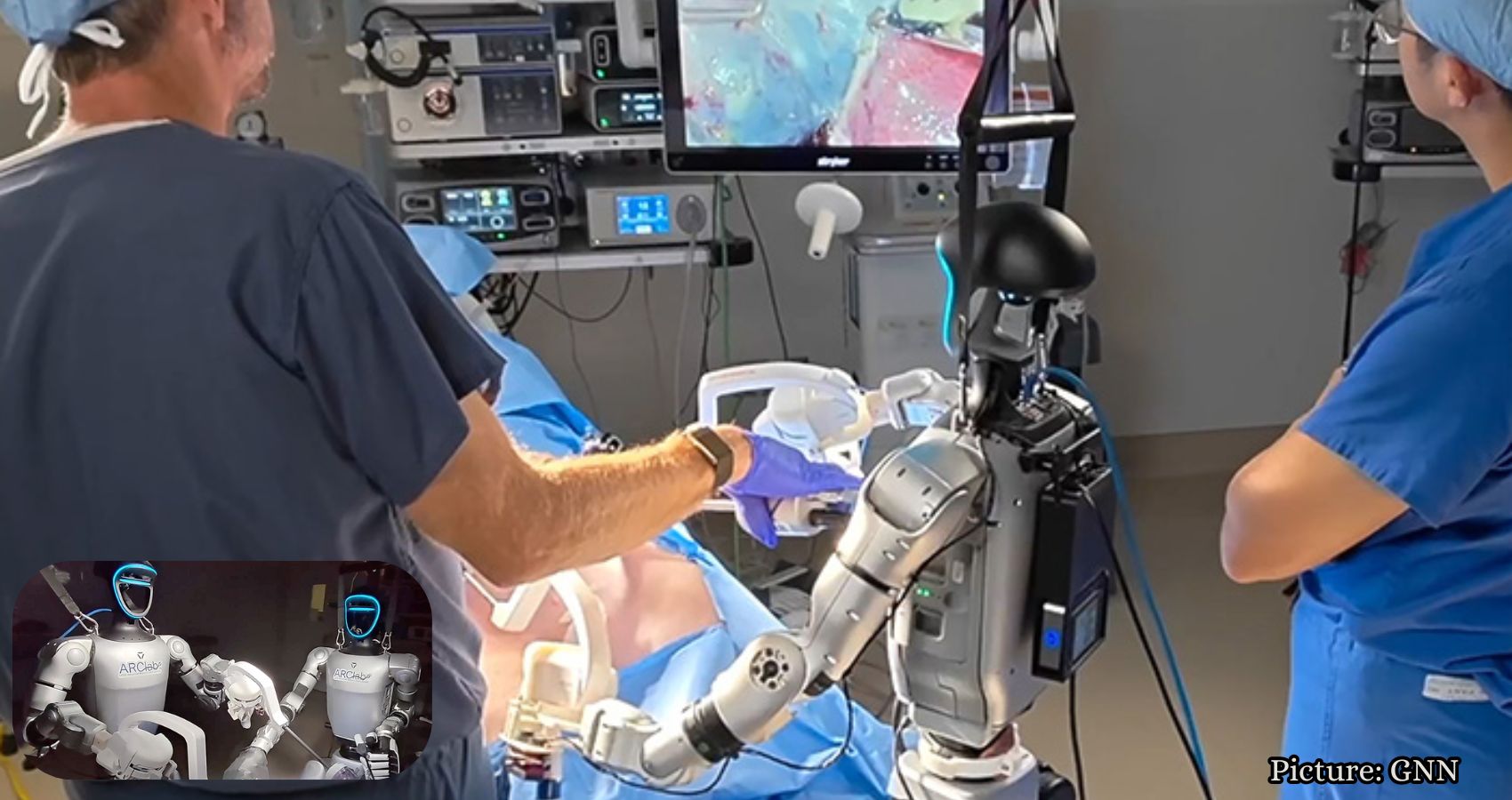
Humanoid robots have successfully completed live gallbladder surgeries on pigs, marking a significant advancement in robotic-assisted surgery and offering potential solutions for healthcare accessibility.
In a groundbreaking achievement, teleoperated humanoid robots have completed two live gallbladder surgeries, marking a first for general-purpose machines in the operating room. This innovative trial, conducted by researchers at the University of California San Diego, involved surgeons remotely guiding the robots through the procedures, which were performed on pigs rather than human patients.
Unlike traditional bulky robotic systems that are fixed in place, these humanoid robots, standing at about five feet tall, utilized standard surgical tools and operated within a human-designed operating room. This experiment provides an early glimpse into how such technology could one day enable specialists to perform surgeries in rural clinics or areas with limited access to surgical care.
The study, published in the journal Nature, showcased the capabilities of the humanoid robots during two laparoscopic gallbladder removal procedures. In one instance, a humanoid robot managed surgical instruments while a human surgeon assisted alongside it. In the second procedure, two humanoid robots collaborated, both controlled remotely by surgeons throughout the operations. The robots performed delicate tasks typical of minimally invasive gallbladder surgery, including moving tissue, dissecting around the gallbladder, and placing clips before its removal.
This trial was designed as a proof of concept to determine whether a general-purpose humanoid robot could effectively handle standard surgical tools with sufficient control to complete an operation. The results were promising, but the trial also highlighted challenges that researchers must address before considering human applications.
While robotic gallbladder surgeries have been performed before, this experiment is notable for being the first to utilize general-purpose humanoid machines. The work builds on previous research at UC San Diego, where a remotely controlled humanoid successfully conducted seven medical procedures, including physical exams and ultrasound-guided injections.
The humanoid robots, named Surgie, were developed by modifying commercially available Unitree G1 robots. Each Surgie stands approximately five feet tall and weighs around 60 pounds, significantly lighter than many existing robotic surgery systems, which can weigh up to 1,800 pounds. This compact design allows for easier integration into existing operating rooms without the need for extensive modifications.
Surgeons controlled the robots from a remote console, with Surgie mimicking their movements at the operating table. This human-like design is crucial, as it allows hospitals to utilize the robot in spaces designed for medical personnel. Additionally, the robot’s portability means it can be moved between rooms or transported to smaller facilities.
“We were surprised at how well Surgie meshed with our workspace and workflow,” said Dr. Nikita Thareja, a general surgery resident at UC San Diego and co-author of the study.
The base price for the Unitree G1 is approximately $13,500, not including the surgical adapters, instruments, or remote-control equipment utilized in the study. This cost presents a stark contrast to specialized surgical systems like the Da Vinci robots, which can range from $700,000 to over $3 million, depending on the model and configuration. However, researchers have not disclosed the total cost for the complete Surgie setup.
Modern robotic surgery systems typically assist doctors in performing highly precise procedures but are often limited to a fixed location and specialized equipment. In contrast, humanoid robots offer greater flexibility, as they can operate in environments designed for human medical workers and handle tools meant for human hands. Future iterations of these robots could potentially retrieve instruments during surgery or assist in preparing and cleaning the operating room post-procedure.
Michael Yip, a professor in UC San Diego’s Department of Electrical and Computer Engineering, emphasized that remotely operated humanoids could significantly expand access to critical surgical procedures. Researchers envision deploying these robots to communities with limited medical staffing or temporary field hospitals, allowing specialists to provide care without being physically present.
It is important to note that the goal is not to transfer medical decision-making to machines. A trained surgeon would remain in control while the robot executes the necessary movements at the patient’s location. This approach could be particularly beneficial in emergency situations, such as on a battlefield, or for patients in remote areas who would otherwise face long travel times to major medical centers. Researchers have even considered the potential application of this technology for future space missions.
Despite the successful completion of these procedures, hospitals are not yet ready to implement humanoid robots for patient surgeries. The trials revealed the need for recalibration of the robots during operations, and the procedures took significantly longer than those performed with established surgical systems. Latency, or the delay between a surgeon’s control movements and the robot’s response, also poses a concern. In surgical settings, even minor delays can affect precision and outcomes, particularly when the surgeon and robot are separated by considerable distances.
To advance this technology, researchers must enhance the robots’ reliability and response times, as well as demonstrate consistent performance across multiple procedures. Hospitals will also require contingency plans, ensuring that qualified surgical teams are ready to intervene if the robot malfunctions or if the remote connection fails.
Currently, human surgeons control Surgie’s movements, but the researchers aim to develop what they term an autonomous surgical assistant. This type of robot could recognize which tool a surgeon requires or perform limited tasks under supervision. Other research teams are exploring different approaches to autonomous surgery, including AI-powered robots capable of completing specific surgical phases independently. However, operating on live patients presents significant challenges, such as the risk of sudden bleeding or rapid changes in a patient’s condition.
As this technology continues to evolve, it raises important questions about responsibility and accountability in surgical settings. Clear guidelines will be necessary to determine who is responsible for decision-making and outcomes when using autonomous systems. Additionally, hospitals must safeguard the robot’s software and communication systems from unauthorized access while ensuring safe operation during connectivity issues.
While humanoid robots are not yet ready to independently perform surgeries, this research represents a significant step forward in the field of robotic-assisted medicine. The potential for a mobile surgical robot to provide access to specialists without the need for extensive travel could address critical healthcare challenges. However, safety must remain paramount, and patients should be informed about who controls the robot and the protocols in place should any issues arise during a procedure.
As researchers work to refine and enhance this technology, the prospect of humanoid robots assisting in surgeries could transform the landscape of healthcare, particularly in underserved communities. The journey toward reliable and safe robotic-assisted surgery is just beginning, but the possibilities are promising.
According to Nature, the research team is committed to advancing this technology while prioritizing patient safety and care.