
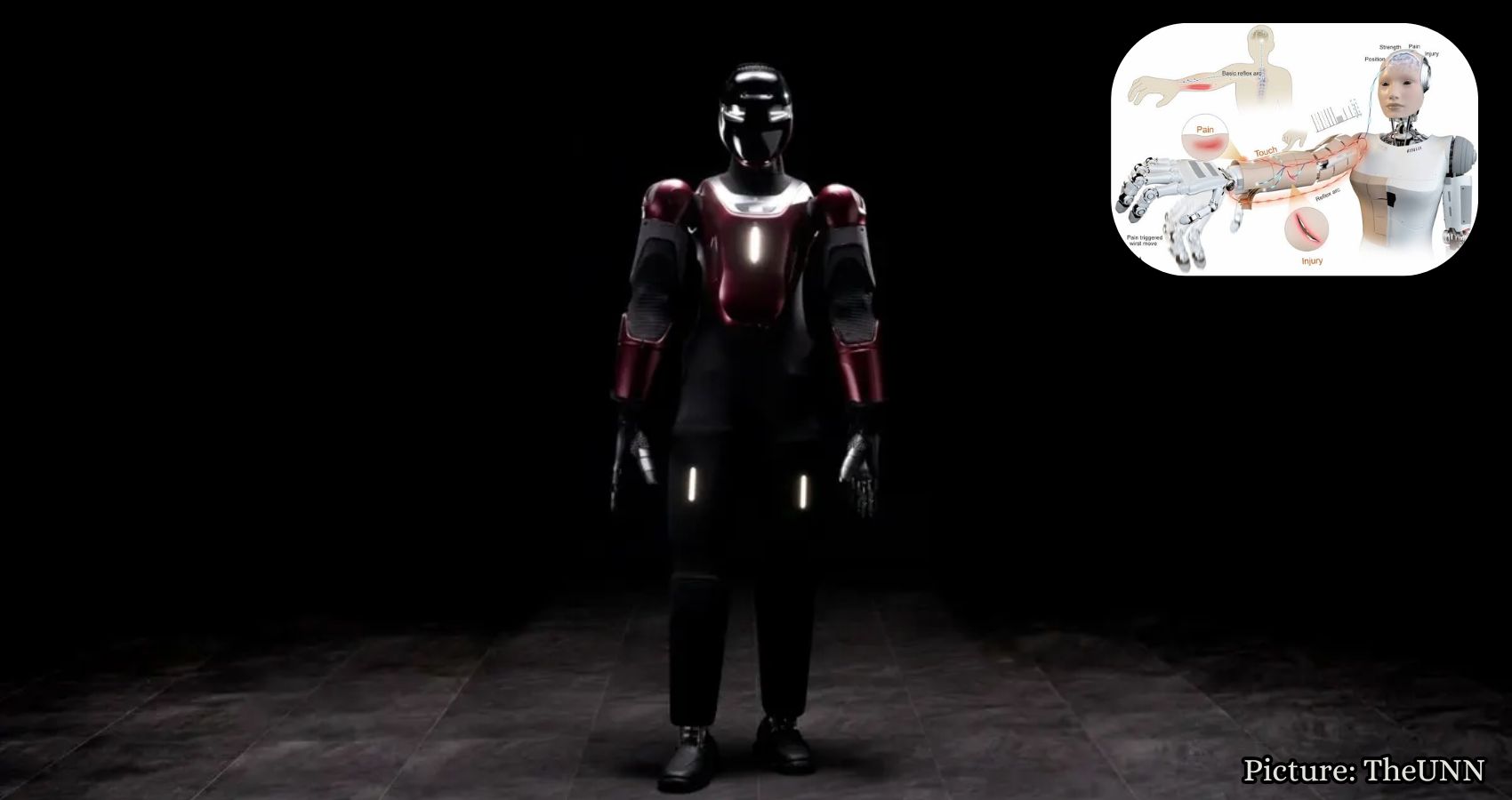
Generative Bionics’ Gene.01 humanoid robot features sensor-filled skin that detects nearby individuals before contact, aiming to enhance workplace safety, though detailed performance data is still pending.
Working alongside a humanoid robot can be a daunting experience, particularly when considering the potential for collisions between heavy machinery and human workers. To address these safety concerns, the Italian startup Generative Bionics has developed the Gene.01 humanoid robot, which is equipped with sensor-filled skin designed to detect individuals approaching before any physical contact occurs.
The innovative skin on Gene.01 is capable of sensing touch, temperature, and force, allowing the robot to gather information about its surroundings and interactions. This capability raises an important question: can the sensors and control software react swiftly enough to ensure safety when people are working in close proximity to the robot?
Gene.01 is outfitted with distributed sensors across its torso and limbs. According to Generative Bionics, this smart skin can simultaneously detect touch, temperature, proximity, and force. The proximity sensing feature provides the robot with an early warning when someone enters its immediate space, much like a person instinctively pulls their hand away from a hot stove before making contact.
While the concept of proximity sensing is familiar, the effectiveness of Gene.01’s system in real-world industrial environments remains to be seen. Generative Bionics has yet to release comprehensive workplace safety data that demonstrates how the robot performs during full industrial shifts. As it stands, the safety benefits of Gene.01 are primarily based on the company’s claims regarding its newly introduced platform.
Traditional factory robots often operate behind barriers to keep workers out of their range of motion. However, humanoid robots like Gene.01 present unique challenges, as they are designed to use tools and navigate spaces built for human workers. This design necessitates closer interactions between robots and people.
While cameras can help robots visually detect approaching individuals, they may struggle to track someone who stands too close or moves behind the robot. The full-body proximity sensing offered by Gene.01 adds an additional layer of awareness, allowing the robot to detect activity near its torso or limbs without relying solely on its visual field.
Gene.01’s sensors could also transform the way workers train humanoid robots. By guiding the robot’s arm through a specific movement, a worker can demonstrate the necessary motion and force involved in a task. This method provides the robot with information that a video demonstration might overlook. For instance, while a video can show where to place a hand, it may not convey the appropriate grip strength required for a particular object.
Generative Bionics has adopted an approach called Physical AI in the development of Gene.01. This methodology integrates the robot’s body and movement controls into a cohesive system, rather than treating hardware and software as separate entities. The team utilizes models of both the robot and its human partner to optimize design based on measurable factors, such as walking stability and the physical strain on the human worker.
This approach is rooted in research conducted by members of the company’s founding team at the Istituto Italiano di Tecnologia, with findings published in the journal *Nature Machine Intelligence* on July 13, 2026. Although the research focused on a different robot called ergoCub, it laid the groundwork for the development of Gene.01. The researchers optimized ergoCub’s physical design and movement controls using human-related measurements, including the stress on a person’s back in conjunction with the robot’s walking requirements.
Generative Bionics claims that Gene.01 is the first industrial platform to apply this peer-reviewed methodology to a fully functional humanoid robot equipped with sensors. The company transitioned Gene.01 from concept to a working platform in just six months. CEO Daniele Pucci emphasized that the robot was designed as a foundational platform for various industrial machines, stating, “Unlike other one-size-fits-all humanoids, Gene.01 is a scalable platform, customized at the edge of AI, design, and end-effector level to maximize each customer’s needs.”
Generative Bionics envisions Gene.01 as a base for a family of specialized humanoids, allowing for adjustments to the AI for specific tasks and modifications to the robot’s exterior to suit different working environments. Additionally, engineers can replace the robot’s end effectors—such as hands, grippers, or feet—depending on the requirements of the task at hand. This platform approach enables the company to adapt a single core robot rather than designing each machine from scratch.
The potential applications for Gene.01 extend to manufacturing, logistics, inspection, public safety, and healthcare. However, as an early industrial platform, Generative Bionics must demonstrate that its customization strategy can reliably function outside of controlled environments.
To facilitate development, Generative Bionics has begun releasing a digital model of Gene.01, allowing developers to simulate the robot’s movements and create industry-specific applications in a virtual setting. The company’s website currently features a preview of the robot’s URDF model on GitHub, which developers can use to describe the robot’s physical structure for software and simulation tools.
Gene.01’s first planned industrial application involves shipbuilding, with Generative Bionics collaborating with Italian shipbuilding company Fincantieri to develop a humanoid for welding operations in shipyards. These environments often present tight workspaces and heavy equipment, making the potential for a humanoid to handle specific tasks particularly appealing. However, detailed performance results from the welding project have yet to be published.
Generative Bionics has successfully raised $81 million in a seed funding round led by CDP Venture Capital, with participation from AMD Ventures, Duferco, Eni Next, RoboIT, and Tether. This funding will enhance the company’s resources for developing Gene.01 and expanding production capacity. The team comprises approximately 100 individuals, nearly half of whom hold doctoral degrees, with experience in previous humanoid projects such as iCub and ergoCub.
In an effort to bolster its capabilities, Generative Bionics has formed a strategic partnership with German company Synapticon to develop an actuation system for Gene.01 and future robots. Actuators are crucial for the motorized joints that enable a robot’s movement, impacting how quickly and forcefully a humanoid can operate. This partnership will facilitate final assembly and calibration in Europe, ensuring compliance with regional safety standards.
While Gene.01 may not be ready for widespread deployment just yet, its sensor-filled skin represents a significant advancement in humanoid robot design. As companies seek to integrate these machines into workplaces designed for human interaction, the ability to detect individuals before contact and respond appropriately will be essential for ensuring safety. The promise of Gene.01 lies in its potential to enhance factory safety through increased awareness and responsiveness to human presence.
However, the effectiveness of this technology will ultimately depend on Generative Bionics’ ability to substantiate its claims with rigorous workplace testing and clear data. As the industry evolves, the question remains: would you trust smart skin to protect you from a full-size humanoid at work, or would you prefer a barrier between yourself and the machine? Let us know your thoughts.
According to Fox News, the future of humanoid robots like Gene.01 hinges on their ability to ensure safety and adapt to human environments.