
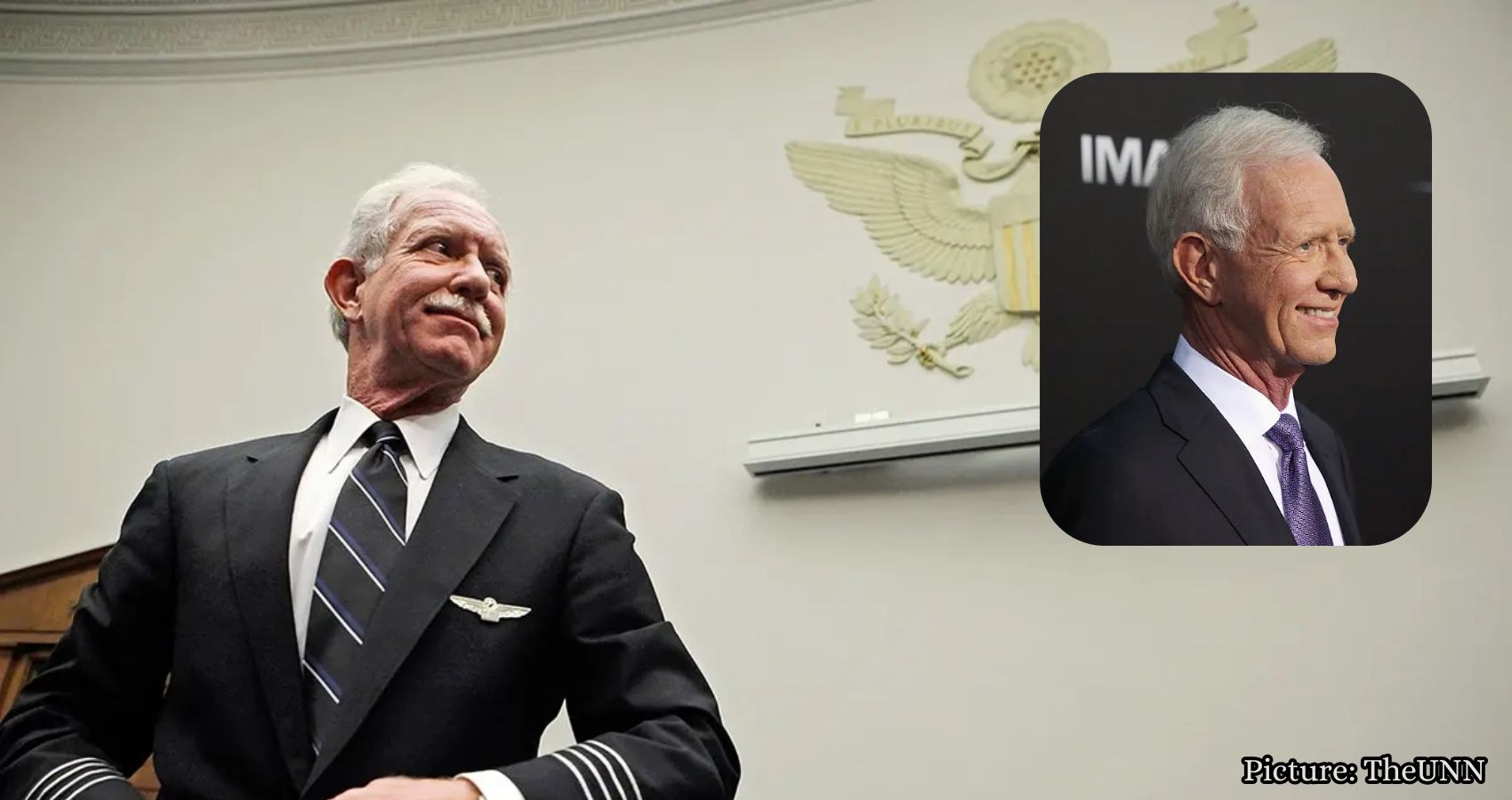
Capt. Chesley “Sully” Sullenberger III has publicly announced his early-stage Alzheimer’s diagnosis, pledging to raise awareness about brain health and the impact of the disease.
Capt. Chesley “Sully” Sullenberger III, renowned for his heroic emergency landing of US Airways Flight 1549 in the Hudson River, has revealed that he has been diagnosed with early-stage Alzheimer’s disease. The announcement comes as a poignant moment for one of the nation’s most celebrated aviators, who saved 155 lives during the incident known as “The Miracle on the Hudson.”
In a statement shared with People magazine, Sullenberger, 75, described his diagnosis, stating, “It is early stage. For now, this means a name may not come easily to me, I forget a story I have recently told, or I don’t sleep as well, but I am in the beginning of this long journey.” He received his official diagnosis in August 2025, and despite his previous photographic memory, he has experienced difficulties recalling details over the past year.
Alzheimer’s disease, the most common form of dementia, affects over seven million people aged 65 and older in the United States, according to the Alzheimer’s Association. Sullenberger emphasized the widespread nature of the disease, noting, “My doctor, Dr. Gil Rabinovici with UCSF Medical Center, has opened my eyes to the prevalence of Alzheimer’s. This disease, he has told me, spares no age group and impacts millions of people around the world. It is the unwanted visitor at the door.”
His wife, Lorrie, expressed her unwavering support, stating that the diagnosis has not altered his steadfast character. “Just as he was the same steady person before and after Flight 1549, he is the same steady person now, before and after this diagnosis,” she said. “That strength and steadiness is guiding us as a family. We’re supporting him on this journey that we now walk with so many other families. Though the future is uncertain, we continue to live our lives, have hope, and find joy in the everyday.”
Capt. Jeff Skiles, Sullenberger’s first officer during the emergency landing, also shared his thoughts on the diagnosis. “Sully is larger than life, even to me,” Skiles told People. “He’s somebody I’ve always looked up to, and I think a lot of other people do, too. Hopefully, it’s going to progress slowly, and he’s going to be able to create the kind of life going forward that he would be proud of.”
Dr. Marc Siegel, a senior medical analyst for Fox News, noted that Sullenberger had previously been diagnosed with post-traumatic stress disorder (PTSD) following the Miracle on the Hudson incident, which may have increased his risk of developing Alzheimer’s. “Age 75 is relatively late-onset,” Siegel explained. “PTSD doubles the risk of developing Alzheimer’s because of changing brain chemistry and structure and sleep disruption.”
Sullenberger has long been an advocate for aviation safety, addressing challenges within the industry and advocating for improved pilot training and care. Now, he aims to raise awareness about Alzheimer’s disease and its effects. “This new phase of my life has challenged what it means to be of service,” he said. “And the answer is to speak up. It is my hope that by sharing this, other families living in the shadows with this disease will feel they, too, can step forward.”
Reflecting on the hope he provided to others after Flight 1549, Sullenberger remarked, “So many people told us after Flight 1549 that the outcome gave them hope. Lorrie, my incredible partner of 37 years, says we can all use a little of that hope right now.”
Although his memory may be affected by the diagnosis, Sullenberger remains optimistic about the future. “I will navigate this chapter with my wonderful family by my side,” he stated. He believes that courage is essential in facing this challenge, just as it was during the emergency landing. “Now we need that courage to battle this disease. I am now part of a larger community with many of you, and we will be courageous together.”
Alzheimer’s disease is characterized by memory loss, cognitive decline, and behavioral changes. It accounts for 60% to 80% of all dementia cases and is progressive, meaning symptoms worsen over time. While there is currently no cure, treatments are available to help manage symptoms, and new therapies are on the horizon.
Experts recommend lifestyle changes, including mental and physical activity, to help reduce the risk of developing Alzheimer’s. Dr. Daniel Amen, a psychiatrist and founder of Amen Clinics, emphasizes the importance of early brain health management. “Alzheimer’s starts in your brain decades before you have any symptoms,” he noted. “So, a 59-year-old woman I diagnosed with Alzheimer’s disease likely had negative changes in her brain in her 20s. It’s really never too early to think about protecting your brain and your mind.”
In addition to his advocacy work, Sullenberger is also known for his bestselling autobiography, “Highest Duty: My Search for What Really Matters,” co-written with Jeffrey Zaslow. The book was adapted into the 2016 film “Sully,” directed by Clint Eastwood and starring Tom Hanks.
As Sullenberger embarks on this new chapter of his life, he continues to inspire many with his resilience and commitment to raising awareness about Alzheimer’s disease, encouraging others to join him in the fight against this challenging condition.
According to People, Sullenberger’s journey serves as a reminder of the importance of support and hope in the face of adversity.