
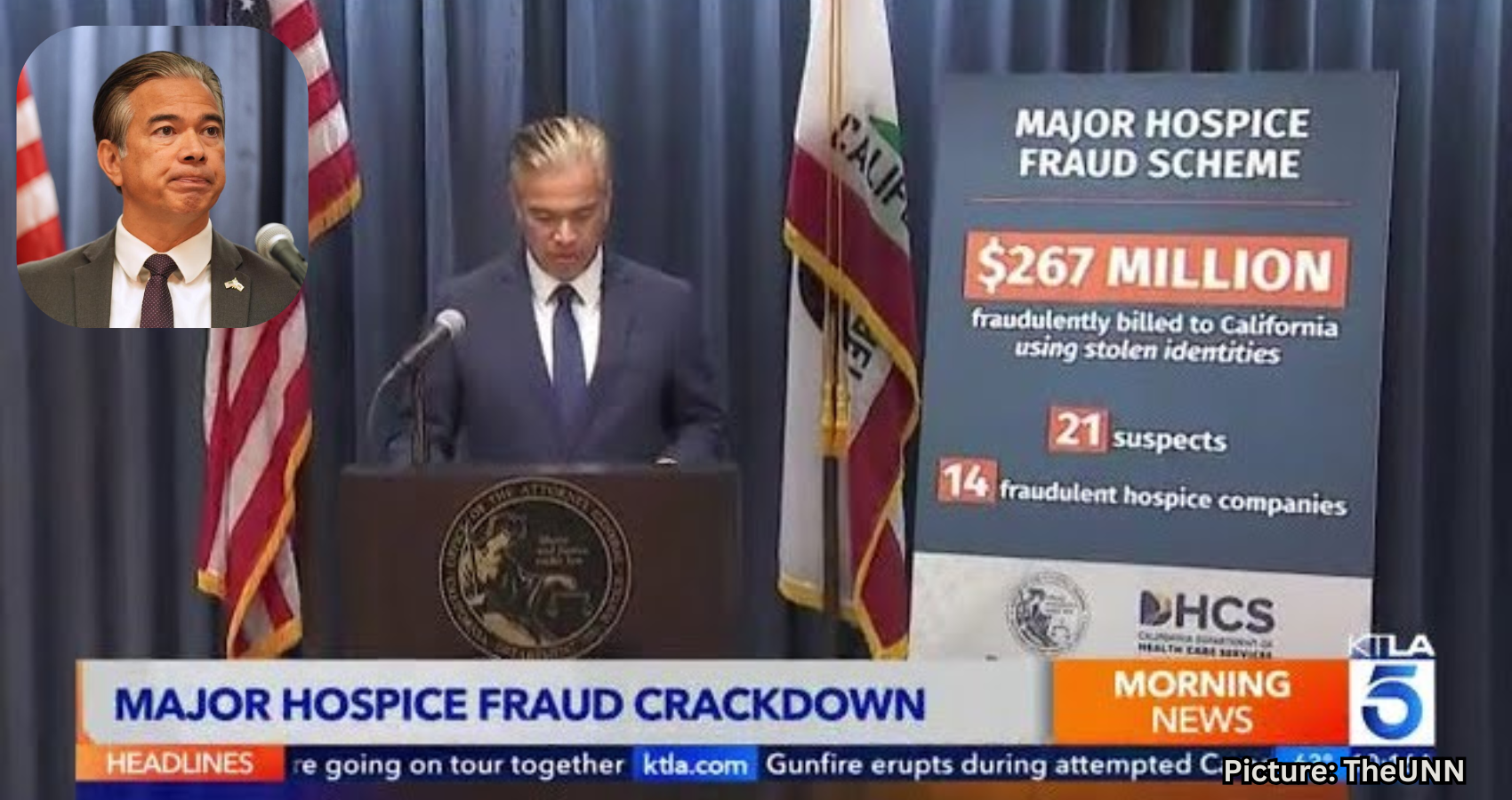
A $267 million Medi-Cal hospice fraud scheme has been uncovered in California, involving stolen identities and fictitious patients, according to the state Attorney General’s office.
A significant fraud operation involving Medi-Cal hospice services has been exposed in California, with allegations totaling $267 million. The California Attorney General’s office recently filed charges against 21 individuals linked to this scheme, known as Operation Skip Trace.
The operation reportedly involved the purchase of stolen personal data from the dark web, which was then used to bill the state for hospice care that was never provided. The defendants allegedly enrolled fictitious patients in Medi-Cal through Covered California, establishing 14 shell hospice companies that submitted fraudulent claims for end-of-life care.
Many of the supposed patients were not terminally ill, and in some cases, they did not even reside in California. Instead, their names and Social Security numbers were extracted from data breaches and utilized as billing entries.
According to the allegations, scammers paid individuals to register hospice companies under their names, even though they did not operate these businesses. This tactic obscured the true operators and allowed the group to submit bills using a licensed entity. Behind the scenes, the scammers acquired stolen personal information from dark web marketplaces, which included names, dates of birth, Social Security numbers, and addresses.
Once they had this information, the scammers enrolled these individuals in Medi-Cal, falsely designating them as terminally ill hospice patients. The shell companies then submitted claims for visits, prescriptions, and daily care associated with these fictitious patients, all without providing any actual services. Since hospice care is reimbursed at a flat daily rate, the fraudulent billing could continue as long as the identities remained active.
Operation Skip Trace is part of a broader pattern of hospice fraud that federal and state officials have been monitoring for years. In Los Angeles County, the average hospice bills Medicare approximately $29,000 per patient, which is more than double the national average. Of the roughly 1,800 hospices operating in the county, more than 700 have raised multiple fraud alerts, according to state auditors.
In March 2026, the U.S. House Committee on Oversight and Government Reform sent a letter to California Governor Gavin Newsom, requesting documents related to the state’s oversight of federally funded hospice programs. The committee members highlighted a “well-documented history of fraud,” including agencies enrolling beneficiaries without their consent and overbilling Medicare.
The Centers for Medicare & Medicaid Services (CMS) estimates that Los Angeles County alone accounts for approximately $3.5 billion in hospice fraud. In response, Governor Newsom’s office has revoked over 280 hospice licenses, imposed a moratorium on new providers, and is investigating hundreds more operators.
Unlike typical identity theft cases that often involve credit cards, tax returns, or loans, hospice fraud operates differently. Scammers can exploit personal information within Medicare or Medi-Cal billing systems without triggering credit alerts or hard inquiries, making it difficult for victims to detect the fraud.
Individuals are advised to be vigilant for warning signs, such as Medicare Summary Notices detailing services they never received, Medi-Cal enrollment letters in their names, or explanation-of-benefits statements from unfamiliar providers. If someone applies for coverage later, they could face denial due to records indicating they are already enrolled in another state.
Those whose data may have been compromised in a breach should be aware that it could already be circulating on the dark web. The CMS recommends reviewing Medicare Summary Notices quarterly through MyMedicare.gov. For those enrolled in Medi-Cal, it is essential to monitor their Covered California account for any unexpected activity and report any suspicious findings to the California Department of Health Care Services via its Stop Medi-Cal Fraud line.
Suspected Medicare fraud can be reported to 1-800-MEDICARE or directly to the HHS Office of Inspector General at oig.hhs.gov/fraud. The Senior Medicare Patrol offers free assistance in reviewing statements and filing reports in every state. If unfamiliar charges or enrollment activity is detected, individuals should place a fraud alert with Equifax, Experian, and TransUnion. Medical identity theft often overlaps with other types of fraud.
Hospice fraud schemes like Operation Skip Trace typically begin long before any billing occurs. The personal data used is often traded on dark web marketplaces following large data breaches. Services such as Aura monitor these marketplaces and data broker listings for exposed personal information, including Social Security numbers, driver’s licenses, and email addresses. They also track changes in public records, such as address updates that may indicate fraudulent enrollment, and monitor credit files across major bureaus.
If suspicious activity is detected, users receive support from fraud resolution specialists who assist in contacting agencies, preparing documentation, and disputing unauthorized accounts. Some plans may also include identity theft insurance to cover eligible recovery costs.
While no service can prevent every misuse of stolen identity, early alerts can significantly mitigate damage, especially when fraud occurs within systems that individuals rarely check, like Medicare or Medi-Cal.
Credit monitoring services track activity across major credit bureaus and alert users when changes occur, allowing for prompt action, such as freezing credit or disputing unfamiliar accounts. Certain services also enable users to lock their credit files with a single tap, helping to prevent new applications from being approved.
In addition to monitoring credit reports, some services keep an eye on other personal data that may be exposed in breaches or sold online, including email addresses, phone numbers, driver’s license details, and medical IDs, all of which can be exploited in identity theft schemes.
This case illustrates the evolving nature of identity theft. It is no longer solely about draining bank accounts or opening credit cards; scammers are now creating invisible patients within systems that most individuals do not routinely check. This shift complicates detection and slows down the response to fraud.
To protect oneself, it is crucial to understand where personal information may appear and to regularly check systems that might not be part of one’s usual review routine. If someone could use your identity for months without your knowledge, would you catch it before the damage is done? For more information, individuals can visit CyberGuy.com.
According to Fox News, the implications of this fraud scheme extend beyond financial loss, highlighting the need for increased vigilance and monitoring of personal information.