
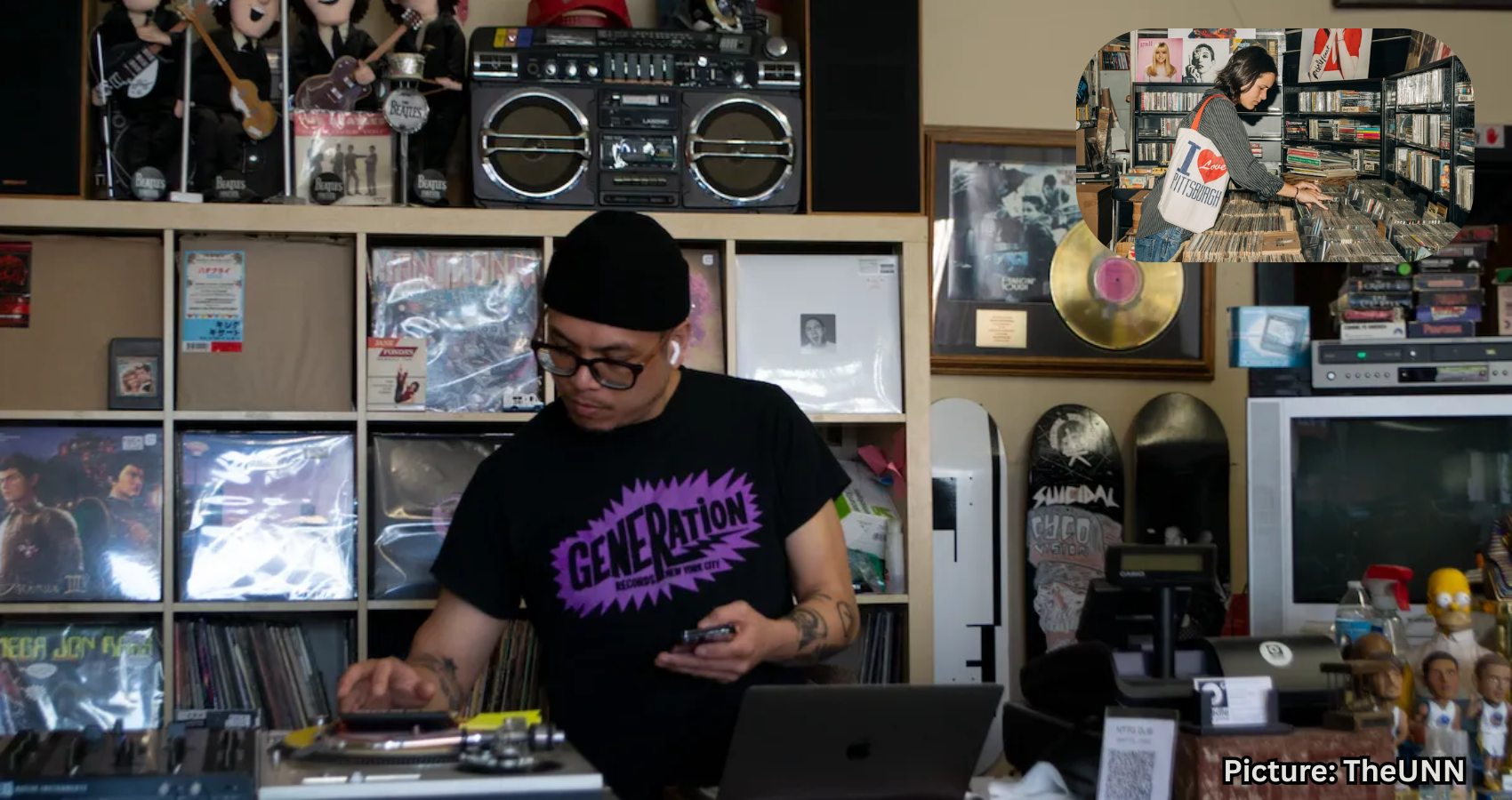
Gen Z is increasingly turning away from digital media, opting instead for physical formats like vinyl records and CDs, driven by a desire to reconnect with music and reduce screen time.
In a surprising trend, many members of Generation Z are choosing to ditch their smartphones in favor of vinyl records and CDs. This shift reflects a growing desire for tangible experiences in a world dominated by digital media.
Seventeen-year-old Navya Chitlur, a senior at Mission San Jose High School in Fremont, exemplifies this trend. Last December, she asked for a portable CD player for Christmas, eager to fully immerse herself in the music she had been collecting. “It feels like a whole different experience listening to CDs,” she said, highlighting the connection she feels when holding a physical album in her hands.
Chitlur, who grew up listening to music on Spotify, has recently discovered the joy of watching a vinyl record spin as it plays. “It feels like you’re connecting with a piece way more than if you were just listening to it on your phone,” she explained.
As screen fatigue becomes more prevalent among young people, many are turning to physical media such as vinyl records, CDs, and books. A survey conducted among 120 Bay Area high school students via Mosaic’s Instagram revealed that 57% of respondents are making a conscious effort to engage more with physical media.
While much of the evidence for this shift is anecdotal, data suggests a rising interest in analog formats. According to Google Trends, searches for “analog” surged nearly 80% over the past six months.
Michael Boado, co-founder of the vinyl record store Needle to the Groove, has noticed an influx of young customers at his locations in San Jose and Fremont. As teenagers sift through records, Boado emphasizes the appeal of physical media. “It’s nice to have something physical as opposed to just streaming,” he said. “I feel like younger folks are digging having a collection as opposed to having playlists on Spotify.”
Zaki Hasan, a film professor at San Jose State University, attributes this trend to the overwhelming nature of digital media consumption. “We’re in this age of convergence where our phone is the vector for all the media you consume — whether it’s TV or movies or music or newspapers,” he noted. “It starts leaving kind of a gaping hole inside of you a little bit because weirdly, it offers us everything, yet it leaves us feeling empty.”
The Mosaic survey also revealed that nearly 70% of respondents have made a conscious effort to reduce their phone use in recent months. Raul Peñaloza, a junior at Newark Memorial High School, shared his experience of feeling guilty about his high screen time. He has since started picking up copies of his local newspaper, The Tri-City Voice, stating that holding a physical paper in his hand “is just a different vibe.”
Gaura Amarnani, another junior at Mission San Jose High School, believes the COVID-19 pandemic contributed to a dependency on screens. “Every time we were bored, rather than going outside, it became a new normal to just get on your phone,” he said. Amarnani has recently made an effort to cut down on screen time and revive his love of reading, feeling a disconnect from his childhood passion.
Hasan argues that embracing physical media allows young people to reclaim control over their lives. “Every single one of us is just plugged into an algorithm,” he said. “I think something as simple as curating for yourself what you see, what you listen to, what you own — that exercises agency. It’s reclaiming something that I don’t think people even realized had been taken away from them.”
For Chitlur, listening to her favorite CD, often “The Bends” by Radiohead, is a form of rebellion against technology. “It feels like a way to kind of slow down and reconnect with what actually matters,” she said, emphasizing the importance of this experience in her life.
As Generation Z continues to explore the world of physical media, it becomes clear that the desire for tangible experiences is reshaping their relationship with music and media consumption.
According to Mosaic, this trend reflects a broader movement among young people seeking to balance their digital lives with more meaningful, analog experiences.