
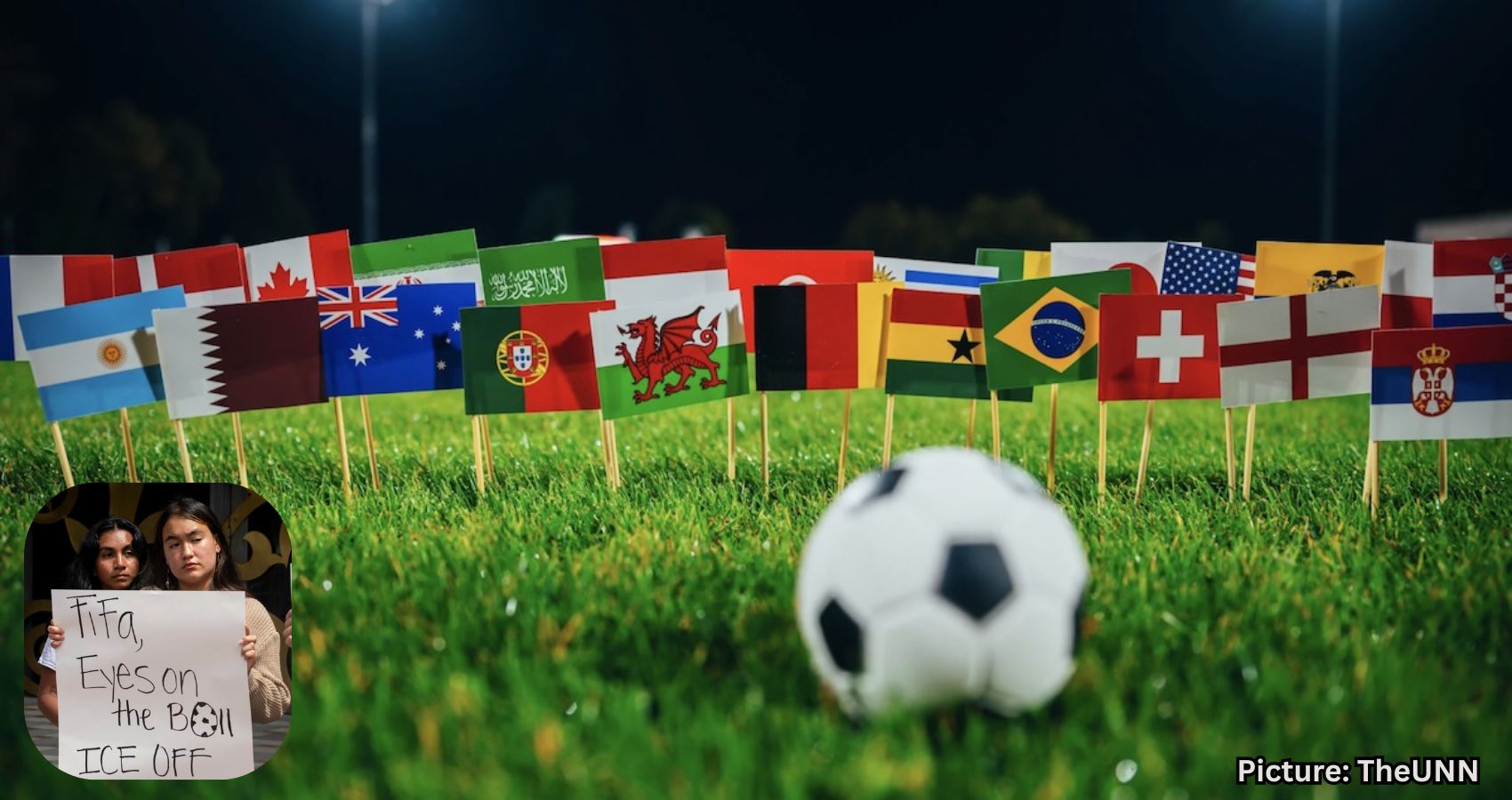
As the FIFA World Cup approaches, advocates raise alarms over potential human rights violations, warning that the tournament may not be as inclusive as promised.
With the FIFA World Cup set to kick off on June 11, civil advocates are sounding the alarm about the potential for serious human rights violations during an event that is being promoted as the most inclusive in history. The tournament, which will see the United States host 78 of the 104 matches, is expected to attract up to 10 million visitors across 11 cities, raising significant concerns about immigration enforcement, travel bans, and the overall human rights framework surrounding the event.
Minky Worden, director of global initiatives at Human Rights Watch (HRW), contextualized the upcoming tournament by referencing the human rights crises that marred previous World Cups in Russia and Qatar. “The human rights catastrophes around the World Cup in 2018 in Russia and 2022 in Qatar, that is the right place to start,” she stated.
The 2018 World Cup in Russia was characterized by what HRW described as “the worst human rights crisis in Russia since the Soviet era.” Violations included a crackdown on political dissent, arbitrary detention of activists and journalists, forced labor in hazardous conditions, and numerous fatalities among construction workers. Qatar’s 2022 tournament proved even more catastrophic, with a 2021 investigation by the Guardian revealing that over 6,500 migrant workers died during the construction of World Cup venues. The conditions faced by these workers were exacerbated by extreme heat, poor living conditions, and a restrictive visa system.
Despite FIFA’s adoption of a human rights framework requiring host cities to implement tailored human rights action plans, Worden criticized the effectiveness of these measures, describing them as a “beautiful yet meaningless document.” She noted that as many as five of the 16 host cities had yet to publish their action plans, including New Jersey, Philadelphia, and Miami, where FIFA is headquartered.
Worden also highlighted the contradiction between FIFA President Gianni Infantino’s claims of an inclusive World Cup and the reality of travel bans affecting 39 countries, including qualifying nations such as Senegal, Côte d’Ivoire, Haiti, and Iran. “These mega-events shouldn’t happen to a community; they should happen with a community,” she emphasized. “This World Cup is not a World Cup for the world.”
The situation for the Iranian team exemplifies this contradiction. Although they qualified for the tournament, players will not be allowed to remain in U.S. territory and will instead cross the border nightly from Tijuana to compete in matches in Los Angeles and Seattle. Historically, the World Cup has served as a platform for Iranian civil rights, particularly for women’s rights activists who have used the event to protest gender-based restrictions in their home country. However, current visa restrictions are hindering advocates from exercising their right to free speech during the tournament.
Ariel G. Ruiz Soto, a senior policy analyst at the Migration Policy Institute, provided insight into the uneven landscape facing international visitors. Travelers from countries participating in the U.S. Visa Waiver Program will encounter relatively simple entry conditions, while those from the 39 countries under travel bans will be barred from entry altogether. Additionally, the Trump administration’s imposition of a World Cup visa bond of up to $15,000 for certain visitors has created further barriers, with the bond waived only for those who secured tickets or travel plans before April 15.
While the Trump administration and FIFA have agreed that Immigration and Customs Enforcement (ICE) operations will not take place at stadiums or fan zones, activists have received conflicting information regarding ICE arrests in surrounding areas. Over 120 civil society groups have issued a travel warning about “serious rights violations” for the tournament’s potential visitors. A labor union representing hospitality employees at Los Angeles’ SoFi Stadium has even threatened to strike if ICE agents are deployed at the venue.
HRW, along with the Sport and Rights Alliance and the coalition Dignity 2026, has called for an “ICE Truce” to suspend enforcement operations during the tournament, similar to the Olympic Truce. Worden noted that many immigrant families cherish the World Cup, recounting stories of individuals who expressed their willingness to risk arrest or deportation to support their teams. “When we hear that, it’s very concerning,” she said.
Katherine La Puente, senior children’s rights coordinator at HRW, highlighted the troubling enforcement landscape, citing data from the Deportation Data Project that revealed over 167,000 arrests in the 11 U.S. host cities since January 2025, with particularly high numbers in Miami, Dallas, and Houston. She recounted a distressing case involving a father seeking asylum who was arrested by ICE agents while attending a FIFA event with his children, leaving them traumatized and separated from him.
La Puente expressed concerns about FIFA’s child safeguarding policies, stating that while the organization adopted a child safeguarding statement last March, it may be too little and too late. She fears that staff may not be adequately trained to respond to risks faced by children during the tournament.
Jamal R. Watkins, senior vice president of strategy and advancement at the NAACP, echoed these sentiments, emphasizing that assurances regarding ICE presence have offered little comfort given the history of enforcement actions in the U.S. He argued that supporting the fans, players, and workers who make the World Cup possible requires resisting the political interests that prioritize profits over people.
As the World Cup approaches, advocates continue to call for attention to these pressing human rights concerns, urging that the tournament should be a celebration for all, rather than a backdrop for violations.
According to Human Rights Watch, the implications of these issues could significantly impact the experience of millions during the tournament.