
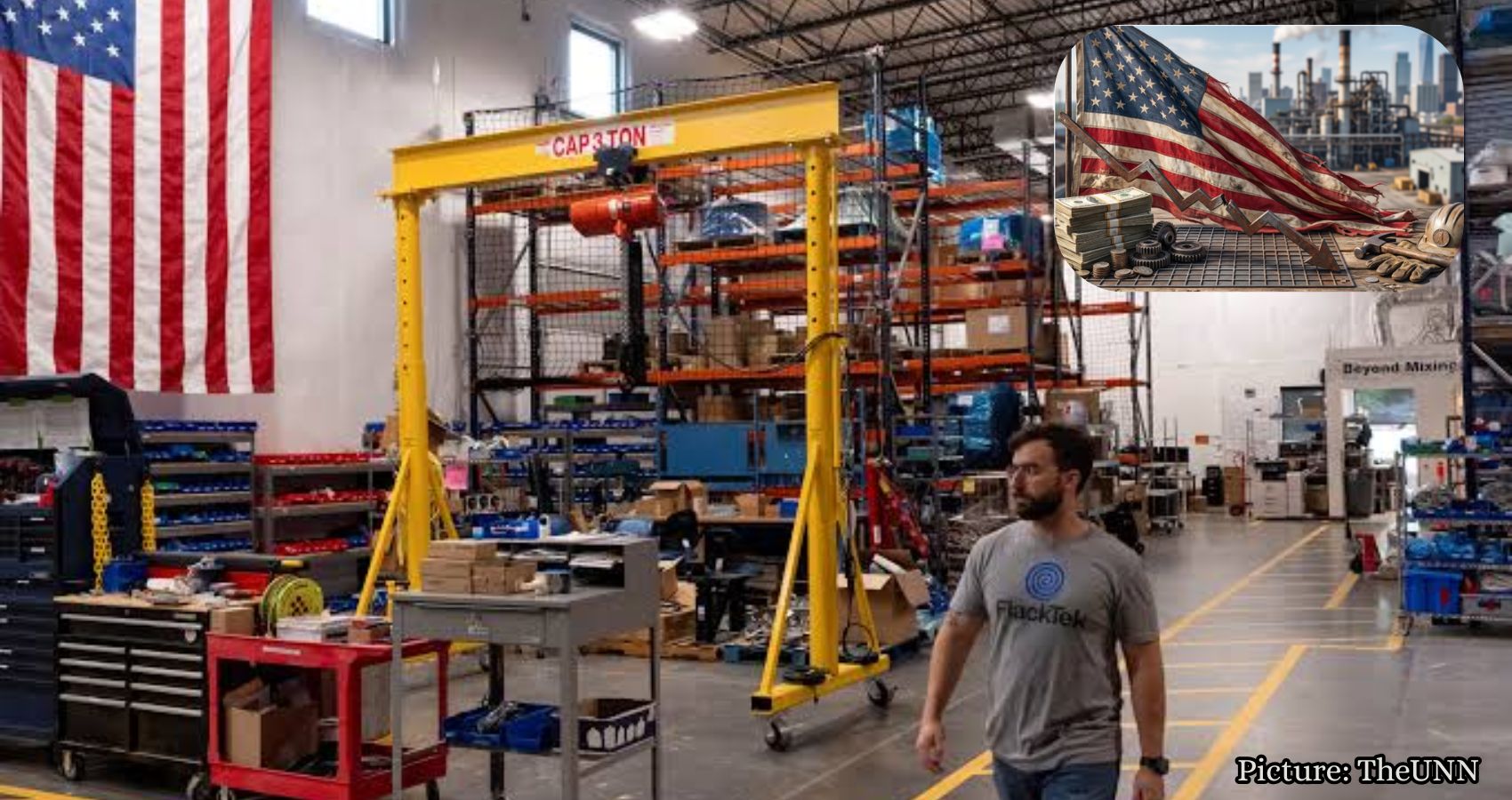
U.S. workers’ share of the economy has reached a historic low, reflecting the impacts of automation, globalization, and diminishing union power on economic distribution.
The share of the U.S. economy that workers receive has fallen to a record low in 2026, according to the Bureau of Labor Statistics (BLS). In the second quarter of this year, the labor share of nominal gross domestic product (GDP) dropped to 52.9%, down from 53.7% in the first quarter. This marks the lowest percentage recorded since the BLS began tracking this data in 1947.
The decline in labor share has been a long-term trend, influenced by various factors such as the weakening of organized labor and the globalization of production, which has shifted many high-paying manufacturing jobs to lower-cost overseas locations. Reports indicate that this labor share has been decreasing since the latter half of the 20th century and has continued to decline in the post-pandemic era, even as the overall U.S. economy expands. This means that workers are receiving a smaller portion of an increasingly larger economic output.
Recent advancements in technology, particularly automation and artificial intelligence, have enabled companies to enhance productivity without significantly increasing their workforce. As a result, the economic gains are primarily benefiting business owners and shareholders rather than workers.
Real weekly earnings, which account for wage growth adjusted for inflation, remained largely stagnant during the first half of 2026. However, the latest data for June indicated a positive shift, breaking a three-month streak of declines and marking the strongest earnings growth in six years.
The phenomenon of “jobless growth” has been highlighted in previous reports, with labor economist Raymond Robertson from Texas A&M’s Bush School of Government attributing the declining labor share to the rise of automation. He noted that while productivity continues to increase, it often comes at the expense of displacing workers.
Looking ahead, automation is projected to contribute to corporate profits and GDP growth, with estimates suggesting a 1.5% boost to GDP by 2035, according to a Wharton brief published in September 2025. Early indicators show that companies investing significantly in artificial intelligence—specifically those spending $10 million or more—are reporting notable productivity gains compared to those with lower investments in the technology, as highlighted in EY’s U.S. AI Pulse Survey.
In addition to technological advancements, researchers have pointed to the decline of unions, the emergence of China as a major economic player, and increasing profit margins for businesses as contributing factors to the shrinking share of economic gains for workers.
This ongoing trend raises important questions about the future of labor in the U.S. economy and the distribution of wealth generated by economic growth.
According to Source Name, the implications of these changes will likely continue to shape the economic landscape in the years to come.