
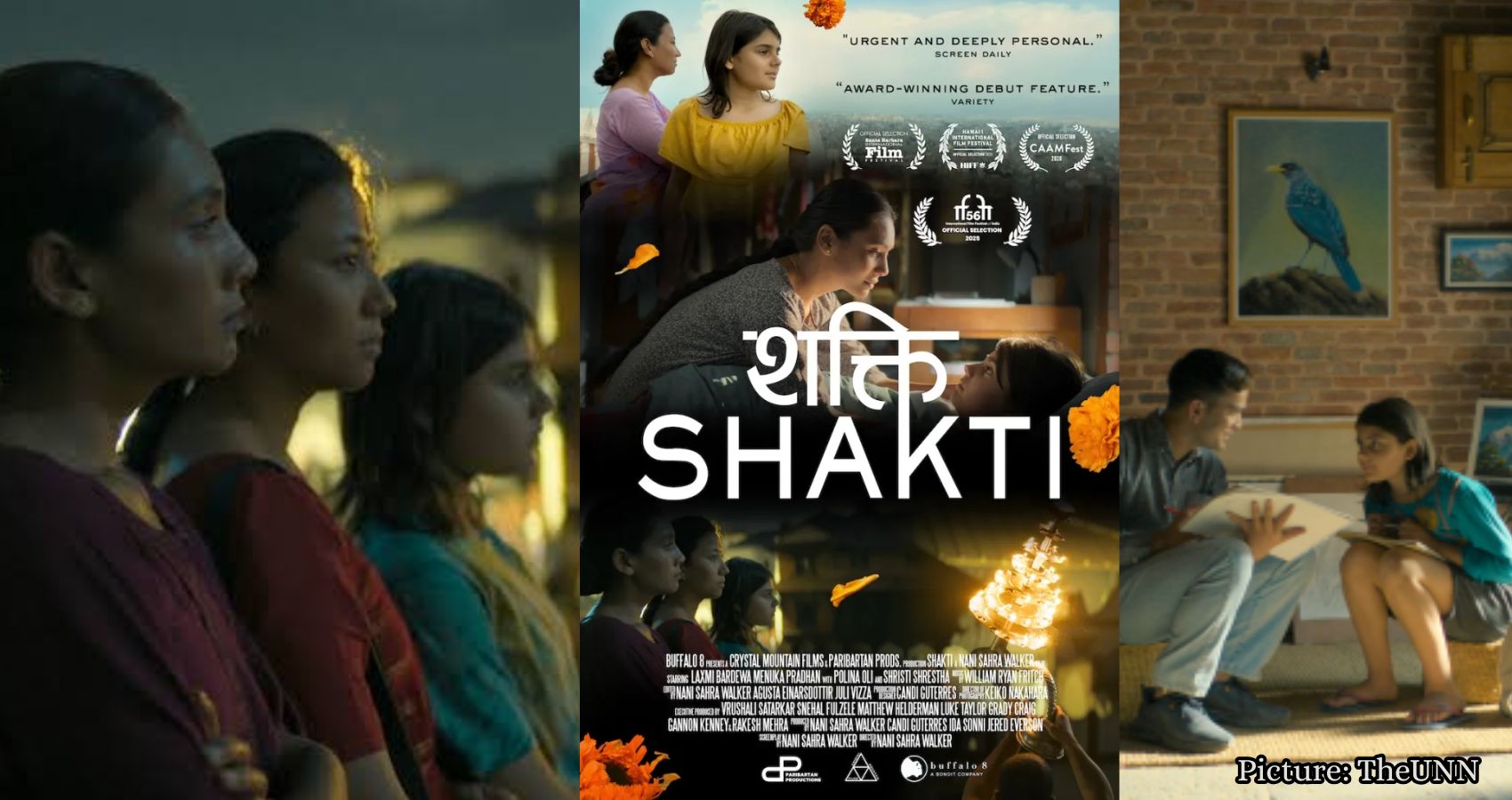
In her debut film “Shakti,” Nani Sahra Walker explores the struggles of a young mother and her daughter against the backdrop of deep-seated patriarchy in Nepal.
In the Hindu tradition, “Shakti” represents power expressed as divine feminine energy, embodying the all-powerful feminine and the source of life itself. This concept is deeply rooted in many South Asian cultures and mythologies. However, the stark contrast between this ideal and the harsh realities faced by women in society is the focus of Nani Sahra Walker’s debut fiction film, “Shakti.” The film weaves an intimate narrative centered on a young mother’s fight to protect her daughter amidst societal challenges.
Set in Walker’s birthplace of Kathmandu, Nepal, “Shakti” follows the story of eleven-year-old Lila (Polina Oli), who finds herself in trouble for stealing guavas from an orchard and defiantly refusing to apologize. As a child of mixed racial heritage—her father is American, and her mother, Durga (Laxmi Bardewa), is a Nepali Dalit—Lila is already marginalized in her society. Despite her outcast status, she lives in a bubble of innocence, unaware of how the world perceives her.
Her single mother, a janitor at the local hospital, hopes to instill discipline in Lila. However, her teacher, Ms. Joshi (Shrishti Shreshtha), recognizes Lila’s artistic potential and suggests art lessons to channel her energy. Excited by the opportunity, Lila’s mother scrapes together enough money to enroll her in art classes taught by the son of a local art gallerist.
As the story unfolds, Lila’s personality begins to change. From an outgoing, carefree tomboy, she becomes quiet, somber, and detached from her art. Concerned for her well-being, her mother and aunt fight against the institutionalized patriarchy that limits their options. The film poignantly addresses the absurdity of Nepal’s 35-day statute of limitations for reporting acts of sexual violence, a law that remained in place until 2018, all while honoring the dignity of survivors.
In an interview with India Currents, Walker discussed her journey to filmmaking, her inspirations, and the challenges faced by independent filmmakers.
“I studied philosophy and religion at Boston University,” Walker explained. “I was drawn to that particular school because it was where Martin Luther King Jr. spent a lot of time during his studies. In high school, I made films blending photography and poetry, and later, I worked in various roles in film production.”
After moving to New York City, Walker gained experience in film production and post-production, working on projects including Michael Moore’s “Fahrenheit 911.” She later returned to the Bay Area, where she established a company and continued to develop her filmmaking career.
Walker’s passion for storytelling is evident in her collaborative approach. “Filmmaking is such a team sport,” she stated. “I was fortunate to work with incredible collaborators, including my director of photography, Keiko Nakahara, who has worked on big-budget Bollywood films. She was seven and a half months pregnant while filming, which speaks to the dedication of our team.”
Walker also emphasized the importance of working with her cast, particularly the young actress Polina Oli. “It was crucial for us not to expose her to any trauma,” Walker said. “We had conversations with her and her family to ensure she felt safe and comfortable throughout the filming process.”
Auditions for the role of Lila took place over a year, with Walker traveling to Nepal multiple times. “Finding the right actress was challenging,” she noted. “Many young girls were not aware enough to embody the character, and some were scared to audition. We wanted to create a supportive environment for Polina, who ultimately proved to be a natural talent.”
Walker shared insights into the business side of filmmaking, highlighting the importance of creative control and distribution. “I learned early on to think about distribution as the first step in making a film,” she explained. “I wanted as many people as possible to see ‘Shakti’ because the ultimate goal is to make an impact.”
The inspiration for “Shakti” stemmed from Walker’s reaction to the 35-day statute of limitations for sexual violence cases in Nepal. “When I read about it, I thought it was insane,” she recalled. “I wanted to tell a story that addressed this taboo subject and create space for dialogue and healing.”
Looking ahead, Walker is developing a new project, a dramedy set in California. “I’m drawn to family stories,” she said. “As an independent filmmaker, I want to ensure that our films are not just made, but also seen and monetized effectively.”
“Shakti” is available for rent on Amazon Prime Video and is streaming for free in the U.S. and Canada on Tubi, as well as worldwide on Fawesome.
For more insights into Nani Sahra Walker’s filmmaking journey and the themes explored in “Shakti,” visit India Currents.