
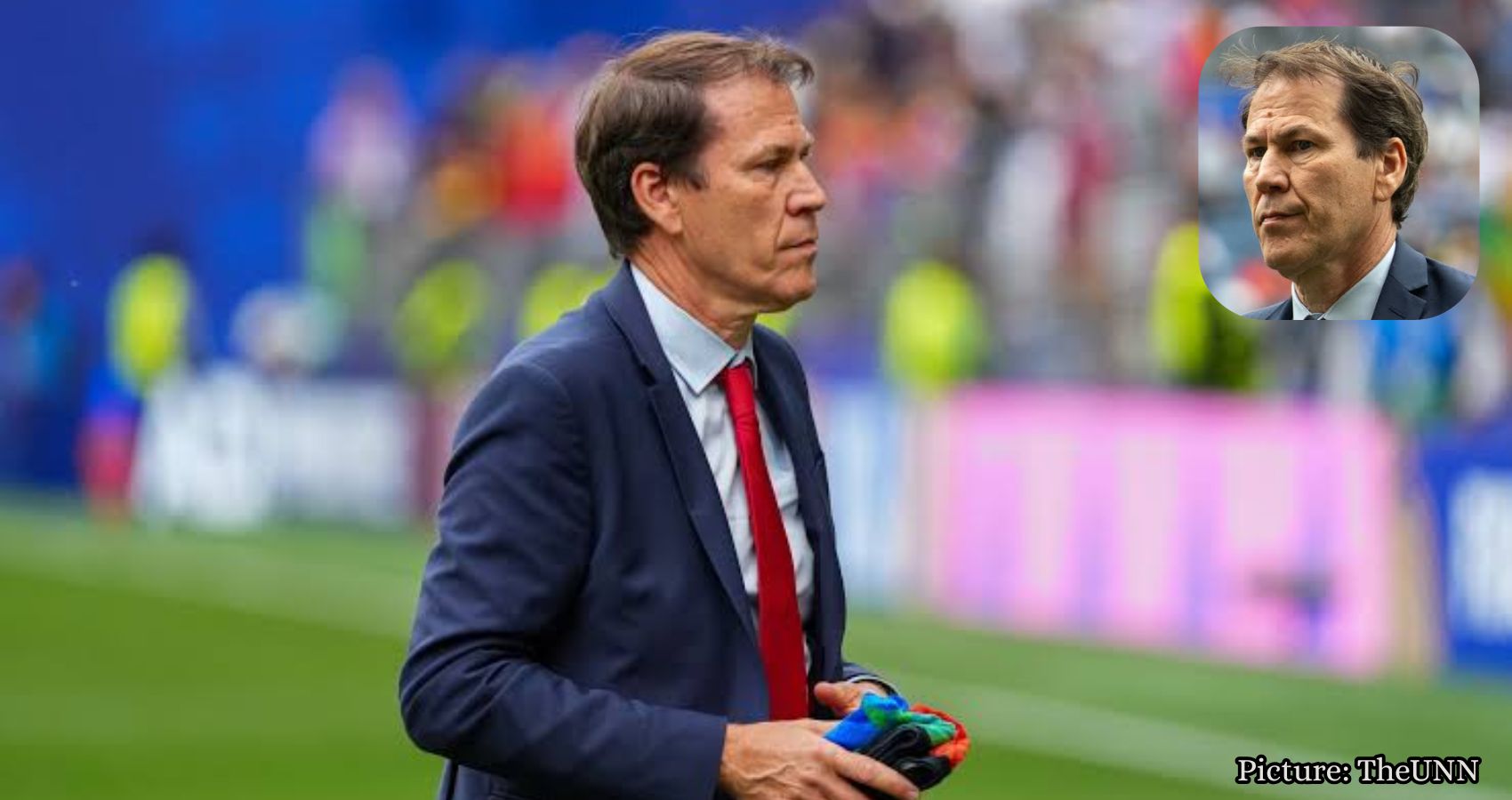
Belgium coach Rudi Garcia’s comments about Senegal during the FIFA World Cup 2026 have sparked a racism controversy, reigniting discussions on stereotypes surrounding African football.
Belgium’s coach Rudi Garcia has found himself at the center of a racism row following his comments about Senegal after a recent match in the FIFA World Cup 2026. His remarks have reignited a long-standing debate regarding stereotypes associated with African football, particularly the portrayal of African teams as physically gifted but tactically inferior.
Garcia made his controversial comments after Belgium’s dramatic comeback against Senegal. Two days later, he clarified on social media that he was referring to teams that struggle to manage a lead in high-stakes World Cup matches, asserting that his remarks could apply to teams from any region. However, critics argue that his comments tapped into a deeper history of racial stereotypes that depict Black players and African teams as instinctive yet lacking in tactical acumen.
Ben Carrington, a professor of journalism and sociology at USC Annenberg, emphasized that Garcia’s comments perpetuate harmful racialized stereotypes. He noted that such narratives suggest that African teams lack the ability to control games or themselves, drawing on colonial-era frameworks that dehumanize Black populations.
Peter Alegi, a history professor at Michigan State University and an expert on African football, expressed concern over the implications of Garcia’s remarks. He stated that Senegal’s late-game collapse could revive negative assumptions about African teams, potentially undoing the goodwill they have built over the years. Alegi referenced South Africa’s successful hosting of the 2010 World Cup as evidence of African nations’ capability to organize and influence the global game.
Research indicates that Black footballers are often stereotyped in commentary, with a focus on their athleticism and physical attributes rather than their tactical intelligence or skill. A study conducted during the 2018 World Cup revealed that 70% of praise directed at Black players centered on physical traits, while only 18% of praise for white players focused on the same attributes. In contrast, 73% of praise for white players highlighted learned skills, character, or cognitive abilities.
Matthew Hughey, a sociology professor at the University of Connecticut specializing in race and sport, noted that these stereotypes have historical roots, emerging as Black athletes began to achieve success in sports during the early twentieth century.
Similar controversies have arisen during the FIFA World Cup 2026. For instance, German pundit Bastian Schweinsteiger made comments about the unpredictability of African football before a match between Germany and Ivory Coast, which were criticized by Ivory Coast’s coach as potentially racist. Schweinsteiger defended his remarks as mere analysis of playing style.
Additionally, former Serbian footballer Rade Bogdanovic faced backlash for making racist comments about Black players during a match between Belgium and Iran. British sports journalist Leon Mann described Schweinsteiger’s comments as ignorant and rooted in stereotypes, but he also emphasized the importance of using these moments to foster dialogue and improve coverage in sports media.
FIFA has not publicly commented on the recent controversies. However, the organization has initiated efforts to combat racism in football, including the establishment of an advisory panel of former players from diverse backgrounds and educational initiatives aimed at addressing racism.
Briana Scurry, a former U.S. women’s national team goalkeeper and current member of FIFA’s Players’ Voice Panel, has spoken out about the stereotypes faced by Black players. Scurry, who made a pivotal penalty kick save during the 1999 Women’s World Cup, expressed frustration over how her achievements were often overshadowed by discussions of her athleticism rather than her intelligence or skill.
She remarked that the narrative surrounding Black players often reduces their contributions to mere athleticism, failing to acknowledge their intelligence and technical abilities. Scurry noted that she sees parallels between how her performance was portrayed and how Black players are still depicted in the media today.
Carrington reiterated that while FIFA has made strides in addressing racism, there remains significant work to be done. He called for ongoing anti-racism education and campaigns to ensure that football is genuinely inclusive and representative of diverse populations.
The recent comments by Rudi Garcia and the ensuing discussions highlight the persistent stereotypes that continue to affect perceptions of African football. As the tournament progresses, it is crucial for stakeholders in the sport to engage in meaningful conversations about race and representation in football.
According to Reuters, the ongoing dialogue surrounding these issues is essential for fostering a more equitable environment in the world of sports.