
U.S. President Donald Trump claimed a foiled drone attack on Indian ships in the Strait of Hormuz, prompting India to protest U.S. naval actions that have endangered Indian seafarers.
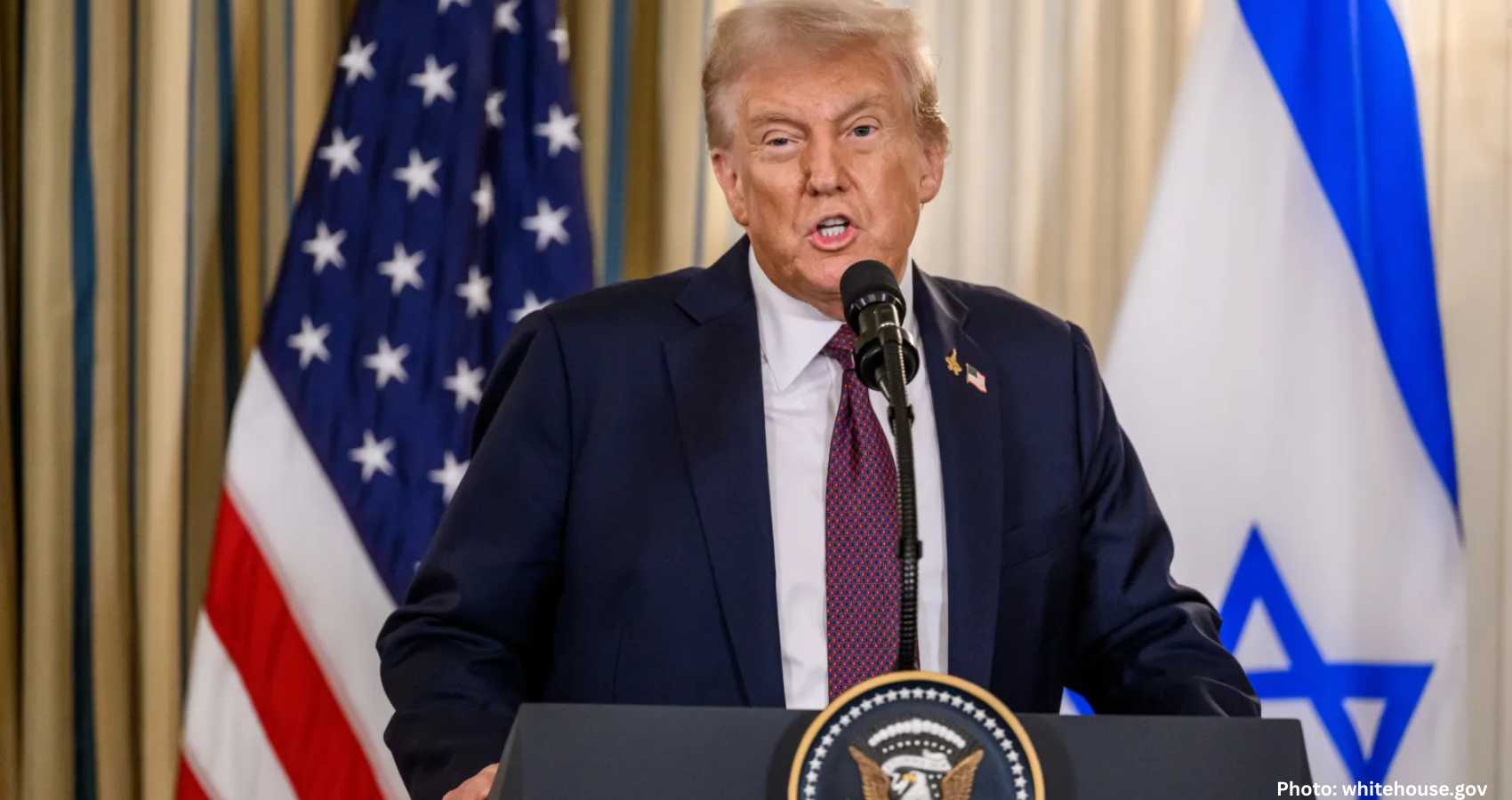
In a recent statement, U.S. President Donald Trump announced that an attempted drone attack on Indian ships departing from the Strait of Hormuz had been thwarted. He described the alleged incident as “totally unacceptable,” raising alarms about the safety of commercial shipping in the Gulf region.
Trump made these comments on June 12 via a post on Truth Social, stating that the drone attack against “Indian Ships leaving the Hormuz Strait” had been “totally rebuffed.” However, he did not specify which vessels were involved nor provided any evidence to support his claim. As of now, there has been no immediate response from Iranian authorities regarding the incident.
These remarks come at a time of heightened concerns regarding maritime security in the region. In response, India has lodged a formal diplomatic protest with the United States over recent attacks on commercial vessels that were carrying Indian seafarers.
On the same day, India summoned U.S. Charge d’Affaires Jason Meeks for the second time within a week to express its strong objections to U.S. naval forces’ actions in the Gulf of Oman, which included an incident that resulted in the deaths of three Indian nationals.
The Ministry of External Affairs (MEA) of India issued a sharply worded statement, voicing its concerns over the ongoing attacks on vessels carrying Indian mariners. “A strong protest was lodged regarding the continuing attacks by U.S. naval forces on commercial vessels carrying Indian mariners in the Gulf of Oman, which have already resulted in the tragic and avoidable loss of three Indian lives,” the MEA stated.
The ministry emphasized that the use of lethal force against civilian shipping is “unacceptable” and undermines the safety, security, and stability of international maritime commerce.
This diplomatic protest coincided with the U.S. acknowledgment of its military action against the MT Jalveer, a Guinea-Bissau-flagged vessel that was reportedly carrying 20 Indian crew members. According to U.S. Central Command (CENTCOM), a U.S. aircraft fired two Hellfire missiles into the vessel’s engine room after the crew allegedly failed to comply with directives from American forces. CENTCOM stated that the tanker was attempting to transport Iranian oil in violation of an ongoing U.S. naval blockade.
The attack on the MT Jalveer followed earlier incidents involving Palau-flagged vessels, MT Settebello and MT Marivex. Tragically, three Indian seafarers lost their lives aboard the MT Settebello. Fortunately, all 20 crew members aboard the MT Jalveer were rescued safely with assistance from Omani authorities.
In response to India’s protest, a U.S. State Department official indicated that Washington is maintaining communication with New Delhi regarding the situation. “The Department of State is in direct contact with the Indian government regarding this matter,” the official stated.
India has called for an immediate cessation of attacks on commercial vessels and reiterated that dialogue and diplomacy are the most effective means to restore peace and stability in the region. The Indian government has also stressed the importance of ensuring unimpeded access through the Strait of Hormuz in accordance with international law.
As concerns mount over the safety of Indian crews operating in conflict-prone waters, the Indian government is coordinating with the MEA, Indian Navy, overseas missions, and other stakeholders to support seafarers. The Seafarers Welfare Fund Society has pledged to provide Rs 10 lakh each to the families of the three deceased sailors. Additionally, authorities have placed maritime agencies on heightened alert and have advised seafarers and vessel operators to exercise maximum caution in their operations.
According to IANS, the situation continues to evolve as both nations navigate the complexities of maritime security in the region.