
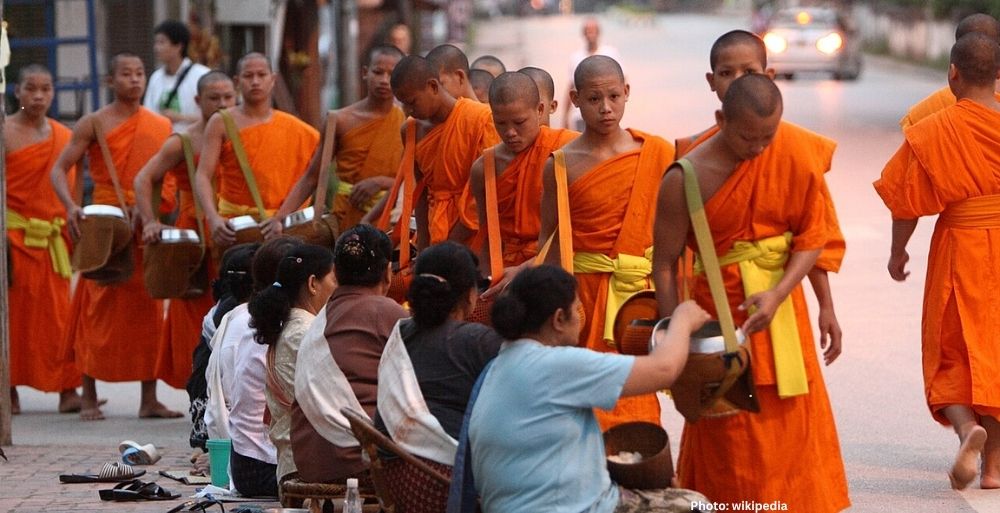
The Vatican’s Dicastery for Interreligious Dialogue calls for collaboration between Buddhists and Christians to foster peace ahead of Vesak 2026, emphasizing compassion and inner transformation.
VATICAN CITY — In anticipation of the Buddhist festival of Vesak, the Vatican’s Dicastery for Interreligious Dialogue has released its annual message directed at Buddhist communities around the globe. This year, the message urges both Christians and Buddhists to collaborate in pursuit of what it describes as an “unarmed and disarming peace.”
Signed by Cardinal George Jacob Koovakad, the Prefect of the Dicastery, and Monsignor Indunil Janakaratne Kodithuwakku Kankanamalage, the Dicastery’s Secretary, the message conveys warm greetings for the upcoming sacred celebration while reflecting on the pressing need for peace in a world marked by conflict, division, and distrust.
Vesak is one of the most significant observances in the Buddhist calendar, commemorating the birth, enlightenment, and Nirvana of Siddhartha Gautama, who is revered as the Buddha. The celebration varies across Buddhist traditions, encompassing Theravada communities in Sri Lanka and Southeast Asia, as well as Mahayana and Vajrayana practices found throughout East Asia and the Himalayas. Regardless of the specific customs, Vesak serves as a shared recognition of the Buddha’s life and his enduring spiritual legacy.
In its message, the Vatican Dicastery emphasizes that peace is more than just a political objective or the mere absence of armed conflict; it begins within the human heart. Citing Pope Leo XIV’s message for the 2026 World Day of Peace, it notes, “Peace exists; it wants to dwell within us. It has the gentle power to enlighten and expand our understanding; it resists and overcomes violence.” The Dicastery warns that even fragile peace must be safeguarded “like a small flame threatened by the storms of hatred and fear.”
In light of ongoing conflicts, rising ethno-religious nationalism, and the “manipulation of religion,” the text cautions that humanity risks falling into a “dangerous cycle of suspicion and hostility.” It asserts that religious traditions bear a special responsibility to heal divisions rather than exacerbate them. The message states that “goodness is truly disarming,” capable of disrupting “the cycle of suspicion” and creating “paths where none seemed possible.”
Among the Buddhist texts referenced in the Vatican’s message is verse five of the Dhammapada, a widely regarded collection of the Buddha’s teachings. This verse states, “Hatred is never appeased by hatred; by non-hatred alone is hatred appeased.” This reflects a fundamental concept in Buddhist philosophy: that anger perpetuates suffering, while compassion and self-control can break this cycle. Additionally, the message cites the Metta Sutta, an essential text on loving-kindness, which advocates for universal benevolence and selfless love towards all beings.
“Let none deceive another or despise any being,” the Metta Sutta emphasizes, urging believers to cultivate compassion even towards those perceived as enemies. This text, traditionally recited in both monasteries and homes, plays a significant role in Buddhist prayer and meditation.
The Dicastery’s message juxtaposes these Buddhist teachings with the words of Jesus Christ found in the Gospel of Matthew, where he instructs followers to “Love your enemies and pray for those who persecute you,” and declares, “Blessed are the peacemakers.” This highlights what the Dicastery perceives as a profound spiritual connection between Buddhism and Christianity. According to the message, both traditions converge in their vision of peace as a lived experience—one that first disarms hearts before it disarms hands.
The Vatican emphasizes that peace is not merely an external imposition but requires profound inner transformation capable of reshaping societal dynamics. It stresses that achieving this peace necessitates more than symbolic gestures or diplomatic rhetoric. Religious leaders are called to become “authentic partners in dialogue and true agents of reconciliation,” while followers are encouraged to assume the role of “artisans of peace.”
This call to action is particularly pressing in an era when religion can be misused to justify exclusion or violence. The Dicastery warns against complicity through silence and indifference, encouraging communities to actively become spaces “where hostility is overcome through encounter, where justice is practiced, and where forgiveness is cherished.”
In conclusion, the message underscores the importance of the internal aspect of peace. Echoing themes from both Buddhist meditation practices and Christian traditions of prayer, it identifies silence, contemplation, patience, and daily acts of kindness as foundational to nurturing peace. The Dicastery asserts that peace is cultivated not solely through international negotiations or public declarations, but also through ordinary human interactions—marked by a refusal of vengeance, the courage to forgive, and a commitment to hope, even when reconciliation seems unattainable. “Peace is not an illusion or a distant ideal,” the message declares, “It is a real possibility already placed within our reach, waiting to be welcomed and shared.”
In closing, the Dicastery for Interreligious Dialogue expresses its hope that Buddhists and Christians will increasingly unite as “witnesses of this disarming peace” capable of healing wounds, restoring fractured relationships, and opening new horizons for humanity, according to GlobalNet News.