
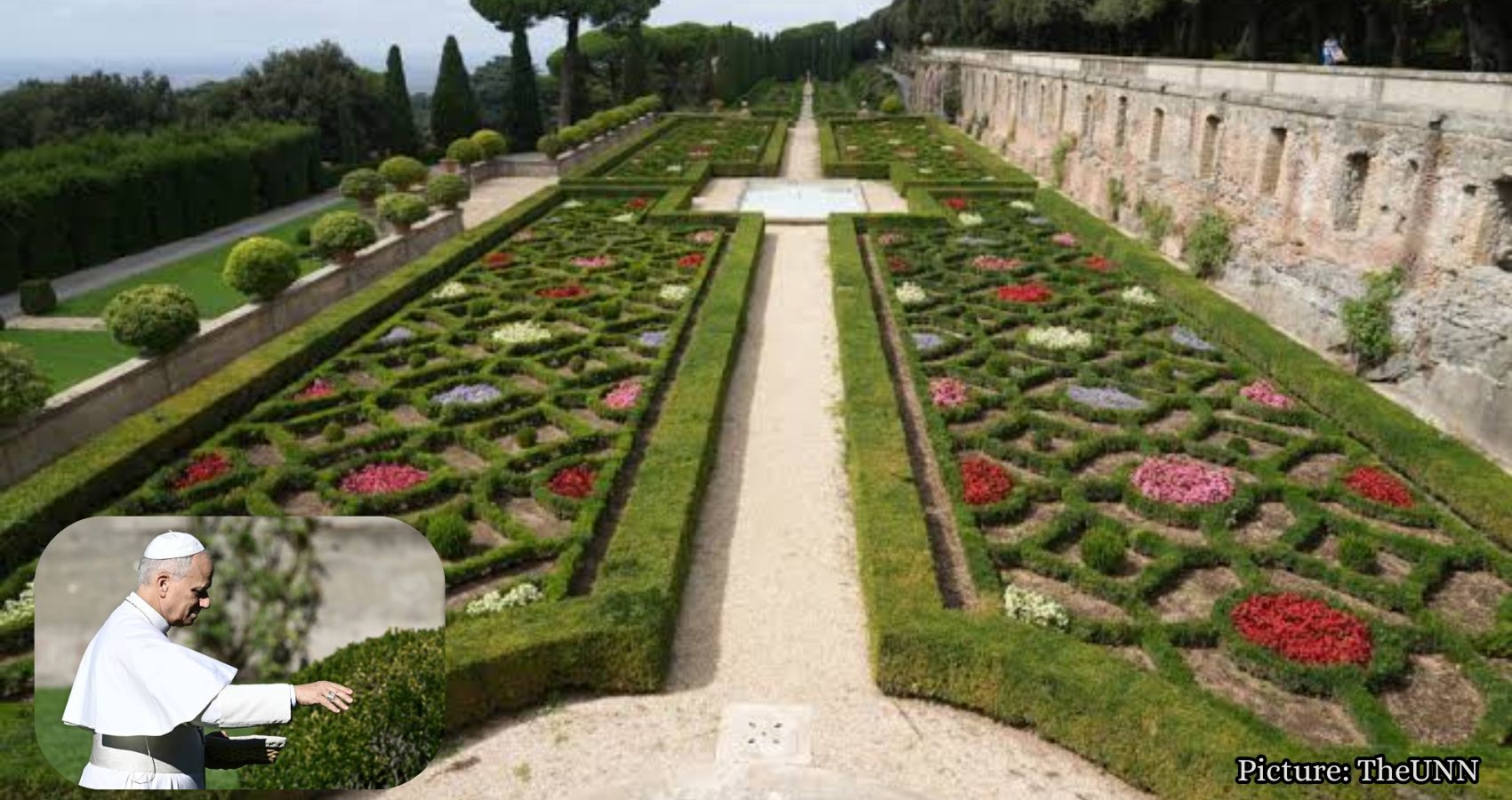
The Vatican Gardens have transitioned to a fully organic cultivation system, reflecting Pope Francis’ commitment to environmental stewardship as outlined in his encyclical, Laudato si’.
The Vatican Gardens’ vegetable garden, located next to the Mater Ecclesiae monastery, has officially transitioned to a fully organic cultivation system. This significant change underscores Pope Francis’ dedication to environmental stewardship, a commitment prominently featured in his encyclical, Laudato si’.
The Vatican City State announced that the vegetable garden will now be managed entirely through organic practices. This initiative aligns with the principles articulated in Laudato si’, which emphasizes the importance of caring for the environment and respecting natural ecosystems.
The transformation of the garden’s cultivation methods marks a notable shift in agricultural practices within the Vatican. Rather than focusing solely on maximizing yield, the new approach prioritizes nurturing the natural growth cycles of plants and maintaining soil health. This change reflects a broader commitment to sustainability and ecological responsibility.
Pope Francis’ emphasis on environmental stewardship was notably reinforced by Pope Leo XIII last November during a gathering of agronomists and forestry experts. He urged that their work should be viewed as an act of charity toward the Earth, framing it as a sacred gift rather than a mere commodity. He articulated a vision where responsible cultivation becomes a participation in God’s creative work.
The garden’s historical practices included the use of manure sourced from the Pontifical Villas in Castel Gandolfo. Currently, the garden employs only certified pelletized fertilizers, selected based on seasonal requirements and the specific needs of the crops. This method aims to minimize reliance on chemical plant protection products, with pest control maintained at levels that do not threaten the crops.
Each agricultural intervention is meticulously documented in a field logbook, ensuring compliance with regulatory standards for certified treatments. Natural substances used in the garden do not require such documentation. The fertility of the soil is preserved through techniques like crop rotation, utilizing legumes such as green beans to naturally enrich nitrogen levels.
This year, the garden is also testing a seaweed-based fertilizer aimed at enhancing tomato growth. Seedlings are procured from external sources and pre-treated using natural methods to mitigate the risk of plant diseases that could jeopardize the entire harvest. Plans are underway for an on-site nursery and greenhouse to further support cultivation efforts.
The garden is overseen by the Gardens and Environment Service, led by forestry expert Stefano Giampaolo. Gilberto Bianchi, an experienced gardener, tends to the nearly 400-square-meter garden, which spans four terraces. Bianchi is mentoring a group of young assistants to ensure the continuity of agricultural knowledge, preserving traditional practices reminiscent of historical monastic communities.
The religious sisters residing at the monastery contribute to the garden’s operations by advising on crop choices based on seasonal viability and land capacity. Notably, irrigation is conducted manually, preserving a hands-on approach to cultivation.
The garden’s cultivation calendar is closely aligned with seasonal changes, producing a variety of crops such as garlic, basil, chili peppers, citrus fruits, and pumpkins, with a harvest cycle that culminates in May. The summer months present challenges due to heat, impacting the growth of tomatoes, eggplants, and various beans. This year, the nuns requested the introduction of kiwi plants, expanding the garden’s diversity.
Among the garden’s notable features are the citrus trees, which are approximately 150 years old and have undergone various grafting processes. These trees yield fruit that is free from chemical treatments, making the peels edible. The nuns utilize this harvest to create jams, candied peels, and baked goods, some of which are offered to guests and sold to support charitable initiatives.
The garden’s legacy extends back to the Middle Ages, tracing its origins to the papacy of Nicholas III Orsini, who relocated the papal residence to the Vatican. He established a viridarium, or pleasure garden, to fulfill the household’s agricultural needs. This historical vocation persists today, maintaining its role alongside the monastery founded by Pope John Paul II between 1992 and 1994, designed to house a community of cloistered nuns dedicated to prayer for the papacy.
Notably, the cultivation of this garden has been described as a form of prayer through labor, a sentiment expressed by Benedictine Abbess Maria Sofia Cichetti in 2009. The space also served as a sanctuary for Pope Emeritus Benedict XVI, who enjoyed walking through the garden, reflecting its significance within the Vatican’s spiritual and communal life.
According to GlobalNet News, the Vatican’s commitment to organic agriculture not only enhances the quality of its produce but also serves as a model for sustainable practices worldwide.