
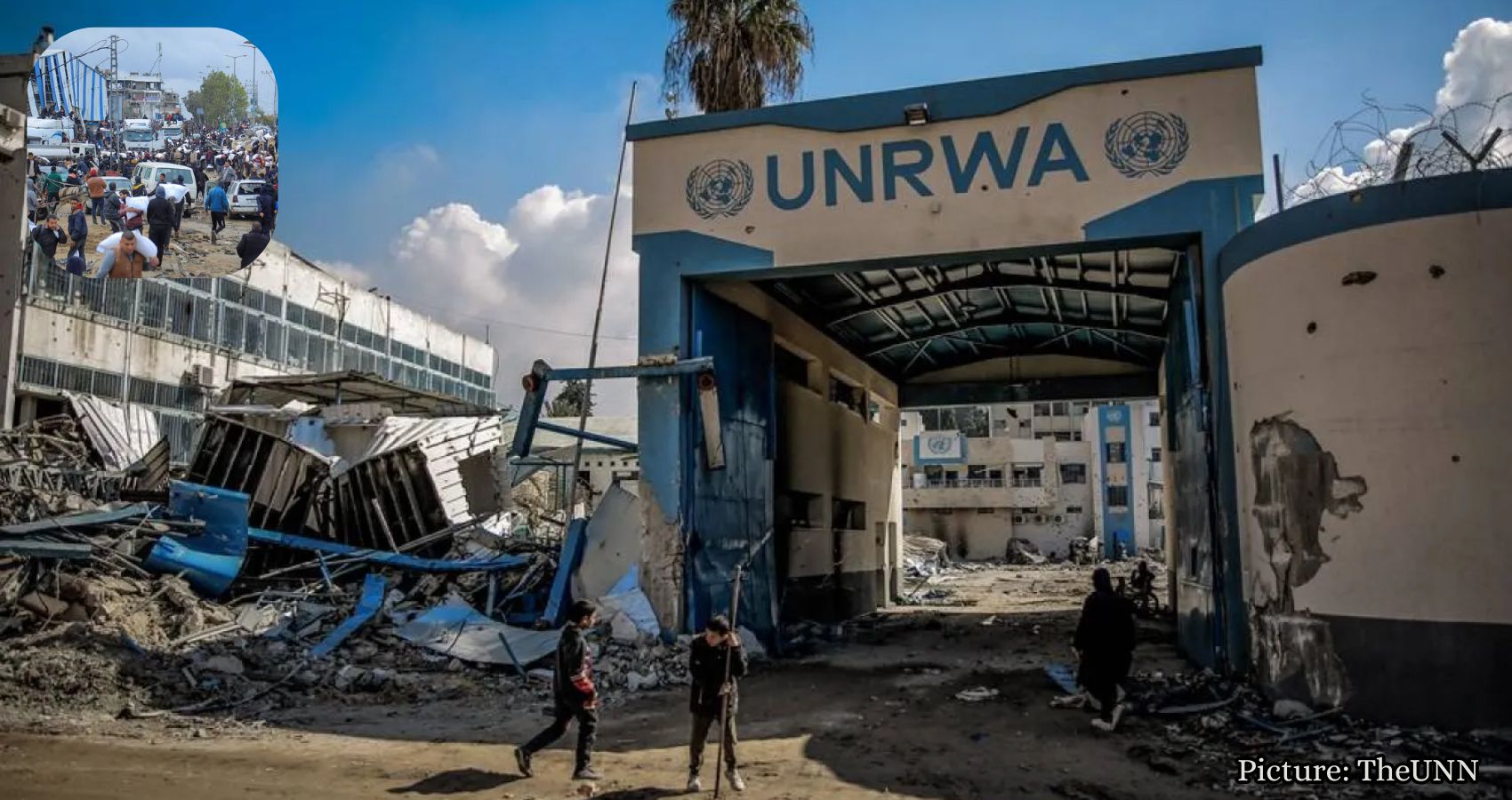
The United Nations defends funding for the UN Relief and Works Agency amid U.S. claims of Hamas infiltration, urging donors to support humanitarian efforts over alternative governance models.
The United Nations (UN) has come under scrutiny as the United States calls for a reevaluation of funding for the United Nations Relief and Works Agency for Palestine Refugees in the Near East (UNRWA). U.S. Ambassador Jeff Bartos accused the agency of being compromised by Hamas and urged international donors to redirect their support toward the Board of Peace, a U.S.-led initiative aimed at fostering stability in the region.
During UNRWA’s annual pledging conference held in early July, Bartos expressed frustration with what he described as a repetitive cycle of funding without tangible results. He stated, “Doing the same thing over and over, expecting a different result is the definition of insanity.” He criticized the agency for its perceived failure to condemn Hamas while continuing to condemn Israel, calling it a “subsidiary of Hamas.”
Bartos specifically targeted UNRWA schools in Gaza, alleging that they indoctrinate children with anti-Semitic sentiments and glorify terrorism. He referenced claims that some UNRWA employees were involved in the Hamas-led attack on Israel on October 7, 2023. “You can choose to fund incitement, terrorism and stagnation, or you can choose to fund the Board of Peace,” he said, advocating for a shift in funding priorities that would promote peace and development in Gaza.
The Board of Peace was established under former President Donald Trump’s Gaza plan, designed to oversee transitional governance and long-term development in collaboration with a Palestinian technocratic administration. The U.S. administration argues that this approach would provide a more effective alternative to UNRWA by ensuring aid is directed toward accountable governance and economic recovery.
In response to the U.S. position, UN spokesman Stéphane Dujarric defended UNRWA’s mission and its historical role in providing humanitarian assistance. He noted that the agency operates under a mandate from the UN General Assembly and has taken significant steps to address allegations of infiltration by terrorist organizations. “UNRWA doesn’t operate through a sort of immaculate conception,” Dujarric stated during a press briefing. “It has a very important role to play on the humanitarian front.”
Dujarric emphasized that the Security Council resolution supporting the Board of Peace also calls for the UN to deliver humanitarian assistance and lead activities in Gaza, asserting that UNRWA is integral to this system.
The U.S. stance on UNRWA contrasts sharply with that of several European nations. At the same pledging event, the United Kingdom announced a £23 million contribution to the agency, with British Ambassador James Kariuki labeling UNRWA as “indispensable” for providing essential services to Palestinian refugees across Gaza, the West Bank, Syria, Lebanon, and Jordan.
France also reaffirmed its support for UNRWA, with its representative stating that the agency continues to deliver crucial assistance despite facing increasing challenges. France has contributed €123 million to UNRWA in 2023 and plans to announce its 2026 contribution soon.
The French representative acknowledged the seriousness of the allegations against UNRWA and indicated that the agency is implementing recommendations aimed at enhancing neutrality and transparency. France supports a gradual transfer of UNRWA’s responsibilities to strengthen Palestinian institutions as part of a broader political resolution.
The ongoing funding debate is further complicated by demands from UN Watch, a Geneva-based watchdog, for UN Secretary-General António Guterres to waive the immunity of former UNRWA Commissioner-General Philippe Lazzarini. The organization claims to have provided evidence of UNRWA employees allegedly affiliated with Hamas and other terrorist groups, suggesting that this warrants an independent criminal investigation.
Hillel Neuer, executive director of UN Watch, stated that the organization has informed Lazzarini about the presence of individuals with ties to terrorism within UNRWA’s ranks. Neuer emphasized that the issue is not isolated to a few individuals but rather indicative of a systemic problem. He argued that waiving Lazzarini’s immunity would not imply guilt but would allow for a thorough investigation into the allegations.
When asked whether Guterres would consider waiving Lazzarini’s immunity, Dujarric did not provide a direct answer. He reiterated that UN Watch is not a judicial authority and emphasized the UN’s commitment to cooperating with investigations by national authorities.
UN Watch contends that the immunity granted to UN officials is intended to protect the interests of the United Nations, not to shield individuals from accountability. The organization argues that immunity should be waived when it obstructs justice without compromising the UN’s mission.
As the debate over UNRWA’s funding continues, the agency remains a focal point in discussions about humanitarian assistance and governance in the region. The contrasting views on its role highlight the complexities of international aid and the challenges of addressing the ongoing conflict.
For further details, see Fox News.