
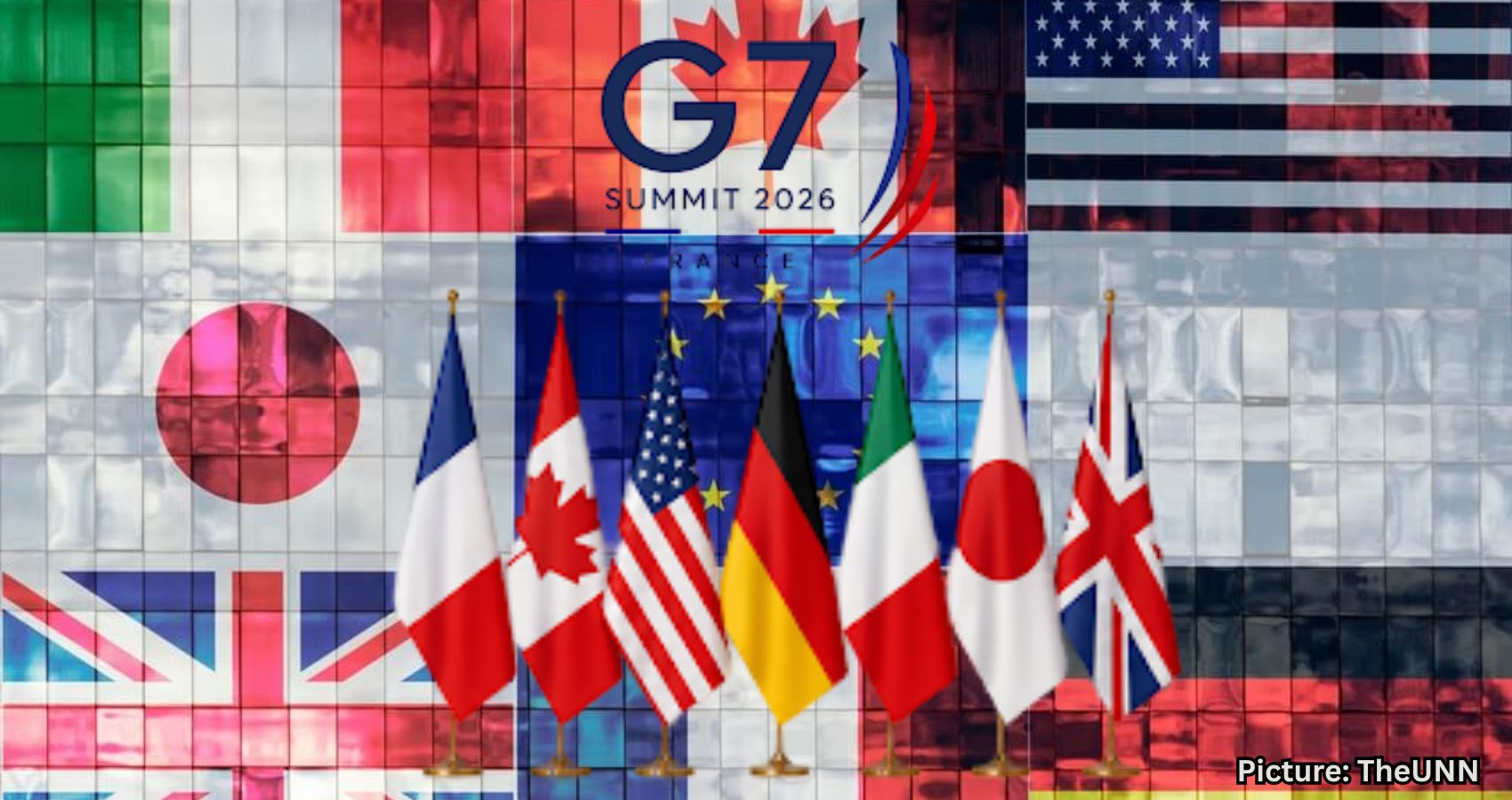
The Group of Seven has transformed from an economic forum into a pivotal platform addressing a wide array of global challenges, including security, climate change, and economic stability.
The Group of Seven (G7), originally established to tackle economic challenges among industrialized nations, has evolved into a crucial platform for addressing a variety of global issues. Since its inception in the mid-1970s, the G7 has undergone significant transformation, adapting to the changing international landscape marked by geopolitical turmoil and economic uncertainty.
The roots of the G7 can be traced back to a period of global change, particularly during the 1960s. On May 22, 1964, then-President Lyndon B. Johnson delivered his ‘Great Society’ speech in Michigan, emphasizing the need for abundance and liberty for all. This call for social reform coincided with a time of unrest in the United States, characterized by anti-Vietnam War protests and civil rights movements. The formation of the G7 in the 1970s emerged from this backdrop, as the Non-Aligned Movement (NAM) began mobilizing decolonized societies, leading to shifts in economic leadership away from a singular focus on the United States.
The G7 emerged from the necessity for industrialized nations to collaborate in response to economic crises. The first World Economic Summit was convened in 1975 by French President Giscard d’Estaing and West German Chancellor Helmut Schmidt, bringing together leaders from the United Kingdom, Italy, Japan, and the United States. This summit marked a pivotal moment as it addressed the financial challenges posed by the 1973 oil crisis, which had disrupted global economies and highlighted the vulnerabilities of the Western world.
By 1976, Canada joined the group, officially establishing the G7. The organization’s initial focus was firmly on economic coordination, responding to the financial crises prevalent in the 1970s and beyond. This period also saw the rise of the New International Economic Order (NIEO), where developing nations, led by the Group of 77 and the NAM, pushed for reforms in global financial institutions like the World Bank and the International Monetary Fund to better reflect the needs of newly independent states.
Throughout the 1980s, the G7 began to address issues beyond economic challenges, acting as a platform for major industrialized countries to coordinate responses to geopolitical conflicts. Key events, such as the Soviet invasion of Afghanistan and the Falklands War, prompted the G7 to take a more active role in global security matters. In 1982, as Israel invaded Lebanon, the G7 expressed its discontent, illustrating its potential to influence international politics.
By 1990, during the lead-up to Iraq’s invasion of Kuwait, the G7 demonstrated its capacity to exert economic pressure in support of international norms. Following the end of the Cold War, the G7 seized the opportunity to redefine its role, even inviting the Soviet Union to participate in summits. Mikhail Gorbachev’s presence at the G7 meeting in 1991 signified a significant shift in the organization’s dynamics.
The dissolution of the Soviet Union further integrated Russia into the G7 framework, with Boris Yeltsin attending multiple summits. This collaboration aimed to assist Russia in its transition to a market economy, with the G7 providing substantial economic assistance. In 1998, Russia’s formal inclusion transformed the G7 into the G8, reflecting a broader commitment to global economic governance.
In recent years, the G7’s role has become particularly pronounced in response to contemporary global challenges, most notably following Russia’s military actions in Ukraine. After the annexation of Crimea in 2014, the G8 expelled Russia, reverting to the G7 format. Since then, the G7 has positioned itself as a crucial forum for addressing pressing global issues, including climate change, pandemic preparedness, and energy security.
The 52nd G7 summit held in France from June 15-17, 2023, saw participation from global leaders, including Indian Prime Minister Narendra Modi. Key topics of discussion included the ongoing war in Ukraine, the U.S.-Iran nuclear deal, global economic imbalances, artificial intelligence, and the debt burdens faced by developing countries. These discussions underscore the G7’s commitment to collective action in an increasingly interconnected world.
As the international community navigates complex supply chain disruptions, including those stemming from the U.S.-Israel conflict and tensions in the Strait of Hormuz, the G7 continues to provide a platform for dialogue and coordination. The inclusion of additional countries in discussions reflects an understanding that global challenges require multifaceted responses. The G7’s informal meetings facilitate interactions that often lack the flexibility of traditional international organizations like the United Nations.
In conclusion, the G7 remains a vital component of the global economic and political landscape, adapting to new challenges while maintaining its focus on collective governance. As it celebrates decades of evolution, the G7’s ability to address pressing global issues will be essential for ensuring stability and continuity in an ever-changing world order, according to GlobalNet News.