
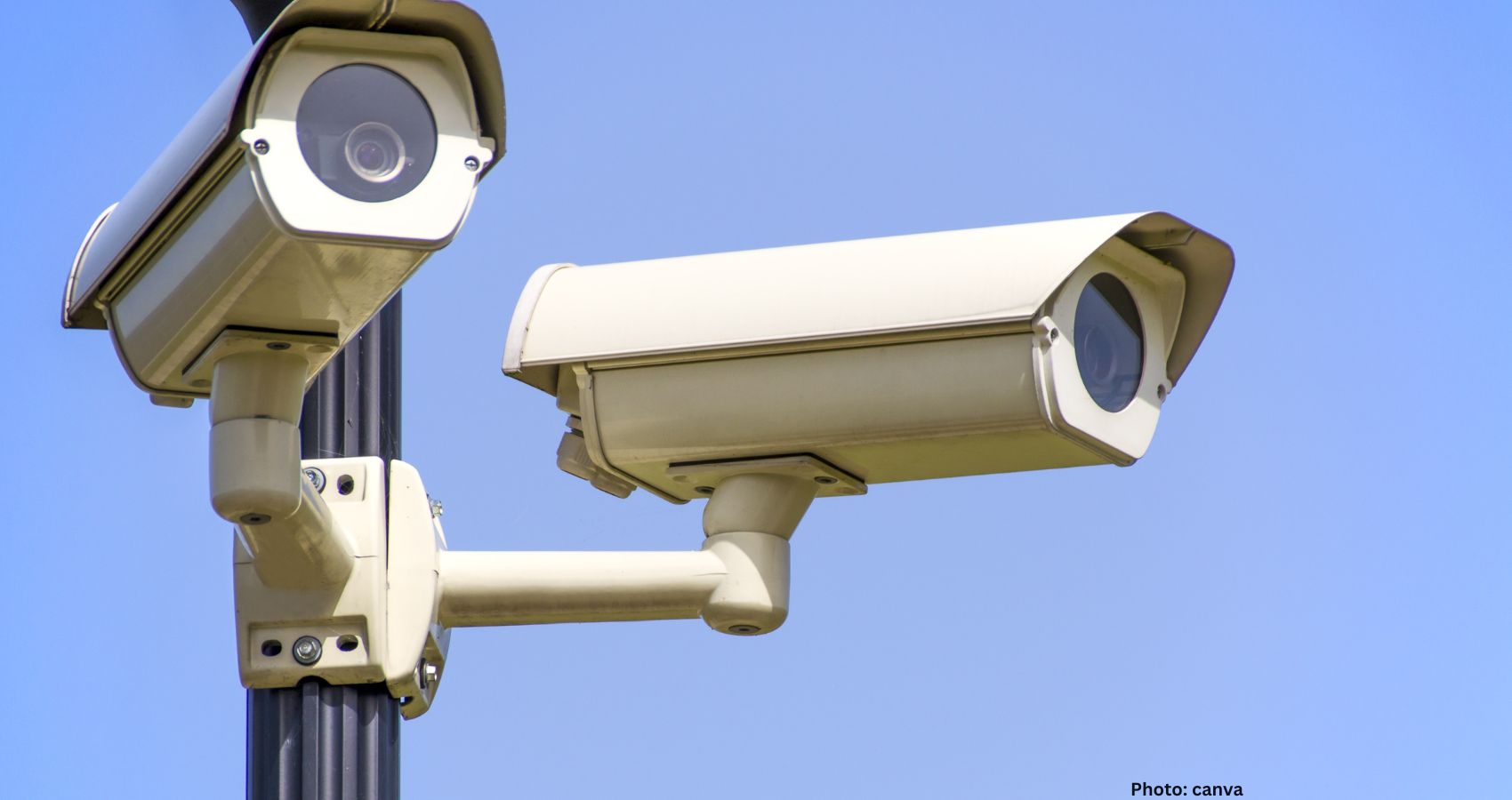
The expansion of automated license plate readers (ALPRs) across the U.S. raises significant privacy concerns, prompting debates over their legality and impact on constitutional rights.
Automated license plate readers (ALPRs) have rapidly proliferated across the United States, becoming one of the most prevalent surveillance tools in the country. These cameras, which scan vehicles during daily commutes, record vehicle sightings and feed searchable databases that can connect searches across different jurisdictions when agencies choose to share data.
While recent court rulings have upheld certain ALPR networks, they have left open the question of whether a more extensive and revealing system could violate constitutional protections. ALPRs are typically small, solar-powered cameras mounted on poles, buildings, or police vehicles. They capture and record the movements of millions of drivers each day.
Flock Safety, a leading vendor in the ALPR market, has gained significant traction among law enforcement, municipalities, and businesses in recent years. According to the American Civil Liberties Union (ACLU), there are estimated to be between 80,000 and 100,000 Flock cameras deployed nationwide. Flock claims to operate in over 6,000 communities, collaborating with more than 1,000 businesses and over 5,000 law enforcement agencies, resulting in billions of vehicle scans each month.
ALPRs function by photographing every passing vehicle, capturing details such as license plate numbers, make, model, color, and distinctive features like roof racks, bumper stickers, and scratches. Flock refers to this data as a “vehicle fingerprint.” The information is then uploaded to a searchable database that can be shared with other agencies, often without a warrant.
Privacy advocates, online creators, and concerned citizens have raised alarms about the implications of this technology. They argue that the issue is not merely the capture of individual photographs but the aggregate data that can reconstruct a person’s movements, associations, and routines over time. This creates a detailed mosaic of an individual’s life without the need for a warrant.
The Electronic Frontier Foundation has reported instances of Flock audit logs revealing searches linked to protest activities. Additionally, there have been allegations of misuse, including cases where officers conducted searches to track personal acquaintances or partners. There have even been instances where drivers were stopped and held at gunpoint due to inaccurate plate scans.
Despite these concerns, law enforcement agencies argue that ALPRs enhance their ability to solve crimes efficiently. Police departments and Flock maintain that license plates are displayed in public, meaning that officers can see the same information as any bystander. They assert that the technology aids in solving over a million investigations annually, citing data retention limits, user accounts, and audit logs as safeguards.
Legally, courts have generally ruled that there is no reasonable expectation of privacy regarding movements while traveling in an automobile on public roads, especially with license plate information that is publicly visible. In March 2026, the Fifth Circuit Court of Appeals ruled in United States v. Elijah Porter that the use of an LPR system did not constitute a Fourth Amendment search. The court noted that the system, which comprised around ten cameras, provided only periodic information about a person’s movements, rather than a comprehensive picture.
In a pending case before the Fourth Circuit Court of Appeals, Schmidt v. City of Norfolk, two plaintiffs have argued that the city’s network of 176 cameras, which retains images for 21 days, allows police to retrace residents’ movements without a warrant. A federal judge granted summary judgment to the city, concluding that the camera network did not reveal enough of the plaintiffs’ movements to constitute a Fourth Amendment search. However, the judge acknowledged that at some point, ALPR surveillance technology could become intrusive enough to cross constitutional privacy boundaries.
In a related development, the Supreme Court recently ruled in Chatrie v. United States that police conduct a Fourth Amendment search when they obtain a person’s Google Location History. Although this case involved cell phone data rather than license plate records, critics of ALPR technology argue that the Chatrie decision strengthens the case against the constitutionality of maintaining a searchable archive of an individual’s past movements.
While cell phones can track a person continuously, ALPR systems are typically fixed at static locations, which complicates the legal landscape surrounding their use. In light of these ongoing debates, Rep. Tim Burchett (R-Tenn.) has introduced the “Protection Against Mass Surveillance Act.” This proposed legislation aims to prohibit the federal government from purchasing or using mass tracking tools and to prevent states from using federal funding for similar systems. Burchett argues that these cameras represent warrantless surveillance tools that violate the Fourth Amendment, emphasizing that Americans should not have to choose between safety and liberty.
As the discussion surrounding ALPRs continues, the balance between public safety and individual privacy remains a contentious issue in the United States, with advocates on both sides of the debate weighing in on the implications of this technology.
According to Fox News.