
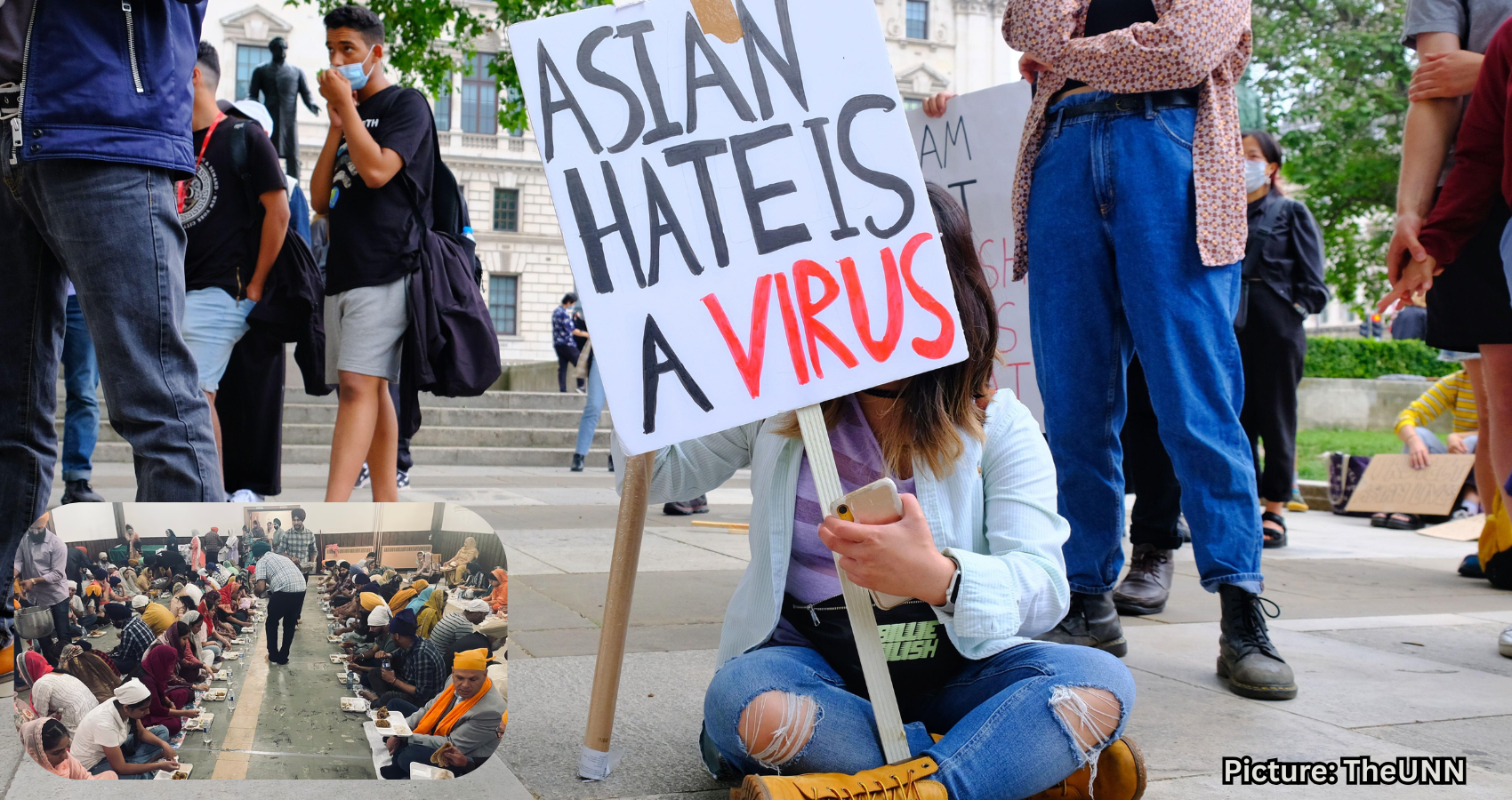
Anti-South Asian hate has surged online and in-person, particularly affecting California’s Sikh trucking community amid new regulations and rising racial bias.
California’s Sikh trucking community is facing increasing hostility, particularly online, as recent policy changes and incidents have exacerbated anti-South Asian sentiment. A TikTok video uploaded by Dave “Rana” Laut on April 29, 2025, begins with the traditional Sikh greeting “Sat Sri Akal” before addressing a significant executive order from the President mandating that all commercial license holders must demonstrate proficiency in English. Laut, who owns FBT Inc., a trucking company based in Bakersfield, California, and serves as President of the Bakersfield Trucking Association, has been using social media to inform his community about these changes.
Since 2024, Laut has been producing educational videos aimed at Sikh truck drivers, highlighting recent Department of Homeland Security (DHS) policy updates that have led to a wave of commercial driving license (CDL) cancellations. These new English-language proficiency requirements have disproportionately affected the Sikh community, which is heavily represented in the trucking industry.
In 2025, two accidents involving semi-trucks driven by Sikh drivers in Florida and Los Angeles drew national attention, leading to a spike in racial bias against the Sikh trucking community. Reports from the Sikh Coalition indicate that drivers have been subjected to verbal abuse, including racial slurs and physical harassment, such as having eggs and water bottles thrown at them.
In response to these incidents, the administration has implemented further executive orders that restrict non-citizens and non-permanent residents from obtaining commercial driver’s licenses. These regulations, which took effect on March 6, 2026, threaten the livelihoods of thousands of immigrant Sikh truck drivers and their families.
Laut, who operates a fleet of 350 trucks and employs over 450 drivers, noted that at least 50% of his drivers have reported experiencing racial bias or hate incidents in recent months. “When they go to the scales, our drivers feel that based on their turban and skin color, they are subjected to extra scrutiny and get red-flagged very often,” he stated. “Earlier, we had no issues; people were very friendly, but now the drivers feel it on the road.”
Mannirmal Kaur, Senior Federal Policy Manager of the Sikh Coalition, echoed Laut’s concerns, stating that the rise in racial hatred against the Sikh community is compounded by a new wave of anti-immigrant sentiment. “This absolutely translates to a spike in hate violence that our community experiences,” she said.
A preliminary report from the FBI in 2025 indicated that anti-Asian hate crimes have more than doubled compared to pre-pandemic levels. From 2013 to 2018, there were approximately 133 incidents per year, but that number surged to 318 in 2025. Hate crimes targeting Sikhs, Hindus, and Buddhists also reached unprecedented levels, with Sikhs remaining the third most targeted religious group.
Kaur believes that the actual numbers may be significantly lower than reality, calling it “almost certainly a severe undercount.” Local police are not required to report hate crimes to the FBI, and many hate incidents go unrecorded. Advocacy groups and support hotlines often capture these unreported incidents, which are frequently more common than officially documented hate crimes.
Online platforms have seen a marked increase in anti-immigrant sentiment and racial hatred against South Asians, particularly since 2024. Instances of derogatory comments and slurs have surged whenever individuals of South Asian descent are in the public eye, such as during political events. One particularly derogatory term, “Pajeet,” has become prevalent in far-right discourse, combining elements of Punjabi culture with derogatory connotations.
Manjusha Kulkarni, Executive Director of the AAPI Equity Alliance, noted that fears surrounding artificial intelligence and job losses, coupled with negative rhetoric about H-1B visas, have intensified hostility toward South Asians. The AAPI Equity Alliance’s latest report on hate incidents highlights deepening systemic discrimination against Asian American and Pacific Islander communities.
In California, hate crime events have increased by 141.7% between 2015 and 2024, according to a 2024 report from the Justice Department. Alarmingly, 31% of individuals who experienced hate did not report it to anyone, despite state efforts to combat hate through the Asian and Pacific Islander Equity Budget.
Kalpana Peddibotla, Co-founder and Executive Director of the South Asian American Justice Collaborative (SAAJCO), reported over 400 social media posts characterizing Indians as “job stealers” and “thieves.” She emphasized that political rhetoric can normalize hate and escalate it into actual incidents. The term H-1B is increasingly being used as a racial epithet against South Asians.
A recent report from the Network Contagion Research Institute and the Frost Institute for Data Science and Computing at the University of Miami identified a sharp rise in anti-Indian hate online, particularly in 2025. The report found that immigration debates often trigger spikes in hostile posts, with criticism of policies quickly morphing into attacks on Indians as a group.
Advocates note that hate dynamics now frequently intertwine anti-immigrant prejudice with anti-religious sentiments targeting South Asians of various faiths. Pushpita Prasad, Chief Communications Officer of the Coalition of Hindus of North America, remarked that while anti-H1B sentiment is often framed as anti-Indian hate, it also carries a specific anti-Hindu component.
Online anonymity has emboldened individuals to express hate without fear of repercussions. Dina Chehata, Civil Rights Managing Attorney for the Council on American-Islamic Relations (CAIR), noted that people feel empowered to make dehumanizing comments online that they would not say in person. She highlighted a troubling trend of “go back” rhetoric directed at various communities.
Kevin Kish, Director of the Civil Rights Department in California, emphasized the importance of reporting hate incidents. A statewide survey revealed that approximately 10% of Asian American Californians, including South Asians, reported experiencing hate within the past year. However, many do not report these incidents due to barriers such as fear of data misuse, language difficulties, and mistrust of law enforcement.
The mental health toll of these hate incidents is significant, affecting individuals and families within the community. Kish noted that counseling and mental health support are among the most requested services through the CA vs Hate hotline. He encouraged Californians to report any incidents of hate to access necessary support and resources.
As trucking associations and advocacy groups like the Sikh Coalition push for clarity on new regulations, Laut continues to advocate for his community, emphasizing the importance of safety and preparedness for drivers. “Safety is first, always,” he stated.
For those affected by hate incidents, resources are available through various agencies, including the California vs. Hate Hotline and advocacy organizations like Stop AAPI Hate and SAAJCO.
This article was produced as part of the American Community Media – CA vs Hate Fellowship.