
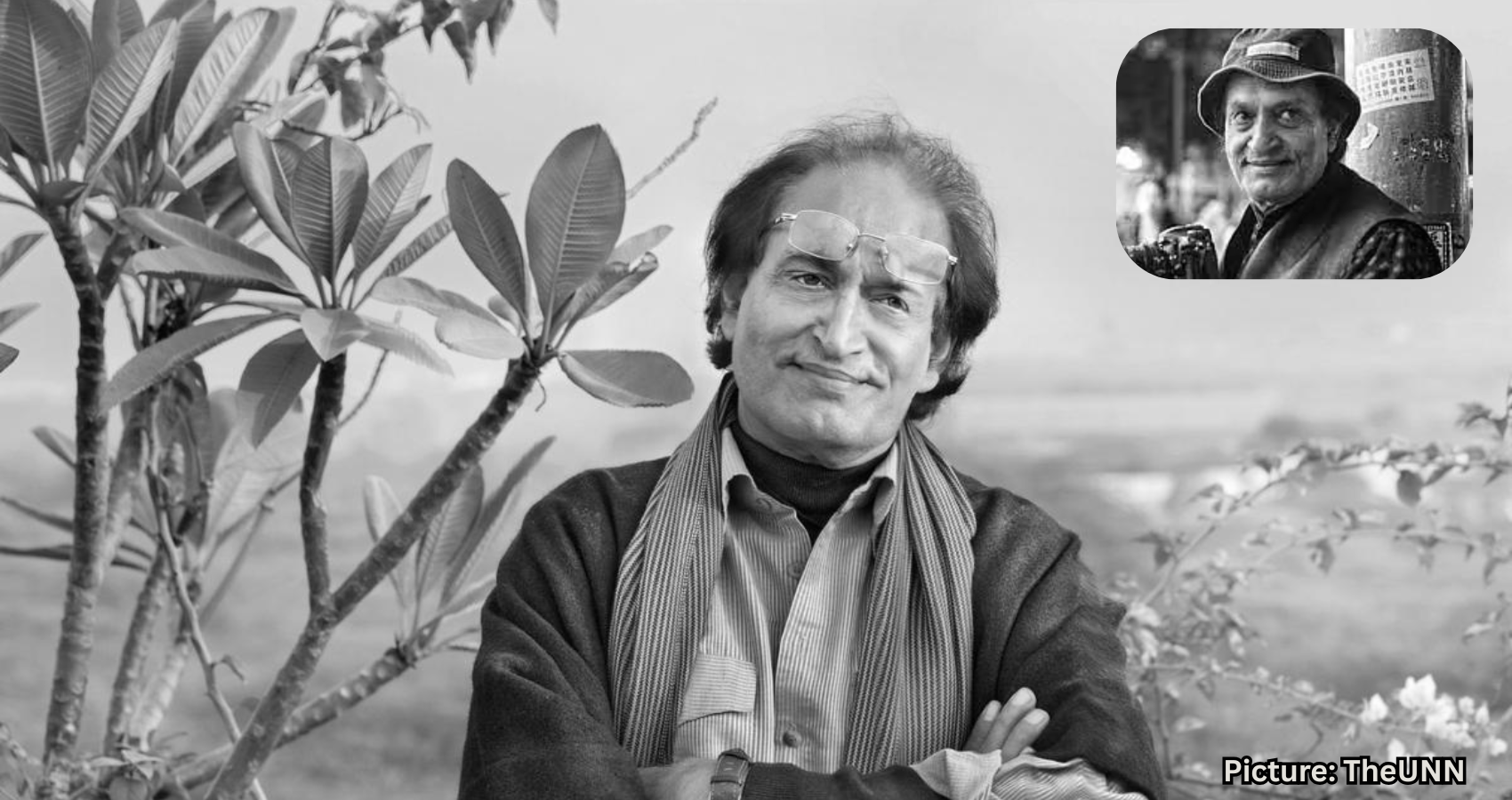
Raghu Rai, the legendary photographer known for his profound portrayal of India’s essence, passed away at 84, leaving behind a remarkable legacy of visual storytelling.
Raghu Rai, a celebrated photographer and photojournalist, has died at the age of 84. His family confirmed the news via his Instagram profile. Rai was a protégé of Henri Cartier-Bresson, who nominated him to join the prestigious Magnum Photos in 1977, marking the beginning of a distinguished career that spanned over half a century.
Rai passed away on Sunday, April 26, 2026, leaving behind a rich legacy defined by his powerful black-and-white imagery. He dedicated decades to documenting the lives of India’s people, its landscapes, and significant historical moments with an unparalleled depth and sensitivity.
His death signifies the end of an era in Indian photography. Through his iconic images, which captured leaders, tragedies, and the nuances of everyday life, Rai chronicled the essence of India with remarkable patience, empathy, and artistic brilliance. His work has left an indelible mark on the visual narrative of the country.
Born in 1942 in Jhang, Punjab, British India (now in Pakistan), Rai began his photography career in the 1960s. He gained prominence after joining The Statesman newspaper and later became a key member of Magnum Photos. This association placed him among the world’s most respected visual storytellers.
Rai’s work is often described as deeply human, transcending mere events to focus on emotions, daily life, and the intricate complexities of Indian society. From capturing the chaos of bustling streets to documenting major events such as the Bhopal Gas Tragedy, his photographs resonate with both intimacy and impact.
One of his most notable bodies of work includes his extensive documentation of Mother Teresa and life in Kolkata, where he captured themes of compassion, suffering, and dignity. His candid and insightful portrayals of political figures, including Indira Gandhi, are also widely recognized.
Rai’s portfolio features unforgettable moments, such as a Delhi sweeper collecting Gandhi’s election poster after her 1977 defeat, and poignant images of Jarnail Singh Bhindranwale prior to Operation Bluestar. His heart-stopping photographs of the Bhopal gas tragedy, which showcased the world’s worst industrial disaster, stand as a testament to his ability to convey profound narratives through his lens.
His work also includes striking portraits of musicians and artists, from MS Subbulakshmi to Satyajit Ray, and evocative street photography that captures the essence of urban life. A notable example is his image of a young Arundhati Roy, which subtly critiques the male gaze, alongside poignant depictions of the homeless living in water pipes. Collectively, these works form a comprehensive visual anthology of India itself.
Rai did not merely capture moments; he told entire stories within a single frame. Initially trained as a civil engineer, he transitioned into photography, where he found his true calling. Though he worked in newspapers and magazines, he carved out a unique niche for himself. A Raghu Rai photograph often spoke for itself, requiring little explanation. This distinctive quality stemmed not only from his technical skill but also from his thoughtful approach to his craft and his ability to perceive deeper meanings beyond the obvious.
“Whether capturing the common man or a figure like Indira Gandhi, I strive to remain a sensitive, responsible human being. Over the years, you develop a discipline that allows you to approach situations with the respect they deserve,” he once reflected.
Throughout his career, Raghu Rai published several books and received numerous accolades, including the Padma Shri in 1977. His work has been exhibited globally, shaping international perceptions of India through a lens that is both honest and poetic. In addition to the Padma Shri, he was honored with the Photographer of the Year award in the USA, the Academie des Beaux Arts Photography Award – William Klein in 2019, and the Lifetime Achievement Award from the Information and Broadcasting Ministry in 2017.
While Rai embraced mobile photography, his most impactful work predates the era of phone cameras and social media. His legacy teaches that great visual storytelling requires patience, thoughtfulness, and a willingness to take risks. Memorable photographs are not mere happenstance; they arise from deliberate immersion in the subject matter. Raghu Rai leaves behind a valuable legacy of photographs that continue to inspire and resonate.
According to India Currents, his contributions to photography and storytelling will be remembered for generations to come.