
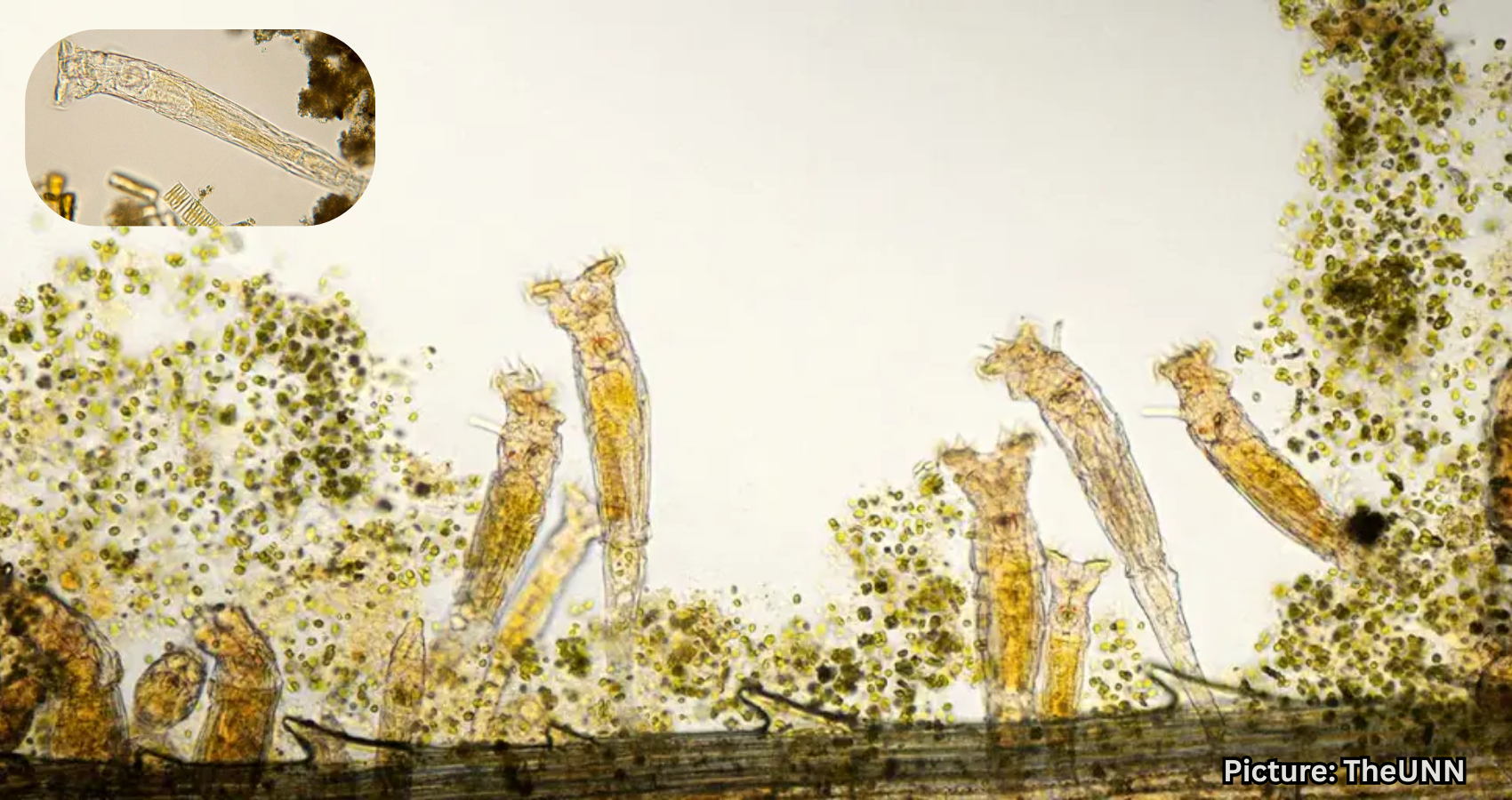
Scientists have revived a 24,000-year-old rotifer from Siberian permafrost, providing new insights into the survival of life under extreme conditions.
In a remarkable scientific breakthrough, researchers have successfully revived a 24,000-year-old microscopic organism that had been frozen in Siberian permafrost. This discovery offers valuable insights into how life can endure extreme conditions over extensive periods.
The organism, identified as a rotifer, is a tiny, multicellular animal commonly found in freshwater environments. Known for its remarkable durability, the rotifer had been preserved in the permafrost since the Late Pleistocene, a geological epoch that concluded approximately 11,700 years ago. The ice-rich soil of the Yedoma formation played a crucial role in maintaining the organism in a stable, frozen state for thousands of years.
Researchers carefully thawed the rotifer under controlled laboratory conditions and observed that it resumed normal biological functions. Not only did the organism become active again, but it also reproduced asexually, indicating that its cellular structures remained intact despite the passage of millennia.
“Our report is the hardest proof as of today that multicellular animals could withstand tens of thousands of years in cryptobiosis, the state of almost completely arrested metabolism,” said lead researcher Stas Malavin in an interview with the Indian Defence Review.
The phenomenon that allowed the rotifer to survive is known as cryptobiosis, a biological state in which metabolic activity slows to nearly zero. This adaptation enables certain organisms to endure extreme environments, including freezing temperatures, dehydration, and lack of oxygen.
While scientists have previously revived organisms from ice, these instances have typically involved single-celled life forms or simpler structures. The successful revival of a multicellular organism represents a significant advancement, as more complex bodies face greater challenges in surviving the freezing and thawing processes without sustaining damage.
Ancient microbes, including viruses, have also been found preserved in permafrost and are generally easier to revive due to their simpler structures. In some studies, scientists have reactivated viruses that remained capable of infecting host cells after thawing; however, none have been linked to human illness.
The findings of this study raise additional concerns as well. With rising global temperatures accelerating permafrost thaw, long-dormant microbes could be released into the environment, prompting new questions about potential ecological and health risks.
Despite their microscopic size, rotifers possess specialized systems, including digestive tracts and rudimentary nervous structures, making their long-term survival in a frozen state particularly noteworthy. Researchers believe these findings could have broader implications for various scientific fields, including studies on how cells resist damage from ice crystals and radiation over time. The discovery may also inform biotechnology and astrobiology, where scientists investigate how life might persist in extreme or extraterrestrial environments.
However, experts caution that these findings do not imply that larger organisms, such as mammals, could be revived after similar periods of freezing. The complexity of higher life forms renders them significantly more vulnerable to cellular damage during freezing and thawing processes.
Nonetheless, this study expands our understanding of the limits of life on Earth and raises new questions about how long organisms can remain viable under the right conditions. It has the potential to reshape scientific perspectives on survival in extreme environments, according to Current Biology.