
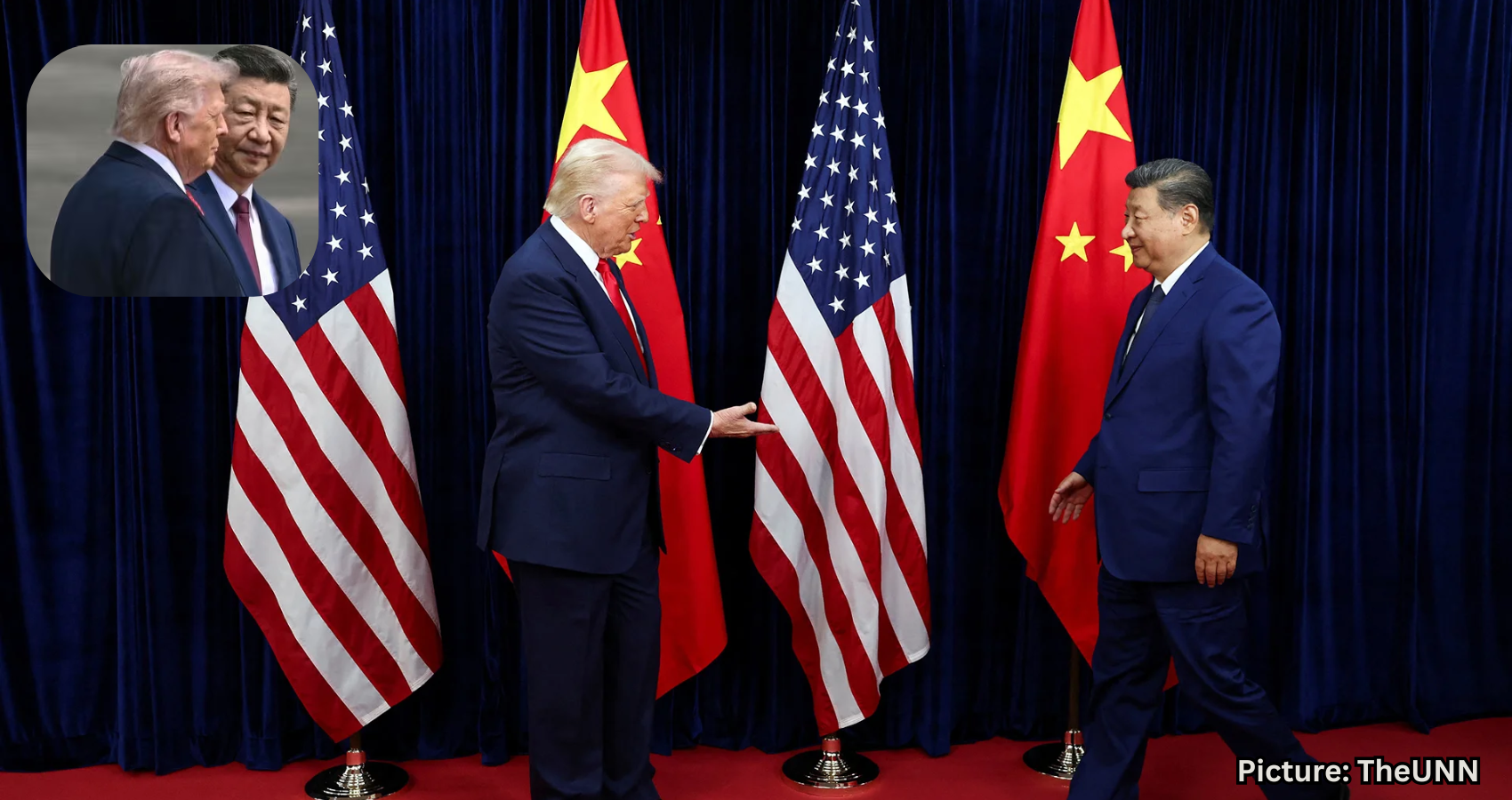
The key takeaway for America from President Trump’s visit to China is not trade deals, but the entrepreneurial spirit that has fueled China’s remarkable SME economy.
As President Trump embarks on his visit to China, the most significant insight he can bring back to the United States may not revolve around tariffs or trade agreements. Instead, it lies in understanding how Beijing has successfully unleashed millions of small entrepreneurs, creating the world’s most formidable small and medium-sized enterprise (SME) economy.
In just a few decades, China has fostered a staggering number of SMEs—over 100 million—transforming them from mere “tadpoles” of entrepreneurial instinct into a colossal economic force. This transformation did not stem from government factories or Wall Street strategies; rather, it was driven by grassroots initiatives that empowered small business owners with simple digital tools, allowing instinctive and fearless innovation to flourish.
The outcome is a vast SME network that excels in exporting, innovating, and dominating supply chains, all while the global community remains preoccupied with GDP statistics. This phenomenon mirrors what the United States achieved a century ago, when waves of immigrant entrepreneurs established their own businesses, creating a similar landscape of SMEs without needing permission from authorities.
For America to regain its economic dominance, it must embrace the revival of its own SME ecosystem—mobilized, digitized, and unleashed. Trump should engage with Chairman Xi Jinping in discussions that focus on entrepreneurial mobilization, advocating for the establishment of National Administration and Mobilization of Entrepreneurialism (NAME) protocols. This could involve digitizing SMEs within ninety days, equipping them with artificial intelligence (AI) tools within six months, and significantly boosting revenues over the next few years, all while avoiding new debt.
Understanding the dynamics of global economies reveals a crucial fact: all superpower economies are fundamentally driven by their SME sectors. The rise of AI-centric digital platforms is reshaping the landscape, offering new opportunities for entrepreneurial growth and innovation.
Across the globe, there is a growing recognition of the power of SMEs as the backbone of economic prosperity. Countries from Indonesia to Mexico and Italy to Vietnam are awakening to the realization that their vast networks of SMEs are not just peripheral players but central to future wealth generation. Grassroots prosperity is no longer a mere slogan; it is manifesting as a significant wave of new jobs, exports, and renewed confidence in local economies.
While traditional economic institutions have often focused on innovation through established channels, initiatives like Expothon Worldwide have championed the cause of SMEs, advocating for their digitization and mobilization. The vocabulary surrounding economic development has shifted, signaling the arrival of the age of SME power. Those who remain stagnant risk being left behind as the world moves forward.
To assess a nation’s potential for SME growth, one can leverage AI to conduct a comprehensive audit of economic development strategies. By querying AI about the leaders responsible for economic progress and their mindsets—whether they are job-seekers or job-creators—nations can gain valuable insights into their readiness for entrepreneurial mobilization. This approach can help identify the barriers that have hindered SME development and outline realistic pathways to achieving grassroots prosperity.
As we navigate this new era, it is essential to recognize that artificial intelligence, while a powerful tool, cannot replicate the unique qualities of human intelligence. AI excels in processing explicit knowledge, but it lacks mastery over the tacit knowledge that defines entrepreneurial success. This tacit knowledge encompasses the instincts and insights that drive innovation and risk-taking, qualities that have historically propelled small enterprises to greatness.
AI serves as a revolutionary force, democratizing access to strategic thinking and market insights that were once the exclusive domain of large corporations. For the first time, small business owners around the world can tap into resources that enable them to compete on a global scale. The narrative surrounding SMEs has evolved, and those who harness this potential will thrive.
As we approach 2026, a pivotal year for economic choices, the imperative for SMEs to embrace digital transformation and entrepreneurial mobilization has never been clearer. The future belongs to those who blend traditional entrepreneurial instincts with the capabilities offered by AI. The challenge is to stop waiting for permission and instead seize the opportunities presented by this technological revolution.
In conclusion, the path to economic revitalization lies in recognizing the untapped potential of SMEs and empowering them to thrive in a rapidly changing landscape. The baton has been passed to those who can navigate both the realms of explicit and tacit knowledge. The choice is clear: adapt and ride the wave of change or watch from the sidelines as others build the future.
The insights presented here reflect the evolving landscape of global entrepreneurship and the critical role of SMEs in shaping economic destinies, according to Expothon Worldwide.