
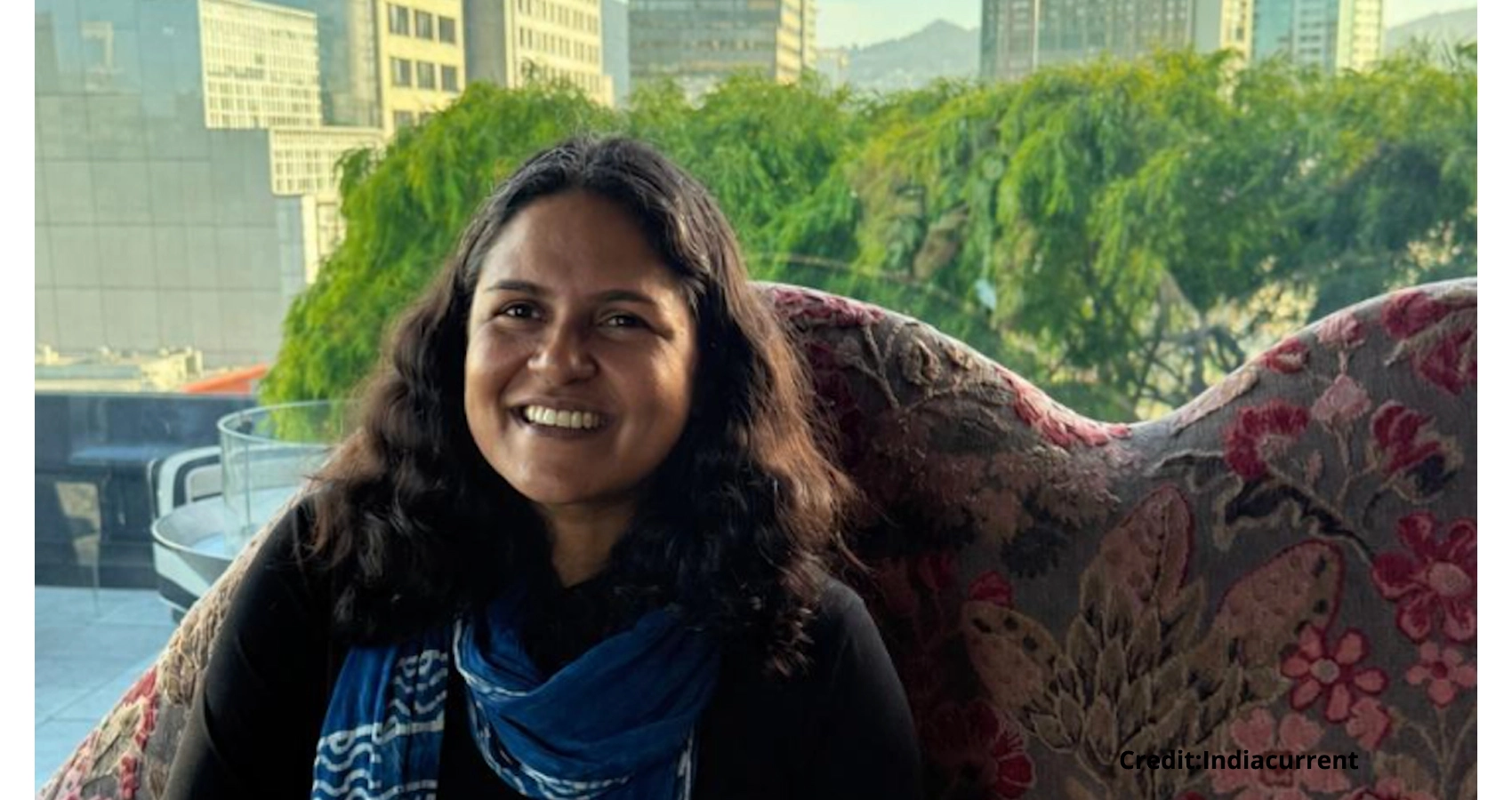
Nandita Dinesh, a theater artist and educator, transitions from immersive theater to leading a writers’ workshop at SALA 2026, fostering creativity among diverse participants.
Nandita Dinesh, a native of Coimbatore, Tamil Nadu, describes herself as “a small-town girl” from what was once a modest town. Her journey took her from Coimbatore to the United World College in Pune, where she credits her experience with opening doors to a global perspective.
A scholarship led Dinesh to Wellesley College, where she discovered her passion for theater and the potential of the arts to address conflict. She later pursued an MA in Performance Studies at the Tisch School of the Arts, New York University.
Dinesh’s interest in the arts as a medium for dialogue took her to northern Uganda and Rwanda. Upon returning to India, she embraced a teaching role that she cherished. To add structure to her work in Kashmir, she pursued a PhD at the University of Cape Town while continuing to teach full-time in India. Although Cape Town did not offer a distance program at the time, the university permitted her to conduct fieldwork from India, requiring her to travel to Cape Town only at the end of her studies to finalize her dissertation.
Her doctoral research, titled “Performances, Perspectives, and Possibilities in Kashmir,” focused on whether immersive theater could facilitate conversations between polarized communities. This project culminated in a 24-hour immersive performance where audience members lived alongside the ensemble, experiencing various narratives from the Kashmir Valley. Dinesh noted that the Ram Leela is one of the oldest forms of immersive theater in India.
After earning her PhD, Dinesh returned to the U.S. and taught at the United World College in Santa Fe, New Mexico. While continuing her work on the Kashmir project, she faced increasing censorship. The risks associated with her ensemble, primarily composed of young Kashmiris, prompted her to shift her focus to writing, which she describes as a transition that, while not devoid of risk, allowed her to take ownership of her creative expression.
Dinesh’s writing journey began out of necessity during her PhD studies. She found traditional academic writing constraining and began to break the mold. One notable project from this period, “The Chronicles from Kashmir,” was published as a multimedia textbook. As censorship pressures mounted on her theater work around 2017-2018, she ventured into fiction writing. Her debut novel, published by Melville House in New York in 2022, marked the beginning of her exploration across various genres. She has since published creative-writing textbooks with Routledge, with another novel set to release next year.
As her writing evolved, Dinesh began teaching in carceral spaces. In New Mexico, she worked in juvenile detention centers, exploring the role of creativity in environments designed to suppress it. After relocating to the San Francisco Bay Area in 2021, she briefly taught at University High School in San Francisco before becoming Dean of Academics at Mount Tamalpais College, which offers an associate degree to incarcerated students at San Quentin State Prison. Dinesh left that role around 2024 to pursue writing and teaching on her own terms, prompting her to consider what it would mean to teach outside traditional institutional frameworks.
This reflection led her to initiate writing workshops, first online and later in person at local restaurants and cafés throughout the Bay Area. Dinesh sought to test different formats to engage with her audience effectively.
The connection to the South Asian Literary Association (SALA) emerged from a serendipitous conversation in Singapore in 2024, where she was visiting her brother. After reaching out to the Indian Women’s Association of Singapore for a reading from her novel, she was introduced to Kiran Malhotra and Ambika Sahay from SALA.
Dinesh proposed one-on-one workshop slots at the festival, which attracted seven or eight participants. She was surprised by the enthusiasm of attendees—many of whom were engineers, doctors, and lawyers pursuing writing as a hobby—who were eager to discuss their writing and publishing journeys with a fellow South Asian writer.
This positive response inspired the creation of a cohort-based Writer’s Workshop program for this year. Participants met monthly for six months, with sessions focusing on presentation and performance skills, drawing on Dinesh’s theater background to enhance the spoken delivery of their writing.
In addition to group sessions, Dinesh provided individual meetings with each writer, recognizing that writing goals vary significantly. Some participants aspired to craft literary bestsellers, while others sought the therapeutic benefits of writing, regardless of publication. This year’s cohort was limited to nine writers, and Dinesh met with each participant six times over the course of the program.
The inaugural cohort featured a diverse array of ages, professions, and writing genres. Participants included a seasoned dance artist, an individual with a film background, a lawyer penning a memoir about his family’s experiences during Partition, a tech professional also engaged in visual and literary arts working on fables, and a medical professional writing poetry.
The participants’ projects encompassed a wide range of forms, including fiction, short stories, screenplays, poetry, dance drama, and analytical nonfiction. As Dinesh noted, the work represented “the whole gamut.” Over the six months, participants’ goals evolved organically, with Dinesh viewing her role as more of a witness to each writer’s unique journey rather than a traditional instructor.
The Writer Cohort will present their work at SALA 2026 on Saturday from 12:30 to 1:30 p.m., showcasing the diverse talents and stories that emerged from this innovative workshop.
According to India Currents, Dinesh’s commitment to nurturing writers reflects her belief in the transformative power of storytelling.