
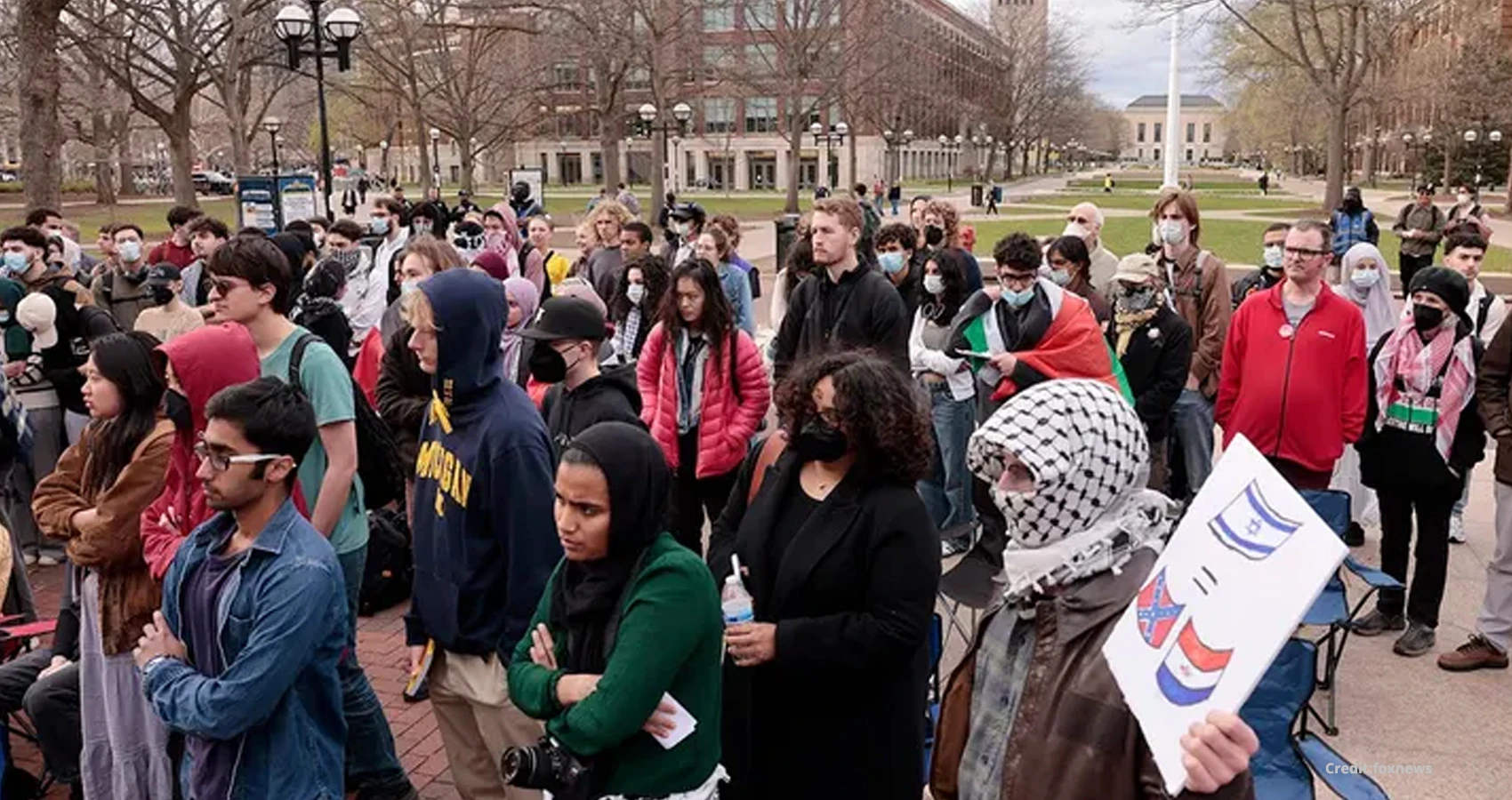
A recent survey reveals that nearly half of college students believe physical violence is justified to combat hate speech, prompting concerns from university leaders about the moral direction of higher education.
A university president is raising alarms following a survey that indicates 45% of college students believe physical violence can be justified to stop what they define as “hate speech.” This finding has sparked significant concern regarding the moral and educational direction of higher education institutions.
The Buckley Institute’s 2026 National Undergraduate Student Survey highlights that nearly half of the undergraduate students surveyed support the use of violence against hate speech. The survey results show a stark divide among political affiliations: 54% of liberal students, 36% of moderates, and 30% of conservatives expressed that violence is an acceptable response to hate speech.
In addition to the alarming statistics on violence, the survey revealed that 46% of students support shout downs, while 40% believe offensive speech should be subject to criminal prosecution. The survey also uncovered a troubling trend in economic preferences, with 42% of students indicating a preference for a socialist system over a capitalist one, and 22% suggesting that the U.S. deserved the September 11, 2001, terrorist attacks.
Dr. Gerson Moreno-Riaño, president of Cornerstone University in Grand Rapids, Michigan, characterized these findings as indicative of a broader “moral formation issue” rather than a straightforward free speech dilemma. He warned that students are developing a sense of “violent entitlement” that could have serious implications for society.
“American colleges and universities have long ceased to form students morally,” Moreno-Riaño stated in an interview with Fox News Digital. “Instead, they are teaching resentment, grievance politics, and entitlement.” He expressed concern that graduates are leaving institutions without a solid moral foundation, instead carrying with them feelings of resentment.
Moreno-Riaño pointed out that this entitlement and resentment contribute to employers’ growing concerns about the value of college degrees. “It’s not just about what some may call worthless degrees,” he explained. “It’s also about the mindset of individuals who have been taught to resent rather than reason, to engage in grievance rather than dialogue.” He emphasized that this trend poses a significant challenge to the health of democracy and civil discourse.
Having led Cornerstone University since 2021, Moreno-Riaño lamented that higher education in the U.S. has been “godless” and has lost its moral compass over the years. He noted that when moral guidance is absent, ideologies such as communism and socialism tend to fill the void. “This has been happening for years,” he said, highlighting a concerning trend among young students who may not fully understand the historical implications of these ideologies.
Moreno-Riaño also suggested that employers are increasingly questioning the efficacy of hiring college graduates, with some considering direct training for high school graduates instead. He warned that many colleges are producing graduates who lean towards socialism and Marxism, fostering a mindset of entitlement that seeks to “destroy the system” rather than improve it.
“Employers are noticing this shift,” he stated. “Some are contemplating whether they should train their own workforce or engage directly with high schools, bypassing colleges altogether, as they perceive a moral bankruptcy in higher education.” He cautioned that this trend, combined with advancements in artificial intelligence, could lead to a generation of sharp minds lacking a moral compass, which he described as a “very dangerous” scenario.
For a healthy democracy, Moreno-Riaño argued, it is essential to cultivate individuals who can engage in reasoned discourse, deliberate thoughtfully, and communicate respectfully with those who hold differing views. He emphasized the importance of fostering a culture that encourages deep thinking and courage in pursuing what is good.
Moreno-Riaño concluded by asserting that American higher education must undergo a significant transformation, prioritizing moral formation over entitlement and grievance culture. The Buckley Institute survey, conducted by Inquire LLC, included responses from 803 full-time undergraduate students under the age of 25 attending four-year public or private colleges and universities, with data collected between September 5 and September 14.
As these findings circulate, they raise critical questions about the future of higher education and the values being instilled in the next generation of leaders, according to Fox News.