
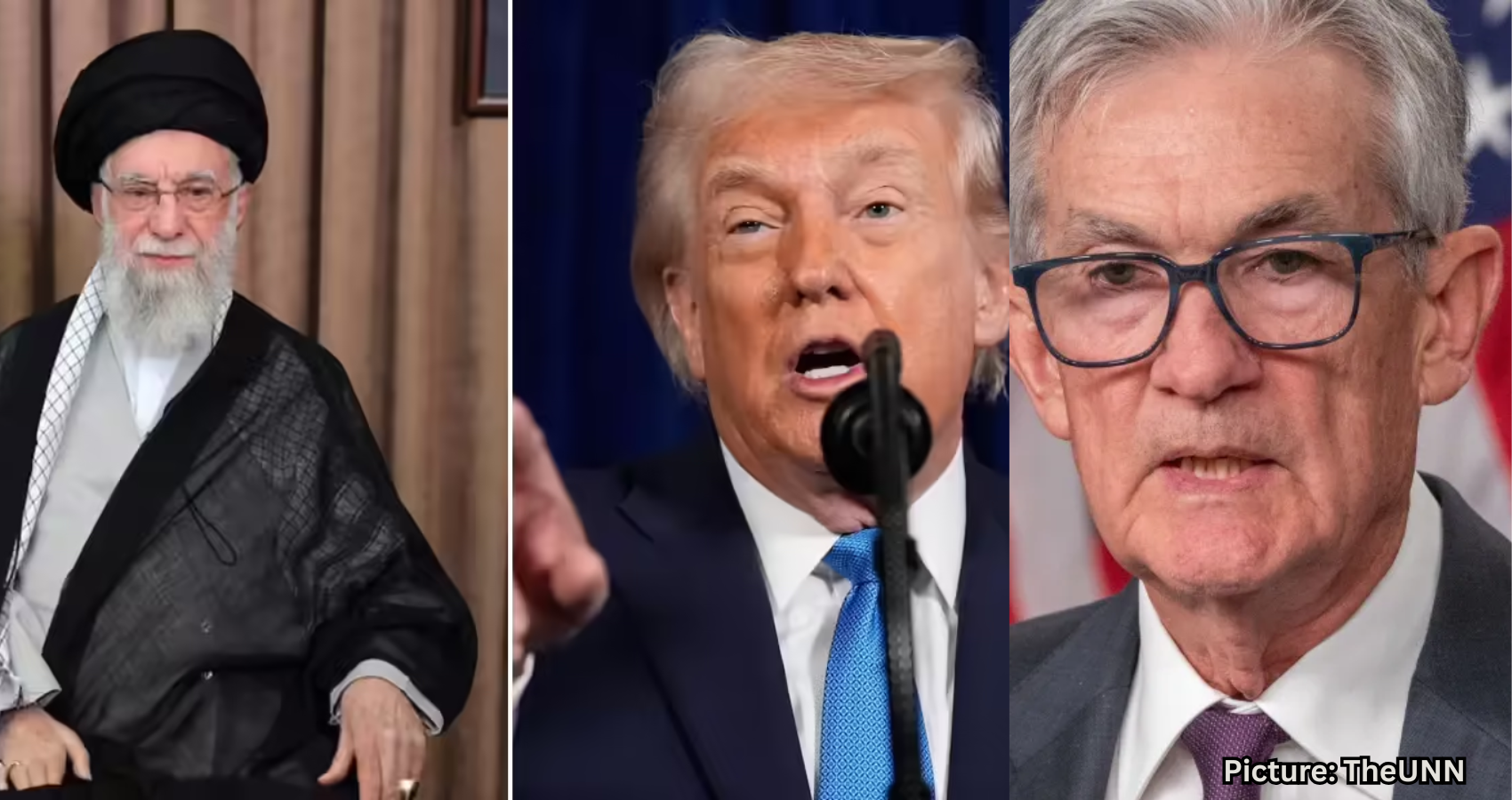
If the Iran ceasefire collapses, President Trump’s market credibility will be severely tested, with repercussions extending far beyond the Strait of Hormuz.
Last week’s rally on Wall Street was propelled by a presidential promise rather than economic fundamentals. Should the Iran ceasefire falter, President Trump’s market credibility may also collapse, leading to consequences that could ripple across global markets.
Financial analysts quickly attributed the surge in U.S. markets to resilient corporate earnings, easing inflation data, or signs of economic stabilization. However, the reality is much simpler—and more precarious. The market’s movement hinged primarily on statements made by President Trump.
Trump indicated through various channels, including Truth Social and direct comments to reporters, that a deal with Iran was “very close,” claiming that the Iranians had agreed to nuclear concessions and that the ceasefire was holding. Investors, eager for positive news after months of tariff-induced volatility, chose to take him at his word. Consequently, oil futures dipped, defense stocks saw reduced gains, and the S&P 500 index experienced a brief respite.
However, there were no new earnings forecasts, no shift in Federal Reserve policy, and no resolution to the ongoing tariff conflict with China, which has already dented U.S. GDP growth by an estimated 1.2%. The market’s upward movement was based solely on presidential rhetoric—a fragile foundation for any sustained recovery.
Iran holds more leverage than Washington acknowledges. The prevailing Western narrative often portrays Iran as the desperate party—its economy in turmoil, its leadership weakened, and its nuclear capabilities diminished. While this perspective contains elements of truth, it fails to capture the full picture.
Iran wields a specific form of leverage that directly targets Trump’s most vulnerable political nerve: the capacity to inflict economic pain on American consumers in an election year. The Strait of Hormuz is not just a crucial maritime route; it serves as a pressure valve for the global oil market, and Iran remains in control of it.
Market observers are acutely aware of several critical factors. Approximately 20% of the world’s traded oil passes through the Strait of Hormuz, meaning any escalation in tensions could lead to a rapid spike in global oil prices. Trump has consistently linked his presidency’s success to stock market performance and consumer prices. A sustained increase in oil prices by $20 to $30 per barrel could reignite inflation in the U.S. and eliminate any remaining discussions of potential Federal Reserve rate cuts.
Moreover, a U.S. naval blockade of Iranian ports could provoke military confrontations, with any incident posing an immediate risk of escalation. Iran’s negotiating team has returned to Tehran for further deliberations, signaling that the regime is not acting out of desperation.
Beyond the realm of oil, Iran recognizes a crucial truth that is often overlooked in diplomatic discussions: Trump cannot afford a prolonged conflict. This is not due to moral considerations but rather economic ones. Any escalation that results in American casualties would send shockwaves through a market already reeling from a 20% correction earlier this year. Trump understands that the Dow Jones Industrial Average is closely tied to his approval ratings.
The credibility issue facing Trump is significant. By asserting that a deal was “almost done” and that Iran had agreed to relinquish its enriched uranium stockpile, he set a benchmark that Wall Street subsequently priced in. Institutional investors adjusted their positions, and retail investors breathed a sigh of relief.
However, if the ceasefire expires on April 21 without a deal—or worse, if hostilities resume—the market’s reaction will likely be more severe than a mere reversal of last week’s gains. Traders will not only react to the bad news but will also reassess their trust in Trump’s statements as reliable market signals.
This observation is not politically motivated; markets are indifferent to politics. They prioritize predictability. Trump has made himself the most significant variable in the Iran-market equation, meaning any failure will be perceived as his failure—publicly, measurably, and immediately.
The global community is watching closely and may be stepping back. The U.S. has alienated many of the allies it would need to maintain economic and diplomatic pressure on Tehran. Europe is not supportive of U.S.-Israeli military actions, while China has been quietly facilitating Iranian oil sales for years. Russia, despite its own complexities, is not aligned with U.S. interests. Even Gulf Arab states, traditionally aligned with U.S. efforts to contain Iran, are now hedging their positions.
At the same time, the United States is grappling with its own economic credibility issues. The current tariff regime has strained relationships with Canada, the European Union, Japan, and South Korea. The dollar’s status as the world’s reserve currency—once considered unassailable—is now being questioned in various central banking circles. As Washington seeks to exert maximum leverage over Iran, it finds itself with minimal diplomatic capital.
While it is true that Iran is not negotiating from a position of strength, its situation is more nuanced. The Iranian economy was already struggling before the first U.S. bomb fell. Inflation, currency collapse, mass protests, and the assassination of key leadership figures have created genuine instability. However, Iran’s regime only needs to endure the next few weeks intact. Trump, on the other hand, requires a favorable outcome before the ceasefire expires, before markets retest recent lows, and before the political costs of the conflict escalate further.
The Iranian negotiating team has shown a willingness to counter-propose, suggesting a five-year enrichment freeze in response to the U.S. demand for a twenty-year freeze. They have also proposed down-blending enriched uranium rather than exporting it, indicating a tactical engagement rather than capitulation. This strategy allows them to keep the deal alive without granting Trump the clean victory he needs.
Defenders of Trump’s approach argue that his unpredictability serves as a strategic asset, making it risky for Iran to call his bluff. While this perspective has merit, it also has drawbacks. Trump’s unpredictability has led U.S. allies to hesitate in coordinating pressure, markets to be reluctant to price in a durable resolution, and Iranian hardliners to argue that any deal with Washington is unreliable, given the potential for future U.S. administrations to abandon it.
If the ceasefire expires without a deal or extension on April 21, several rapid developments are likely to unfold. Oil prices will likely spike sharply as traders reverse their positions. The market gains of the past week will evaporate, potentially leading to a significant downturn as sentiment sours. Trump will then face a critical choice: escalate militarily, with all the associated costs, or back down, which would be politically damaging for a president who has proclaimed that “we win regardless.”
Perhaps most importantly, institutional investors—the major players in sovereign wealth funds, large asset management firms, and the bond market—will conclude that Trump’s declarations about deals cannot be relied upon as trustworthy signals. This shift in perception would have lasting implications for future market reactions to Trump’s statements.
In conclusion, Iran is playing hardball from a position of genuine leverage and is doing so strategically. The asymmetry of time pressure, market sensitivity, and diplomatic isolation favors Tehran’s ability to wait out Trump or negotiate better terms than currently offered. Last week’s market rally was not a true recovery; it was a sentiment-driven response to a presidential promise. If that promise fails to materialize by April 21, the market correction will be swift and significant, undermining Trump’s most valuable currency in negotiations—his credibility with investors.
The pressing question is not whether Iran can endure this conflict; it already has. The real question is whether Trump can withstand the fallout from a failed deal and whether Wall Street, which has so far extended him the benefit of the doubt, will do so once more. The clock is ticking, and it is not running out on Iran; it is running out on Washington.
According to The American Bazaar.