
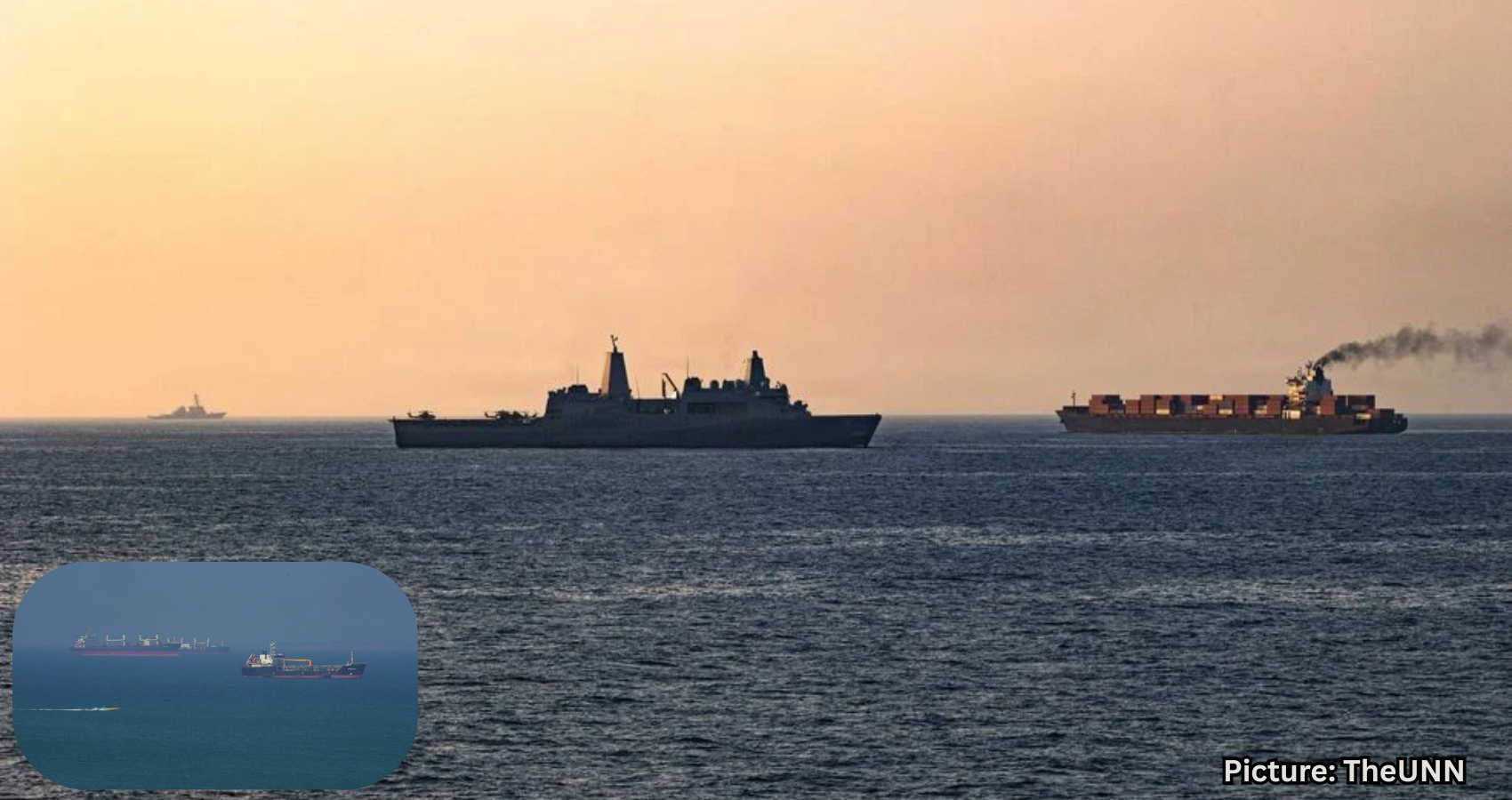
Sanctioned tankers are reportedly disguising Iranian oil shipments as Iraqi cargo, while the U.S. maintains a naval blockade to pressure Tehran’s oil exports.
Sanctioned tankers are allegedly disguising Iranian oil shipments as Iraqi cargo while President Donald Trump intensifies the naval blockade aimed at constraining Tehran’s oil lifeline, according to maritime intelligence firm Windward AI.
On Wednesday, Windward AI reported that a group of U.S.-sanctioned tankers is falsifying their location data to appear as if they are anchored off the coast of Iraq while secretly loading Iranian oil at Iranian ports.
Among the tankers identified by Windward are four very large crude carriers (VLCCs): Alicia (IMO 9281695), RHN (IMO 9208215), Star Forest (IMO 9237632), and Aqua (IMO 9248473). These vessels are reportedly using various flags, including fraudulent registries from Curacao and Malawi.
Each VLCC has the capacity to hold approximately 2 million barrels of oil, meaning that collectively, these four tankers could carry around 8 million barrels, valued at about $800 million at a price of $100 per barrel.
This revelation comes as President Trump reaffirmed on Wednesday that the U.S. will maintain its naval blockade against Iran until the country agrees to a deal that addresses U.S. concerns regarding its nuclear program.
The U.S. administration has demanded that Iran dismantle its uranium enrichment program, while Tehran insists that enrichment is a sovereign right and non-negotiable, leaving little room for compromise.
Windward AI noted a “cluster” of sanctioned tankers spoofing their locations and observed to the west of the Strait of Hormuz. The firm explained that a group of 10 Iran-trading, U.S.-sanctioned tankers is manipulating their Automatic Identification System (AIS) signals to falsely appear anchored off Basrah, Iraq, as the blockade continues to restrict Iranian ports.
“The vessels identified by Windward Multi-Source Intelligence are manipulating their signals to create a digital alibi,” the intelligence firm stated. “By broadcasting fake destination messages to Iraqi ports, the tankers appear to be in Iraqi waters while covertly sailing to Iran to load sanctioned oil.”
Once loaded, these vessels reportedly re-emerge on AIS to suggest a legitimate Iraqi origin for their cargo.
The U.S. blockade on Iranian ports began on April 13 as part of a broader strategy to pressure Iran into renegotiating limits on its nuclear program. The blockade has been implemented in stages, starting with naval deployments and restricted maritime enforcement to limit Iran’s oil exports and economic activity.
As of Wednesday, Windward reported that more than two dozen tankers are confined west of the Strait of Hormuz, with the blockade cutting Iranian oil loadings and exports by more than half.
This deceptive practice is now under intensified scrutiny, as the vessels are part of a larger group of more than two dozen tankers currently confined in the area. The handysize tanker Paola and Long Range One tanker Adena are both signaling ‘Iraqi owner’ but are linked to a sanctioned network.
Additionally, Windward identified three medium-range tankers—Aqualis, Kush, and Charminar—as well as the LPG carrier Royal H (IMO 9155341), which was newly sanctioned in February. These vessels are displaying “erratic voyage trails” to suggest loading at the Iraqi port of Khor Al Zubair.
The tell-tale signs of spoofing, including erratic patterns and fake port signals, highlight the shifting tactics employed by the so-called dark fleet as the blockade continues to significantly reduce Iranian oil loadings and exports.
In response to the U.S. blockade, Iran’s parliamentary speaker, Mohammad Ghalibaf, criticized U.S. policymakers, including Treasury Secretary Scott Bessent, for the impact of the blockade on oil prices. Ghalibaf referred to the advice from the U.S. Treasury as “junk” and blamed it for driving up oil prices. He remarked, “Three days in, no well exploded,” in a post shared on social media platform X.
As the situation unfolds, the international community watches closely, particularly as the U.S. continues to enforce its sanctions and Iran seeks ways to navigate the restrictions on its oil exports.
According to Fox News Digital.