
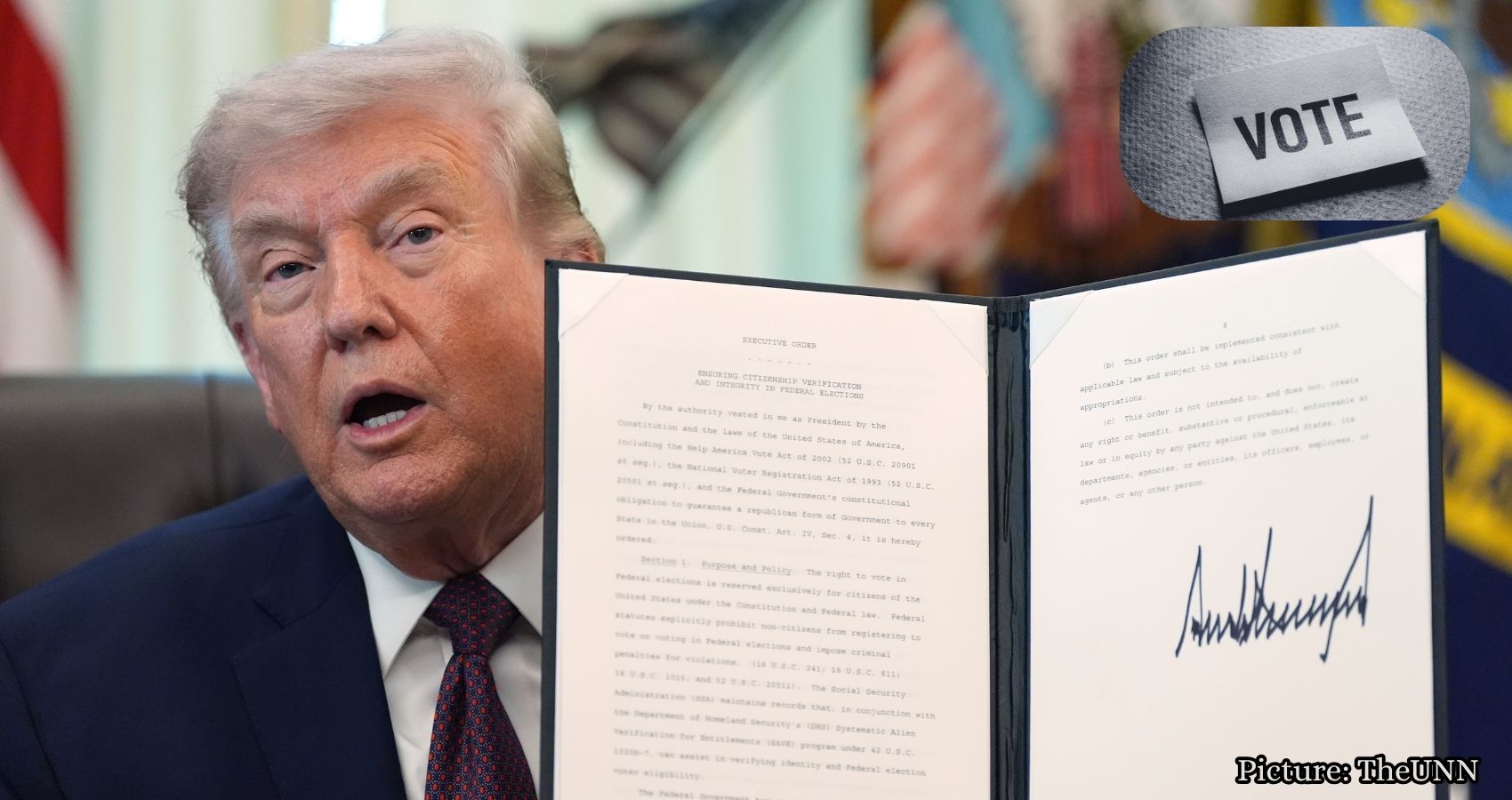
Federal Judge Indira Talwani has issued a temporary restraining order blocking President Trump’s mail-in voting executive order just days before the midterm elections.
A federal judge has once again blocked President Donald Trump’s executive order aimed at limiting mail-in voting, issuing a temporary restraining order just one week before the first mail ballots are set to be dispatched for the upcoming midterm elections.
U.S. District Court Judge Indira Talwani’s ruling halts the enforcement of a new U.S. Postal Service (USPS) rule that was designed to implement Trump’s directive. This decision is expected to be appealed quickly and could potentially reach the Supreme Court again, following a recent procedural ruling that allowed the administration to proceed with its plans.
The latest ruling comes in response to lawsuits refiled by Democrats and voting rights groups, which were prompted by the Supreme Court’s decision that did not address the legality of Trump’s order but indicated that Judge Talwani had acted prematurely.
The administration has since issued a formal rule outlining how states should prepare and submit mail ballots for USPS acceptance, effectively resetting the legal battle. This case is poised to have significant implications for the midterm elections, as nearly one-third of Americans cast their votes by mail. Election officials have expressed concerns that there is insufficient time to adjust their systems to comply with the new directives.
According to the USPS, ballots will not be accepted if states fail to provide necessary recipient information through its portal and do not meet the specified envelope and barcode requirements. Judge Talwani emphasized the urgency of the situation in her ruling, stating, “Plaintiff states have neither time nor funds to design new mail ballots, seek approval of the new designs, order production of mail ballots, update their own election management systems, train election officials to use the USPS portal and upload citizen data to the portal, all before the midterms.”
A hearing in this case is scheduled for September 3.
Democrats and voting rights advocates argue that the USPS rule and Trump’s executive order are unconstitutional, asserting that the Constitution grants states, and in some cases Congress, the authority to establish election rules. They contend that the president and the Postal Service do not possess the power to dictate these regulations. In contrast, the USPS maintains that its rule does not determine voter eligibility or compare submissions with state voter rolls, insisting that states retain control over mail-in voting eligibility.
New York Attorney General Letitia James, representing one of the two dozen Democratic attorneys general involved in the lawsuits, stated, “This rule is a clear attempt by the federal government to interfere in elections it has no power to control. Today, a federal court halted it before this administration could wreak havoc on our elections.”
This is not the first time Trump’s executive order has faced legal challenges. His initial order, issued last year, was blocked on similar grounds, as it sought to alter election procedures by requiring additional documentation for voter registration, such as a U.S. passport or a government-issued photo ID accompanied by proof of citizenship.
Trump has been a vocal critic of mail-in voting, attributing his loss in the 2020 election to former President Joe Biden to alleged widespread fraud in mail-in ballots. However, it is noteworthy that Trump himself utilizes mail-in voting as a registered voter in Florida.
A report from the Brookings Institution in 2025 indicated that mail-in voting fraud occurred in only about four cases for every 10 million mail ballots cast, contradicting claims made by Trump and his allies regarding the prevalence of election fraud. This analysis covered general elections from 2016 through 2022 and relied on a database that its source acknowledges is not comprehensive.
Trump’s executive order targeting mail-in voting was issued in March, leading to a series of legal challenges. Earlier this year, a federal judge in Washington declined to block the order at that time, deeming the challenge premature since the administration had not yet implemented the directive. The Supreme Court recently struck down one of the injunctions against the order, allowing the case to progress.
As the midterm elections approach, the implications of this ruling and the ongoing legal battles surrounding mail-in voting will be closely monitored by both political parties and election officials alike.
According to The Associated Press, the outcome of this case could significantly influence the voting process in the upcoming elections.