
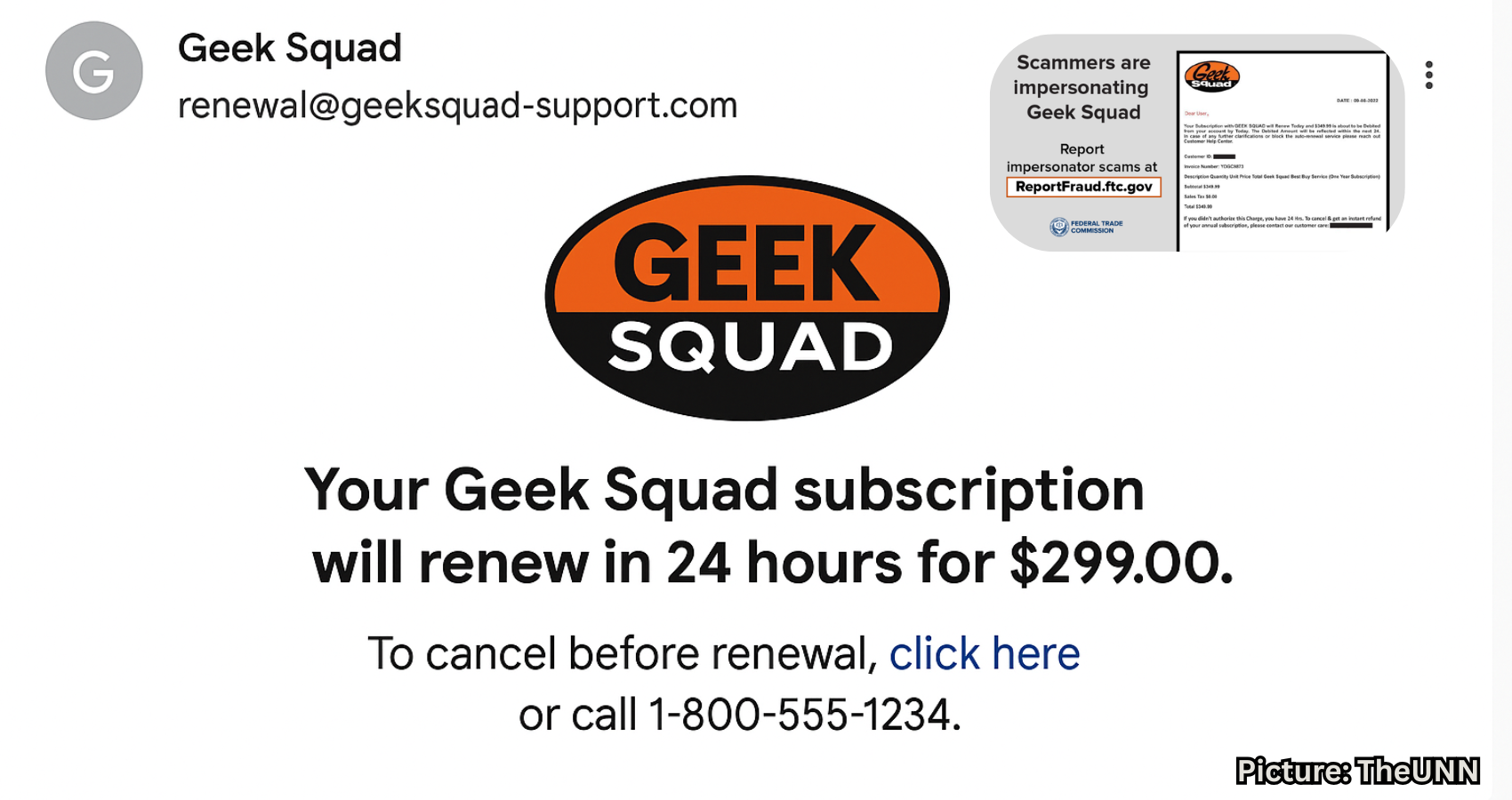
A fraudulent Geek Squad billing email is pressuring consumers to click payment links and share sensitive personal information, raising significant red flags for potential victims.
In a concerning development, a fraudulent email purporting to be from Geek Squad has emerged, utilizing Razorpay branding to deceive consumers. The email claims that the recipient has signed up for Geek Squad protection, demanding a payment of $489.99. However, many recipients have never subscribed to such a service, highlighting the deceptive nature of this scam.
Upon opening the email, recipients are greeted with a sense of urgency, as the message encourages immediate action. It features a prominent “Pay Now” button, designed to entice users to click without careful consideration. A closer examination reveals numerous red flags that indicate the email is not legitimate.
One of the most glaring issues is the lack of personalization in the email. Legitimate companies typically address customers by name, especially if they have an existing account. This email, however, is addressed to a generic recipient, suggesting it was sent in bulk to thousands of people in hopes that someone will fall for the scam.
The email also combines unrelated brands, mentioning Geek Squad, which is affiliated with Best Buy, and Razorpay, a payment processor based in India. Additionally, it references “QuickTax Billing,” a vague term that does not correspond to any recognized consumer brand in this context. Genuine billing emails maintain consistent branding and messaging, while scammers often mix names to create a facade of legitimacy.
Another tactic used in the email is the claim that the recipient’s account will be charged within 48 hours. This statement is designed to create pressure, compelling individuals to act quickly without fully assessing the situation. In reality, legitimate subscriptions do not operate in this manner; customers are not typically informed of random warnings demanding immediate payment through unfamiliar links.
The email further complicates matters by stating that the recipient must complete their first transaction. This is misleading, as legitimate subscriptions would have already processed payment upon signup. Clicking the payment button could lead to one of two dangerous outcomes: either the recipient is directed to a phishing site designed to steal personal information, or they are prompted to call a support number that may connect them with a scammer.
Details within the email also suggest it has been poorly crafted. For instance, it includes a support number with the (813) area code, a common tactic used by scammers. If a victim calls this number, they may be pressured into sharing personal information or granting remote access to their devices, potentially leading to financial loss.
The email claims to have originated from subscriptions@razorpay.com, which may appear credible since Razorpay is a legitimate payment platform. However, scammers often exploit real services to send fraudulent emails, creating accounts to issue fake invoices. Razorpay has confirmed that the account associated with this email was never capable of processing actual payments, as it was operating in test mode and has since been disabled.
Despite Razorpay’s reassurances, the email remains a significant threat. Scammers rely on familiar branding to lend credibility to their messages, which can easily mislead unsuspecting recipients into clicking the “Proceed to Pay” button or calling the provided phone number. The ultimate goal is to extract personal information or redirect victims to alternative payment methods outside of secure platforms.
This type of scam is not targeted at specific individuals; rather, it is sent to vast lists of email addresses, some of which may have been scraped from online sources or obtained through past data breaches. Scammers operate on a numbers game, hoping that a small percentage of recipients will respond to their fraudulent overtures.
Both Razorpay and Best Buy, the parent company of Geek Squad, were contacted for comments regarding this scam but did not respond before the publication deadline.
The primary objectives of these scams are twofold: to extract money or obtain personal data. The $489 price tag is intentionally set high enough to instill fear while remaining plausible enough to appear legitimate. This email exemplifies many classic scam characteristics, making it essential for consumers to recognize the warning signs.
To protect yourself, adhere to a simple rule: never act directly from an email. If you receive a suspicious message, take a moment to pause and evaluate the situation. Scammers thrive on urgency, and by slowing down, you can safeguard your personal information.
At first glance, the email may seem convincing, featuring real brand names and a polished layout. However, a careful reading reveals inconsistencies, such as the absence of a personal greeting, conflicting company affiliations, and pressure tactics urging immediate payment. Familiarity with these tactics can significantly reduce the likelihood of falling victim to such scams.
As the prevalence of these deceptive emails increases, it is crucial to remain vigilant. If you suspect that an email may not be legitimate, consider reaching out to the company directly through official channels to verify the information. Awareness and caution are your best defenses against these types of scams.
For further information on cybersecurity and to stay updated on potential scams, consider visiting CyberGuy.com.
According to CyberGuy, understanding these tactics can help individuals protect themselves from falling victim to scams.