
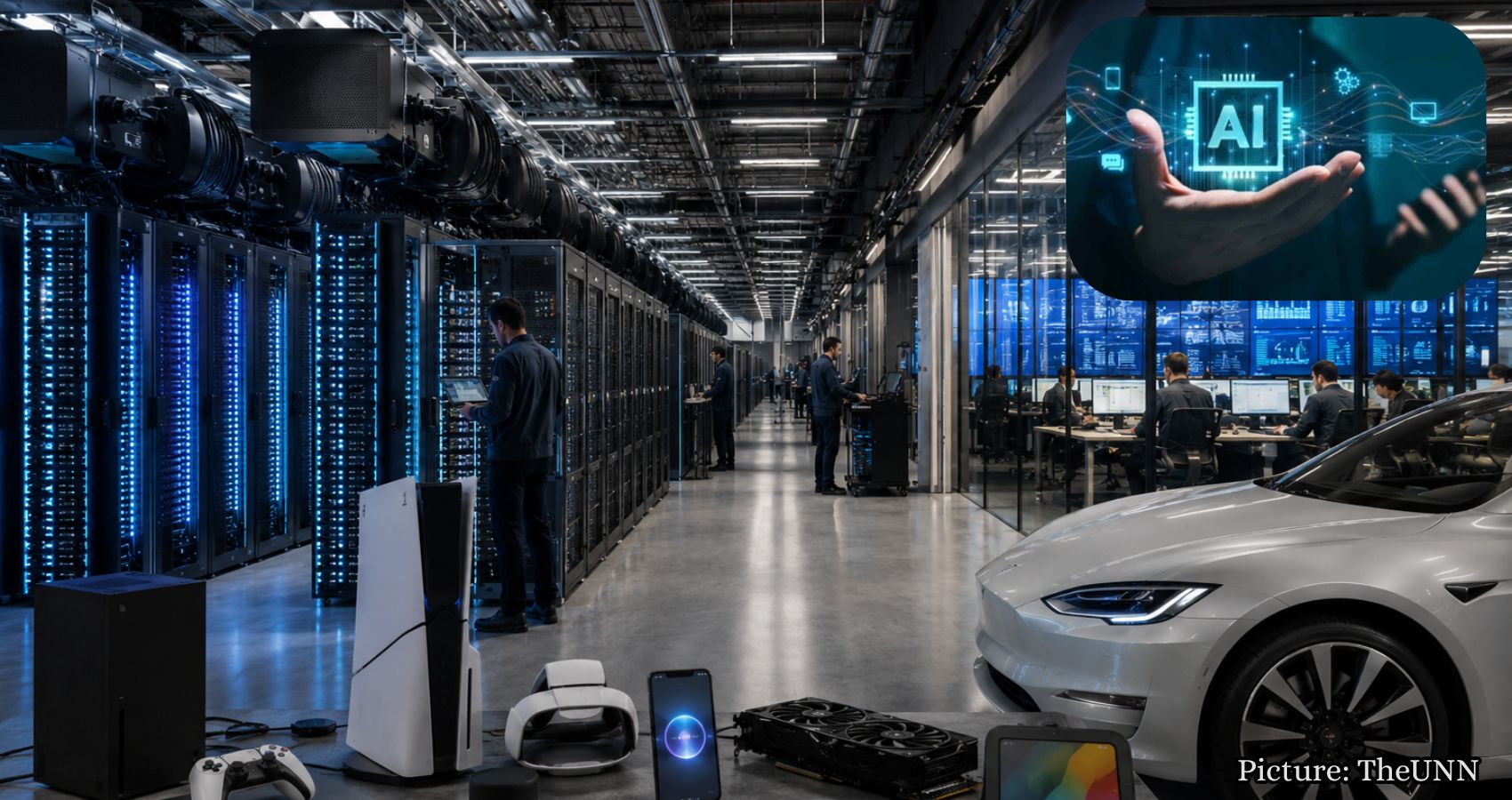
Big Tech’s $8 trillion investment in artificial intelligence is driving up consumer prices across various industries, impacting everything from gaming consoles to electricity bills.
Big Tech’s multitrillion-dollar investment in artificial intelligence (AI) is reshaping not only the technology sector but also influencing everyday consumer prices. This trend is evident in the rising costs of gaming consoles, smartphones, vehicles, home appliances, and electricity, as the demand for AI infrastructure strains global supply chains.
According to a recent analysis by TechSpot, the combined market value of leading AI companies has surged to approximately $8 trillion. This growth is largely driven by aggressive investments from major firms such as Microsoft, Nvidia, Alphabet, Amazon, and Meta. These companies are pouring hundreds of billions of dollars into building AI data centers, acquiring advanced chips, and securing sufficient electricity to power the next generation of AI systems.
The scale of this expansion is beginning to impact industries that are far removed from AI. Modern AI data centers require substantial quantities of graphics processors, high-bandwidth memory chips, cooling equipment, fiber-optic networking hardware, and backup power systems. As technology companies compete for these resources, manufacturers are prioritizing higher-margin AI components over consumer electronics, leading to tighter supplies for other industries.
The gaming industry is already feeling the effects of these changes. Manufacturers of video game consoles, including Sony, Microsoft, and Nintendo, are facing rising component costs as memory chips become more expensive due to the booming demand for AI. Analysts have cautioned that console makers, which typically operate on thin hardware margins, may increasingly pass these higher costs onto consumers through price increases.
The pressure on prices extends beyond gaming. Automakers are also vying for many of the same semiconductors used in AI servers, while smartphone manufacturers, laptop producers, and television makers are confronting higher costs for advanced memory and processing components. As demand continues to outstrip supply, manufacturers across multiple industries are left with the choice of absorbing higher production expenses or raising retail prices.
Energy infrastructure has emerged as another significant constraint. Large AI data centers consume vast amounts of electricity, prompting technology companies to invest heavily in new power generation methods, including natural gas, nuclear energy, and renewable projects. This rapid expansion has intensified competition for electricity in certain regions and increased demand for skilled labor and construction materials needed to build data centers.
Unlike previous technology cycles that were primarily centered on software, the current AI race relies heavily on physical infrastructure, including chips, transmission lines, cooling systems, and power plants. These components require substantial capital investment and lengthy construction timelines.
Despite the mounting costs associated with these investments, the largest technology companies are continuing to accelerate their spending. They are betting that artificial intelligence will yield long-term productivity gains and new revenue streams that justify these unprecedented investments. Analysts predict that AI-related capital expenditures will remain elevated in the coming years as companies race to expand computing capacity and secure strategic advantages in this rapidly evolving market.
As the landscape of technology continues to shift, consumers may need to brace for the impact of these changes on their everyday expenses, as the effects of Big Tech’s AI boom ripple through various sectors.
According to TechSpot, the implications of this investment boom are becoming increasingly evident across multiple industries.