
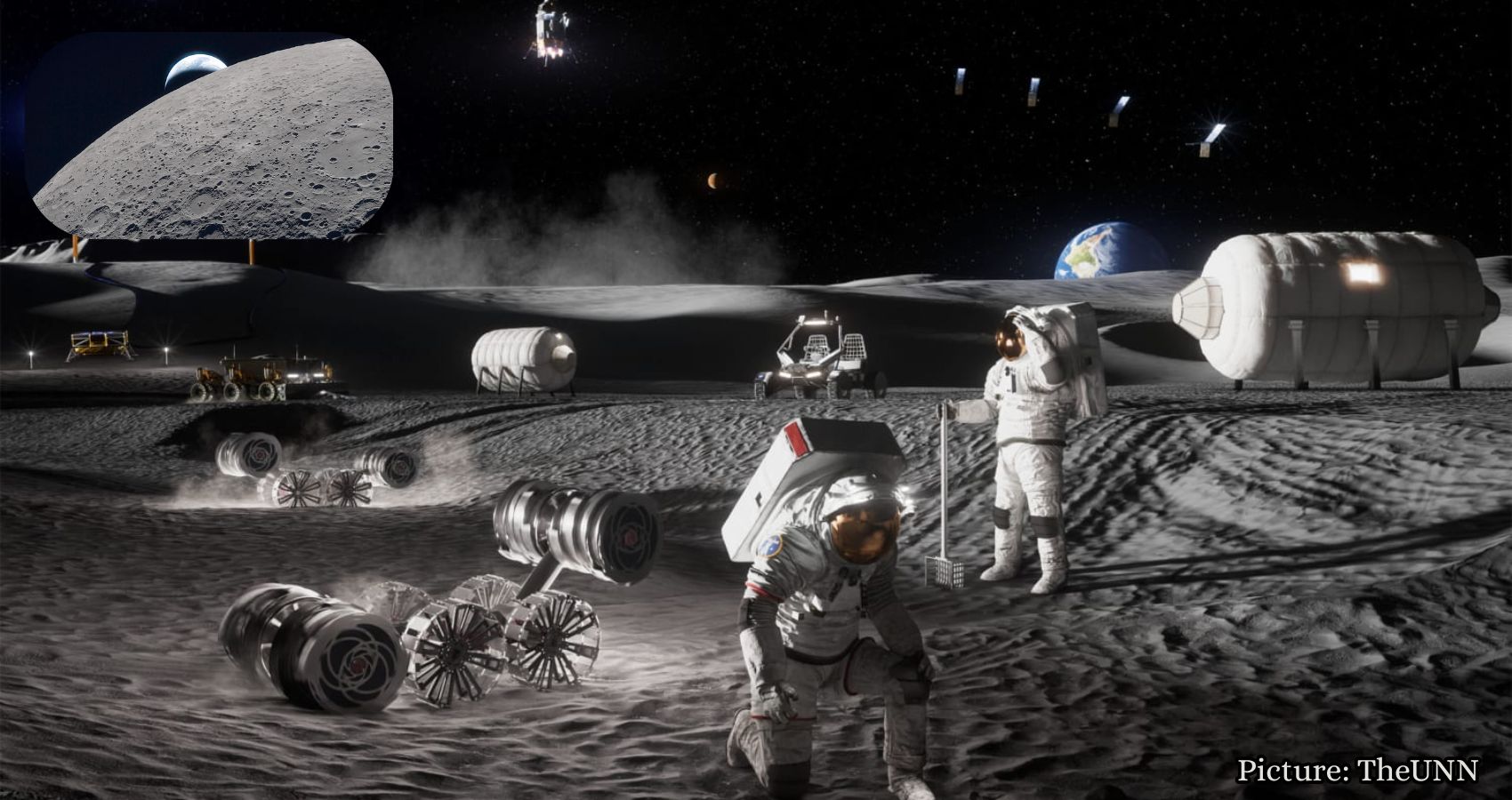
NASA has announced three new Moon missions aimed at establishing a permanent human presence on the lunar surface by the end of 2026.
NASA has unveiled plans for three new Moon missions as part of its ambitious initiative to create a permanent American presence on the lunar surface by 2026. The announcement was made during a news conference on Tuesday, where NASA Administrator Jared Isaacman emphasized the agency’s commitment to what is being referred to as “Moon Base.” This long-term lunar outpost is designed to support sustained astronaut missions and facilitate future exploration of Mars.
“America is returning to the Moon,” Isaacman stated, “and this time to stay.” The newly announced missions are intended to test commercial landers, autonomous vehicles, and lunar surface operations, laying the groundwork for longer astronaut stays on the Moon under the Artemis program.
The first mission, dubbed Moon Base I, will utilize Blue Origin’s Blue Moon Mark 1 Endurance lander to deliver NASA science payloads to the Shackleton Connecting Ridge, located near the lunar south pole. This region is considered critical due to its potential reserves of water ice. The launch for this mission is targeted for no earlier than fall 2026.
Moon Base II will deploy Astrobotic’s Griffin lander to the lunar surface, carrying over 500 kilograms of cargo, including Astrolab’s FLEX rover. NASA anticipates that this rover will assist in developing future astronaut mobility systems and enhance autonomous operations on the Moon.
Meanwhile, Moon Base III will transport NASA’s Lunar Vertex science mission, which aims to study enigmatic lunar swirls—bright formations that scientists believe may be connected to magnetic fields beneath the lunar surface. This mission will also include payloads from the European Space Agency and the Korean Space Agency. Both Moon Base II and Moon Base III are expected to launch before the end of 2026.
NASA officials indicated that these three missions are the first of more than a dozen Moon Base missions anticipated to be announced throughout the year as the agency works toward establishing a sustained lunar presence.
Carlos Garcia-Galan, the Moon Base program manager at NASA, explained that the initial phase of this effort encompasses 25 launches, 21 lunar landings, and the delivery of approximately four metric tons of cargo to the Moon. Additionally, NASA has announced new lunar terrain vehicle awards for Astrolab and Lunar Outpost, along with the development of “Moonfall” drones. These drones are designed to scout landing zones, map the lunar surface, and search for subsurface water ice near the south pole.
Isaacman noted that NASA is intentionally adopting an iterative approach reminiscent of the agency’s strategies during the Apollo era. This involves conducting repeated missions and forming commercial partnerships to rapidly test technologies before attempting permanent habitation on the Moon. “We are leveraging the NASA playbook from the 1960s,” he said, adding, “Figuring out what works and what doesn’t.”
Despite the excitement surrounding these missions, NASA officials acknowledged that the Moon remains an extremely hostile environment. Challenges such as extreme temperatures, radiation exposure, and constant micrometeorite impacts underscore the necessity of repeated robotic missions before astronauts can establish a sustained presence on the lunar surface. “We are really just getting started,” Isaacman concluded.
According to Fox News, these missions mark a significant step in NASA’s ongoing efforts to return to the Moon and eventually pave the way for human exploration of Mars.