
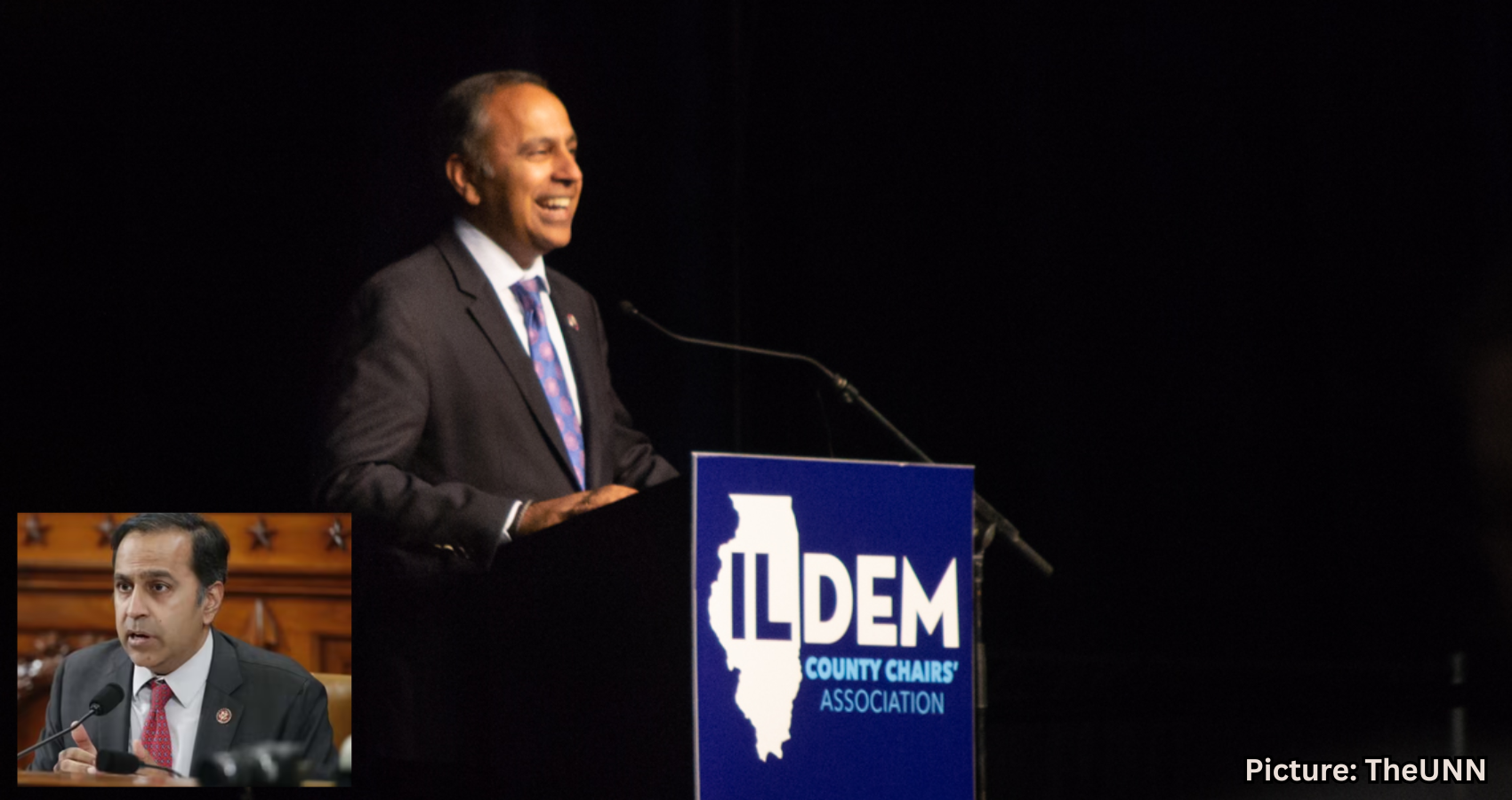
Congressman Raja Krishnamoorthi warns that President Trump’s policies are driving U.S. partners away, while India’s economic strength positions it as a global leader, especially highlighted during the recent BRICS summit.
In a recent statement, Congressman Raja Krishnamoorthi expressed concerns about the direction of U.S. foreign policy under President Donald Trump, suggesting that it is causing American allies to seek partnerships elsewhere. Speaking from Washington, D.C., Krishnamoorthi emphasized that India’s economic strength would enable it to maintain its position as a global leader.
As India hosted the BRICS summit in New Delhi, Krishnamoorthi noted that the country’s ability to convene such significant gatherings of world leaders was not surprising. However, he raised alarms about how U.S. policies are fostering closer ties between Washington’s friends and adversaries alike.
“The question is where is America going?” Krishnamoorthi asked, highlighting a growing concern over the U.S. role in global leadership.
He asserted that India would continue to thrive on the world stage due to its substantial economic size and growth trajectory. Krishnamoorthi questioned whether the United States was effectively demonstrating leadership on critical issues such as climate change, economic development, and global trade stability.
“We are right now AWOL,” he stated, criticizing the current administration’s approach to international relations.
According to Krishnamoorthi, Trump’s trade and foreign policies have inadvertently encouraged nations like India, Egypt, and Brazil to engage more closely with countries such as Russia, China, and Iran. He pointed out that nations across Europe, Asia, and even Canada are also exploring alternative partnerships.
“And that is a very dangerous long-term trend for America,” he warned.
While Krishnamoorthi refrained from labeling recent international gatherings as indicative of a permanent shift in the global order, he acknowledged a noticeable drift in relations with U.S. allies.
“They are eagerly waiting for America to reassert its leadership with regard to any number of issues, which I talked about before,” he added.
Allen Carlson, an associate professor of government at Cornell University and an expert on Chinese foreign policy, echoed Krishnamoorthi’s sentiments, noting that India’s international profile has significantly risen over the past two decades. He attributed this rise in part to Prime Minister Narendra Modi’s assertive foreign policy.
According to Carlson, India’s role in hosting and chairing the BRICS summit underscores its growing stature on the global stage. However, he cautioned that China continues to hold greater influence within the BRICS grouping due to its larger economy and military capabilities.
“Growing economic and military strength in Asia is offsetting American influence,” Carlson stated, adding that both China and, to a lesser extent, India are providing alternatives to U.S. leadership in regions such as Africa and South America.
In a statement issued by Cornell University on September 11, Carlson described the implications of this shift for the United States as profound. He remarked, “BRICS is no longer an incipient power bloc but the core of the emerging international order, with China at its center.”
Carlson further explained that BRICS is working to deepen institutions and cooperation that could challenge the U.S.-led international order. However, he noted that the transition is not instantaneous, as the participating nations face their own domestic challenges.
Krishnamoorthi expressed a desire for Washington to collaborate with India and other partners to counter what he termed Chinese economic, technological, and military aggression. He argued that Trump’s approach to foreign economic and trade policy has diminished America’s capacity to unite countries around shared objectives.
The expanded BRICS summit agenda in New Delhi addressed a range of pressing issues, including conflicts in the Middle East and Ukraine, trade, energy security, and global governance.
Despite the potential for increased cooperation, longstanding issues remain, such as the unresolved territorial dispute between India and China. Carlson also highlighted the significance of Tibet and India’s relationship with the Tibetan government in exile as factors that could impact future collaboration.
As the global landscape continues to evolve, Krishnamoorthi’s insights reflect a growing concern over the U.S.’s diminishing influence and the need for a renewed commitment to international leadership.
According to Cornell University, the dynamics of global power are shifting, and the implications for the United States are significant.