
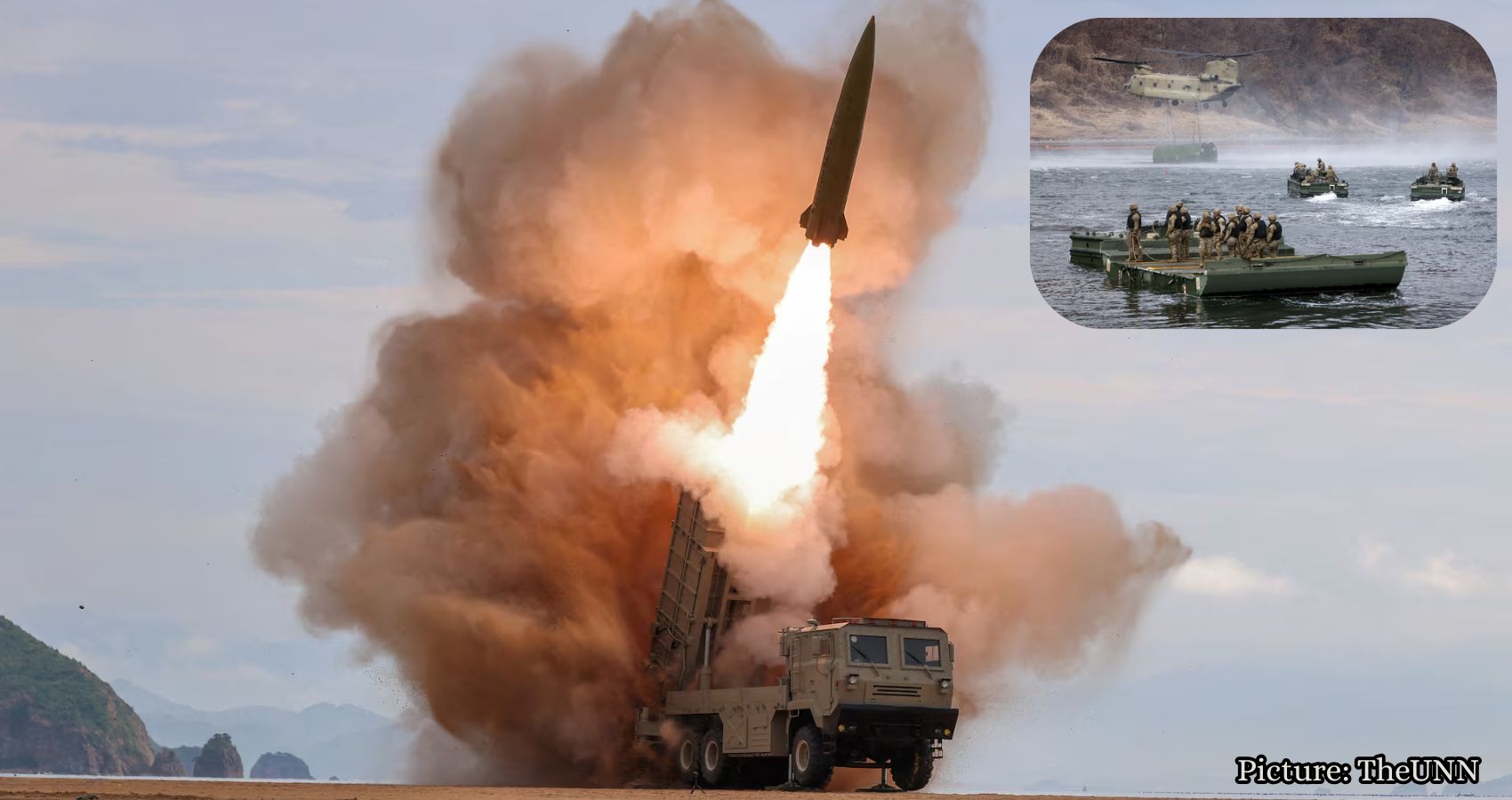
North Korea’s recent ballistic missile launch occurs as the U.S. and South Korea prepare for their annual military exercises, raising tensions in the region.
North Korea conducted another ballistic missile launch on Tuesday, marking the second such event in less than a week. The latest launch was confirmed by Japan’s prime minister’s office, though specific details regarding the missile’s trajectory, range, and landing location have not yet been disclosed.
The U.S. military is actively monitoring the situation and is in consultation with regional allies and partners. In a statement, U.S. Pacific Command noted, “We are aware of the recent missile launch and are consulting closely with our allies and partners. Based on current assessments, these events do not pose an immediate threat to U.S. personnel or territory, or to our allies.” The statement reaffirmed the United States’ commitment to defending its homeland and regional allies.
This latest missile launch follows a previous test on August 5, when North Korea fired a short-range ballistic missile from its eastern Wonsan area. That missile landed in waters off North Korea’s east coast and did not reach Japanese territory, according to Japanese Defense Minister Shinjiro Koizumi. He emphasized that North Korea’s ongoing missile activities pose a significant threat to Japan and the surrounding region, prompting Tokyo to lodge a formal protest with Pyongyang through its embassy in Beijing.
In response to the August 5 launch, South Korea’s military increased its surveillance efforts and coordinated closely with the U.S. and Japan. The South Korean presidential national security council labeled the launch “a provocation” that violated U.N. Security Council resolutions, urging North Korea to cease its missile activities.
The recent missile tests come just ahead of the annual joint military exercises between the U.S. and South Korea, known as Ulchi Freedom Shield, which typically take place in the latter half of August. According to United States Forces Korea, this annual exercise is designed to enhance understanding among the Combined Forces Command, United States Forces Korea, the United Nations Command, and the Republic of Korea (ROK) Joint Chiefs of Staff. The goal is to strengthen the combined defense posture and improve alliance response capabilities against a range of security threats.
The Ulchi Freedom Shield exercises will incorporate live, virtual, constructive, and field-based training, engaging personnel from various military branches. While U.S. and South Korean officials have characterized the training as defensive, North Korea often perceives these exercises as preparations for invasion, frequently responding with missile tests.
The August 5 launch was North Korea’s first ballistic missile test since late June, when the country tested a tactical ballistic missile equipped with what state media referred to as a “special mission” warhead, among other weaponry. Following those tests, North Korean leader Kim Jong Un stated that his military needed to enhance its “deadly and destructive offensive posture.”
The situation remains tense as North Korea continues its missile activities, prompting heightened vigilance from the U.S. and its allies in the region.
According to Fox News, the developments underscore the ongoing volatility in the Korean Peninsula and the broader implications for regional security.