
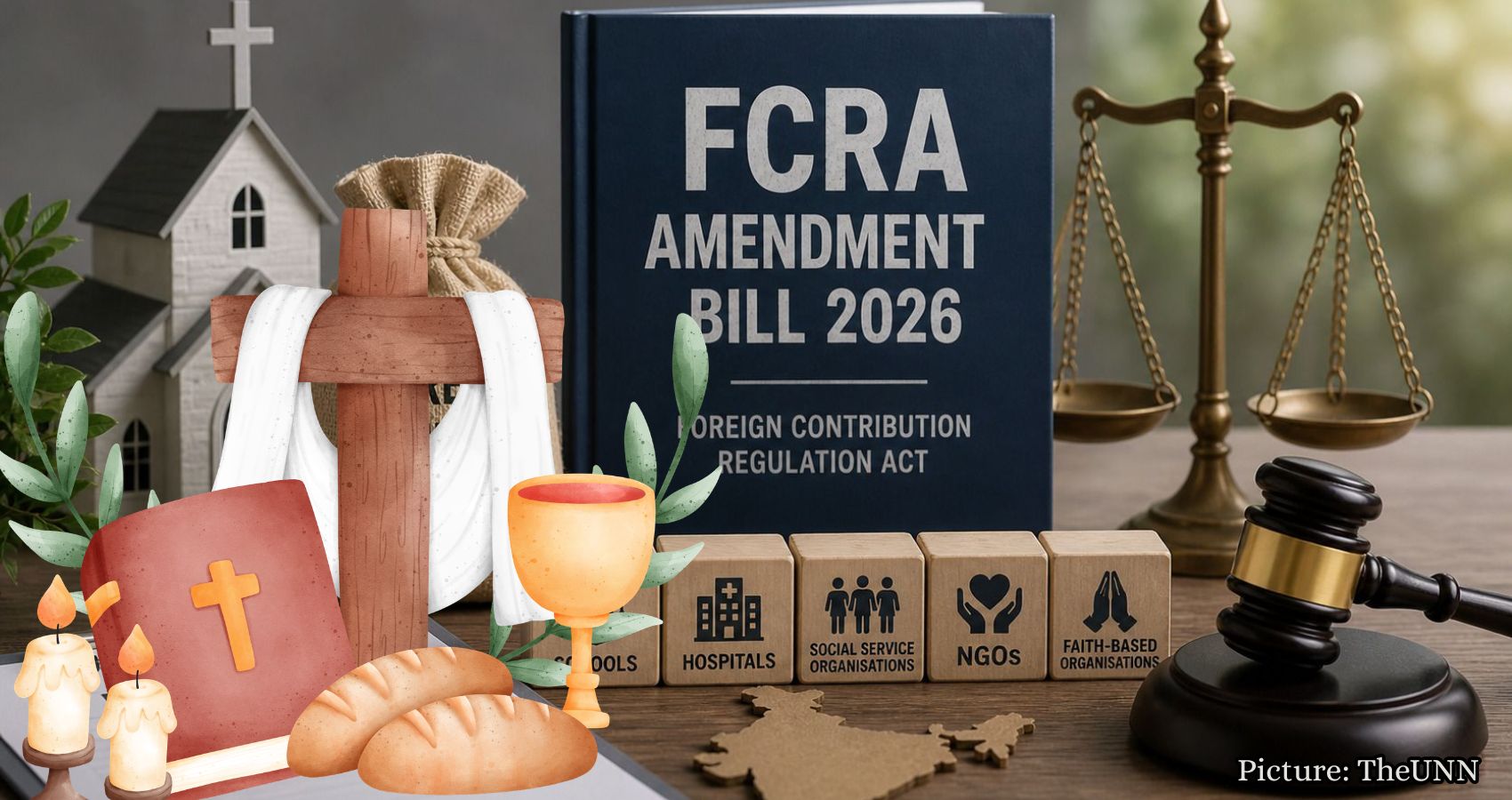
Several prominent Christian organizations in India are urging the government to reconsider the Foreign Contribution Regulation (Amendment) Bill 2026, advocating for a thorough review by a Joint Parliamentary Committee.
Kolkata, August 11, 2026 – A coalition of prominent Christian organizations in India, including the Catholic Bishops Conference of India (CBCI), the National Council of Churches in India (NCCI), and the Council of Churches in Mizoram, is calling on the Indian government to reevaluate the Foreign Contribution Regulation (Amendment) Bill 2026 (FCRA). These groups are advocating for the legislation to be referred to a Joint Parliamentary Committee (JPC) for further examination.
This push for a JPC review follows a series of meetings between Christian leaders and Union Home Minister Amit Shah, which began on July 5, 2026. Notable participants in these discussions include Mizoram Chief Minister Lalduhoma and Meghalaya Chief Minister Conrad K. Sangma, who have expressed their concerns regarding specific provisions within the proposed Bill. Reports indicate that the government is considering the request for a JPC review, particularly as discussions about the Bill are scheduled for the Lok Sabha on August 12, 2026, just before the end of the monsoon session on August 13.
In a memorandum dated August 10, 2026, the CBCI emphasized the need for a clear distinction between minor procedural lapses and serious infractions in the context of the proposed amendments. This request reflects growing apprehension among Christian organizations about the potential implications of the Bill for non-governmental organizations (NGOs) that depend on foreign funding. The CBCI’s memorandum argues that a nuanced understanding of infractions is essential for fair governance.
During an earlier meeting on July 10, Shah reassured CBCI representatives that the proposed amendments were not aimed at targeting Christian NGOs, which collectively receive approximately 15% of the total foreign donations entering India under the FCRA. However, the proposed legislation includes a controversial clause regarding a ‘Designated Authority,’ which would have the power to seize, manage, or dispose of assets generated from foreign funds if an NGO’s FCRA registration is suspended, canceled, or not renewed. This provision has raised significant concerns among NGOs about the potential for arbitrary government action.
The Foreign Contribution Regulation Act was originally enacted in 1976 to regulate the acceptance and use of foreign donations by NGOs in India. Over the years, the Indian government has tightened its control over foreign funding, particularly targeting organizations perceived as acting against national interests. Under current FCRA regulations, 80% of foreign donations must be allocated to designated projects, while the remaining 20% can be used for administrative expenses. This ratio has sparked contention, with several NGOs facing penalties for exceeding the allowed administrative cost limit.
During discussions with CBCI representatives, Shah indicated that any potential confiscation of properties associated with NGOs would not have retrospective effects, suggesting that existing property rights would remain intact. However, ambiguities remain regarding how the timeline for possible confiscations would be determined, particularly concerning the auditing of accounts and asset registers. This uncertainty raises questions about how NGOs can protect their interests under the new framework.
Retired Cardinal Oswald Gracias of Bombay also reached out to the Union Home Minister on August 8, advocating for a comprehensive consultation process that includes all stakeholders, especially the Christian community. He expressed concerns about the urgency to finalize the Bill without adequate engagement with affected parties. The CBCI’s call for broader consultations has prompted discussions about inclusivity, as the organization has not publicly invited lay representatives to share their views on the proposed amendments.
The urgency surrounding this issue has led to calls for a National Day of Prayer among churches, as well as increased scrutiny of the government’s approach to foreign funding regulations. Critics argue that the FCRA Amendment Bill reflects a broader trend of increasing government control over civil society, which could stifle dissent and limit the activities of NGOs dedicated to serving marginalized communities.
As the monsoon session of Parliament approaches its conclusion, the future of the FCRA Amendment Bill remains uncertain, with significant implications for NGOs operating in India and the communities they serve. The outcome of this legislative process is likely to shape the operational landscape for NGOs, particularly those reliant on international support. Observers are closely monitoring developments, as the government’s next steps may influence not only the immediate functioning of these organizations but also the broader civil society landscape in India, according to Source Name.