
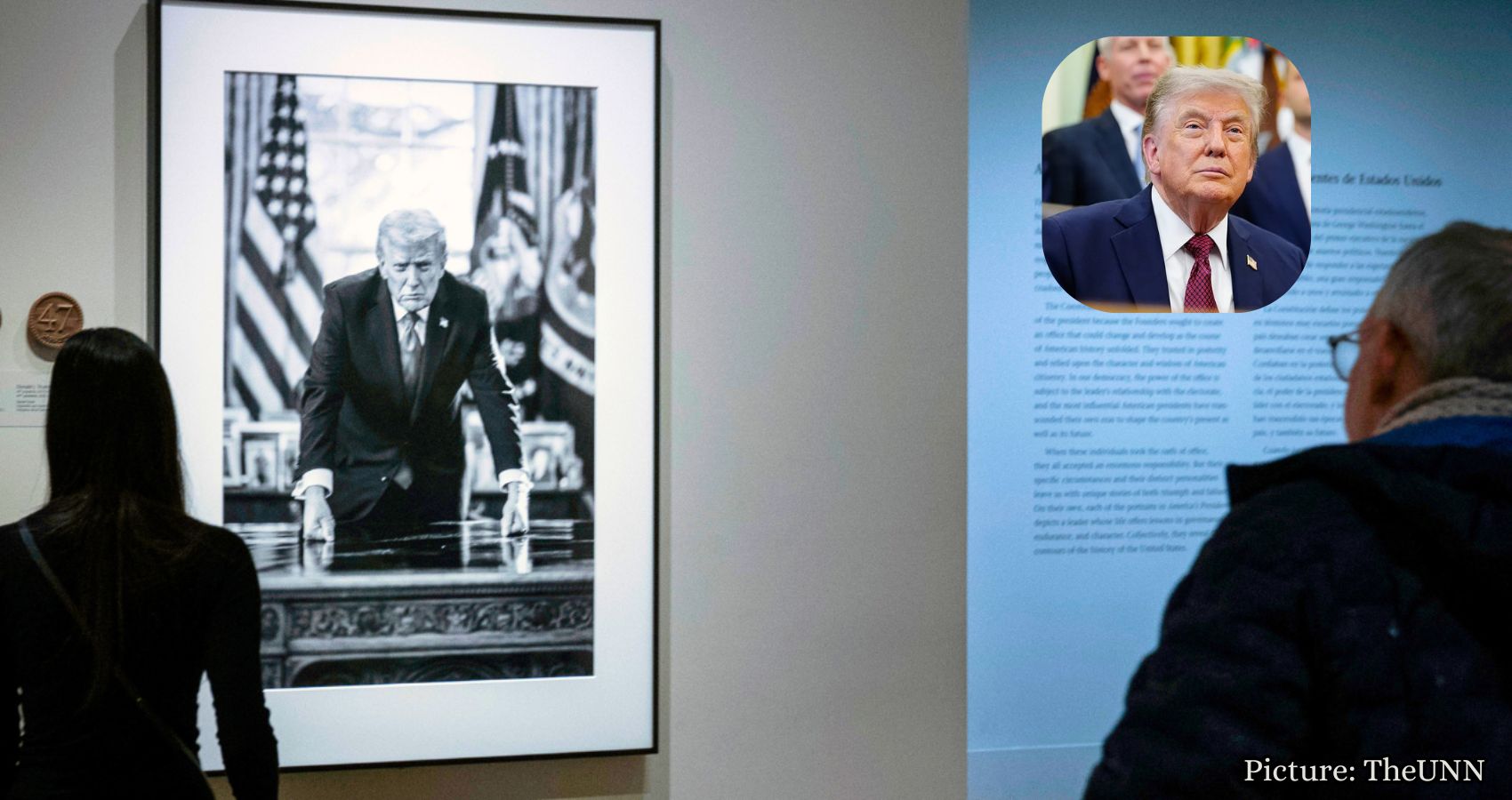
President Donald Trump’s administration has launched a comprehensive review of the Smithsonian Institution, targeting what it describes as “woke” ideology in its exhibits and educational programming.
President Donald Trump’s administration has intensified its efforts to challenge what it terms “woke” ideology at the Smithsonian Institution, leading to one of the most extensive reviews of the cultural institution in decades. The Smithsonian, which encompasses 21 museums, the National Zoo, and nearly 157 million objects and specimens, receives over $1 billion annually in federal funding, alongside private contributions.
This initiative has thrust the taxpayer-supported institution into a broader national debate regarding patriotism, historical interpretation, and the role of federally funded cultural organizations. The administration’s scrutiny of the Smithsonian has raised questions about how American history is presented and understood, particularly amidst a growing divide in public sentiment regarding the nation’s past.
Over the past 16 months, the administration has conducted a thorough examination of museum exhibits, educational programming, internal records, and leadership statements. This comprehensive review included multiple document requests, interviews with curators, and on-site walkthroughs of various museums. The culmination of these efforts was a 162-page report recommending significant reforms and outlining new executive actions aimed at implementing these recommendations.
The timeline of this initiative began when Trump signed an executive order titled “Restoring Truth and Sanity to American History” shortly after the start of his second term. This order contends that federal cultural institutions, including the Smithsonian, have promoted “divisive” ideological narratives. It directs the administration to restore what it describes as a more patriotic presentation of American history and tasks the White House Domestic Policy Council, along with Vice President JD Vance, who serves as a Smithsonian Regent, with reviewing the institution’s exhibits and programs.
Following the executive order, the White House Domestic Policy Council launched an investigation focused primarily on the National Museum of American History. Officials scrutinized exhibits, educational materials, strategic plans, leadership speeches, and museum programming. During this review, they documented instances where they believed ideological narratives overshadowed a patriotic retelling of American history.
The White House formally notified Smithsonian Secretary Lonnie Bunch of the review, requesting a range of documents including exhibition plans, educational materials, and internal policies. The directive outlined a review of eight Smithsonian museums to ensure that exhibits “celebrate American exceptionalism” while removing what the administration considers divisive narratives. Deadlines were established for document production, curator interviews, and on-site reviews, with museums instructed to begin revising public-facing content within 120 days.
Among the criticisms levied by the administration was the Smithsonian’s lack of special programming for Independence Day in 2025, despite being open on July 4, and the discontinuation of traditional Flag Day ceremonies. The White House also expressed concern over the planning of exhibits and events for the 250th anniversary of the United States, arguing that these installations emphasize the nation’s flaws while inadequately honoring the Founding Fathers, the Declaration of Independence, and the American Revolution.
As the review progressed, the administration noted that the Smithsonian had not provided most of the requested records. The White House set a deadline of January 13, 2026, for the institution to produce the necessary documentation, reminding officials that federal funding must align with the principles outlined in Trump’s executive order.
White House investigators completed on-site walkthroughs of various Smithsonian museums, where they assessed exhibits, educational materials, digital content, and internal planning documents. During these visits, they reported finding exhibits that they argued emphasized restorative history, decolonization, immigration activism, diversity, equity, and inclusion (DEI) initiatives, as well as social justice themes. In contrast, they claimed that the institution downplayed the contributions of America’s Founders and the nation’s achievements.
The final report concluded that the Smithsonian had undergone a significant shift away from its original mission, asserting that exhibits increasingly prioritize social justice activism and ideological narratives over America’s founding principles and national accomplishments.
In a notable development, the museum unveiled its signature exhibition commemorating America’s 250th anniversary, showcasing 250 objects from its collection, including Thomas Jefferson’s writing desk, George Washington’s uniform, and the Star-Spangled Banner. However, just two months before the anniversary, the White House criticized the exhibition for repackaging existing displays rather than presenting a new founding-era exhibit. It also expressed disappointment that the installation failed to adequately celebrate the Founding Fathers, the Declaration of Independence, or the American Revolution.
In response to the findings of the review, the White House Domestic Policy Council released its “Saving America’s Story” report, which characterized the National Museum of American History as having undergone “ideological capture.” The report recommended the removal of political activism from museum exhibits and the restoration of displays that emphasize America’s foundational principles, national achievements, and patriotic history. The findings were based on the extensive review initiated by Trump’s executive order in March 2025.
Hours after the report’s release, Trump signed the “Restoring Trust in the Smithsonian Institution” executive order. This directive instructed various government agencies, including the Interior Department and the Office of Management and Budget, to encourage the Smithsonian to address the report’s findings. Additionally, the order mandated the National Park Service to install temporary signs outside the National Museum of American History, directing visitors to the report and outlining the administration’s concerns regarding the museum’s portrayal of American history.
The administration maintains that its efforts aim to restore a more patriotic presentation of American history at the Smithsonian. Conversely, the institution has long asserted that its mission is to preserve and present the nation’s history through scholarship, research, and public education, setting the stage for an ongoing debate about how America’s story should be told.
The Smithsonian did not immediately respond to requests for comment regarding the ongoing situation.
According to Fox News, the developments surrounding the Smithsonian reflect a significant ideological clash over the interpretation of American history and the role of cultural institutions in shaping public understanding.