
Ukraine has intensified its drone offensive against Russian maritime and energy targets, striking 21 vessels and the Omsk refinery, while Moscow responds by banning diesel exports to manage fuel shortages.
Ukraine has launched one of its most extensive drone offensives against Russia’s maritime and energy infrastructure in recent days, claiming strikes on 21 vessels and intensifying attacks on major refineries deep within Russian territory. This wave of assaults highlights Ukraine’s growing long-range capabilities and aims to disrupt Moscow’s fuel supplies.
On Wednesday, Ukrainian President Volodymyr Zelenskyy met with former U.S. President Donald Trump at the NATO summit in Ankara. During their discussions, Trump announced that the United States would permit Ukraine to manufacture Patriot air-defense interceptors, and the two leaders explored the possibility of a new drone agreement.
Zelenskyy emphasized that air defense remains a top priority for Ukraine, describing the potential drone deal as “a very good beginning.” He expressed hope for further discussions with Trump regarding the details of the agreement. This meeting allowed Zelenskyy to present evidence of Ukraine’s domestic drone capabilities, which can threaten Russian assets far beyond the conventional battlefield.
Trump praised Zelenskyy as “very effective” and credited Ukrainian forces for successfully utilizing American military equipment against Russia’s larger military. “He’s had the best equipment because he had our equipment,” Trump stated. “But somebody has to use that equipment. And you have a lot of brave people that are using that equipment.”
Ukraine’s recent offensive has forced Russia to defend its refineries, airfields, shipping routes, and other critical infrastructure well beyond the front lines. While Kyiv has not achieved significant breakthroughs in its ground campaign, the long-range strikes have begun to disrupt fuel production and maritime logistics, imposing costs on regions of Russia that were previously insulated from the conflict.
On Tuesday, Ukraine’s Unmanned Systems Forces reported that nine Russian-linked vessels were struck in the Sea of Azov, bringing the total number of targeted vessels over a 72-hour period to 21. Commander Robert “Magyar” Brovdi indicated that the targets included 19 oil tankers, a cargo ship, and a ferry operating near Russian-occupied Crimea, describing the campaign against the fleet as reaching an “industrial scale.”
Both Ukrainian and Russian officials confirmed that the overnight offensive targeted tankers, refineries, pipeline facilities, and a military airfield across several Russian regions. Ukraine stated that many of the vessels were part of Russia’s so-called shadow fleet, used to transport fuel to Crimea, which Russia seized and illegally annexed in 2014.
The maritime strikes were accompanied by attacks on the Saratov refinery and energy facilities in the Russian regions of Tatarstan and Bashkortostan. Russian authorities reported one fatality in Saratov due to the attacks. Additionally, Ukraine claimed to have struck the Borisoglebsk military airfield in Russia’s Voronezh region, which has been utilized by Russian combat aircraft involved in operations against Ukraine.
This latest wave of drone strikes follows a significant Ukrainian attack on the Omsk refinery in Siberia, approximately 1,700 miles from Ukrainian-controlled territory. The Omsk facility is Russia’s largest oil refinery, processing about 460,000 barrels of crude per day last year, according to Reuters. Following the attack, industry sources reported that the Omsk facility had halted oil processing.
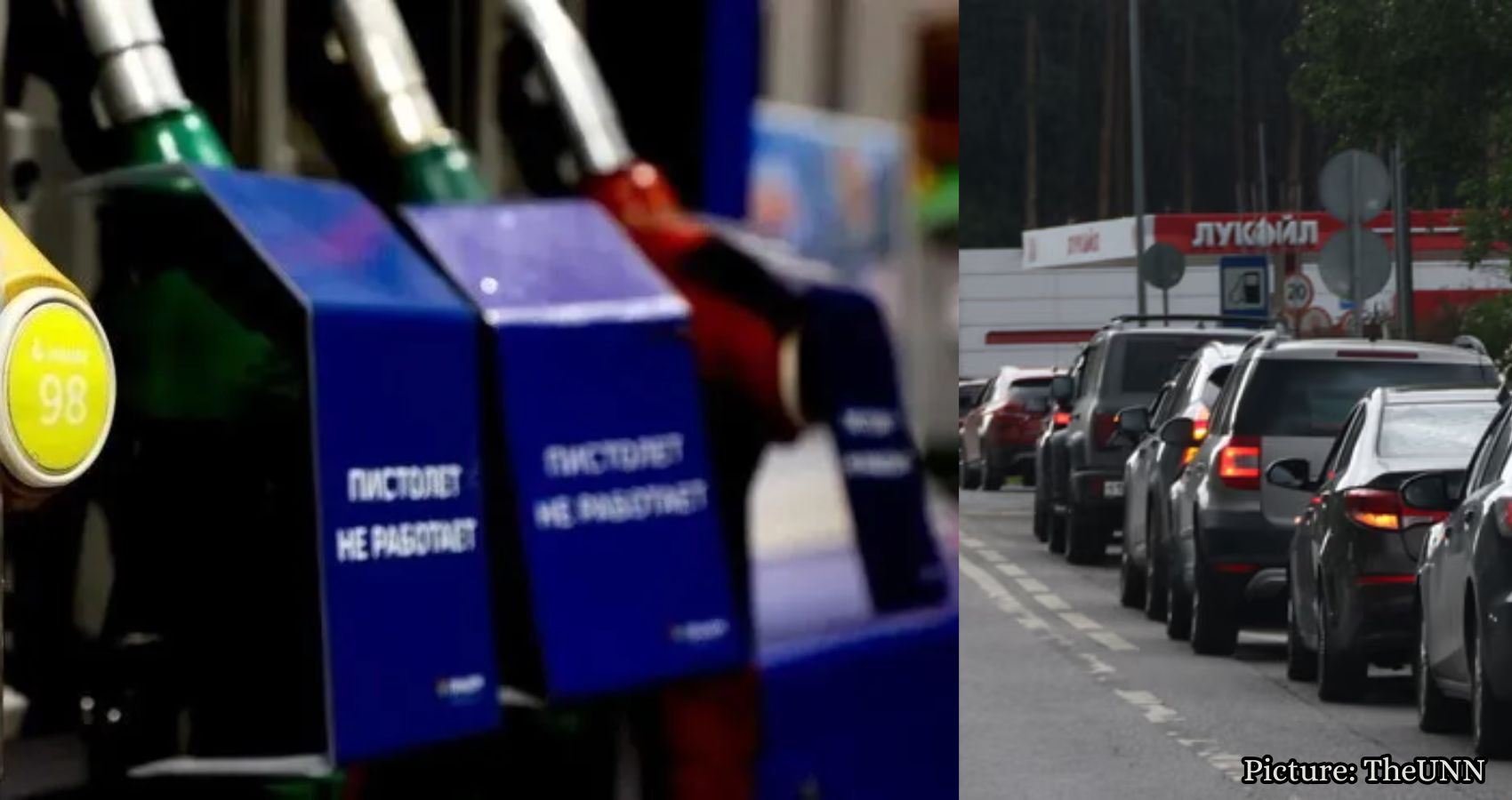
The disruption at the Omsk refinery comes amid reports of gasoline and diesel shortages in various parts of Russia, attributed in part to repeated Ukrainian attacks on refineries and fuel depots. Long lines have formed at filling stations in several cities, and some regions have implemented purchasing restrictions.
In response to the fuel shortages, Russia announced on Wednesday that it would temporarily ban diesel exports through July 31 to safeguard domestic supplies. This shortage has become one of the most visible impacts of the ongoing conflict on ordinary Russians.
Margarita Simonyan, editor-in-chief of the Kremlin-funded RT network, acknowledged the difficulties faced by the Russian population during an appearance on state television. She urged citizens not to respond by challenging the government. “There is no petrol,” Simonyan stated in a translated clip circulated by regional media, recalling the food rationing experienced after the collapse of the Soviet Union. “We endured it. And we will endure it now.”
Simonyan cautioned that Russia’s adversaries would like to see the population react as it did during the 1917 revolution and “run off to overthrow” the czar. “Yes, it is hard, yes, very hard,” she said, urging Russians to remain calm amidst the challenges.
The pressure on Russia’s energy infrastructure coincided with Zelenskyy’s meeting with Trump at the Beştepe Presidential Compound. Meanwhile, Russia continued its bombardment of Ukraine, striking Kyiv and other cities with missiles and drones. Kyiv Mayor Vitali Klitschko reported that storage facilities were ablaze in the capital’s Desnyanskyi district, with additional fires reported in the Sviatoshynskyi district.
As the conflict escalates, the implications of Ukraine’s drone offensive and Russia’s responses will continue to shape the dynamics of the war and its impact on both nations.
According to Reuters, the ongoing situation reflects the evolving nature of the conflict and the increasing stakes for both Ukraine and Russia.