
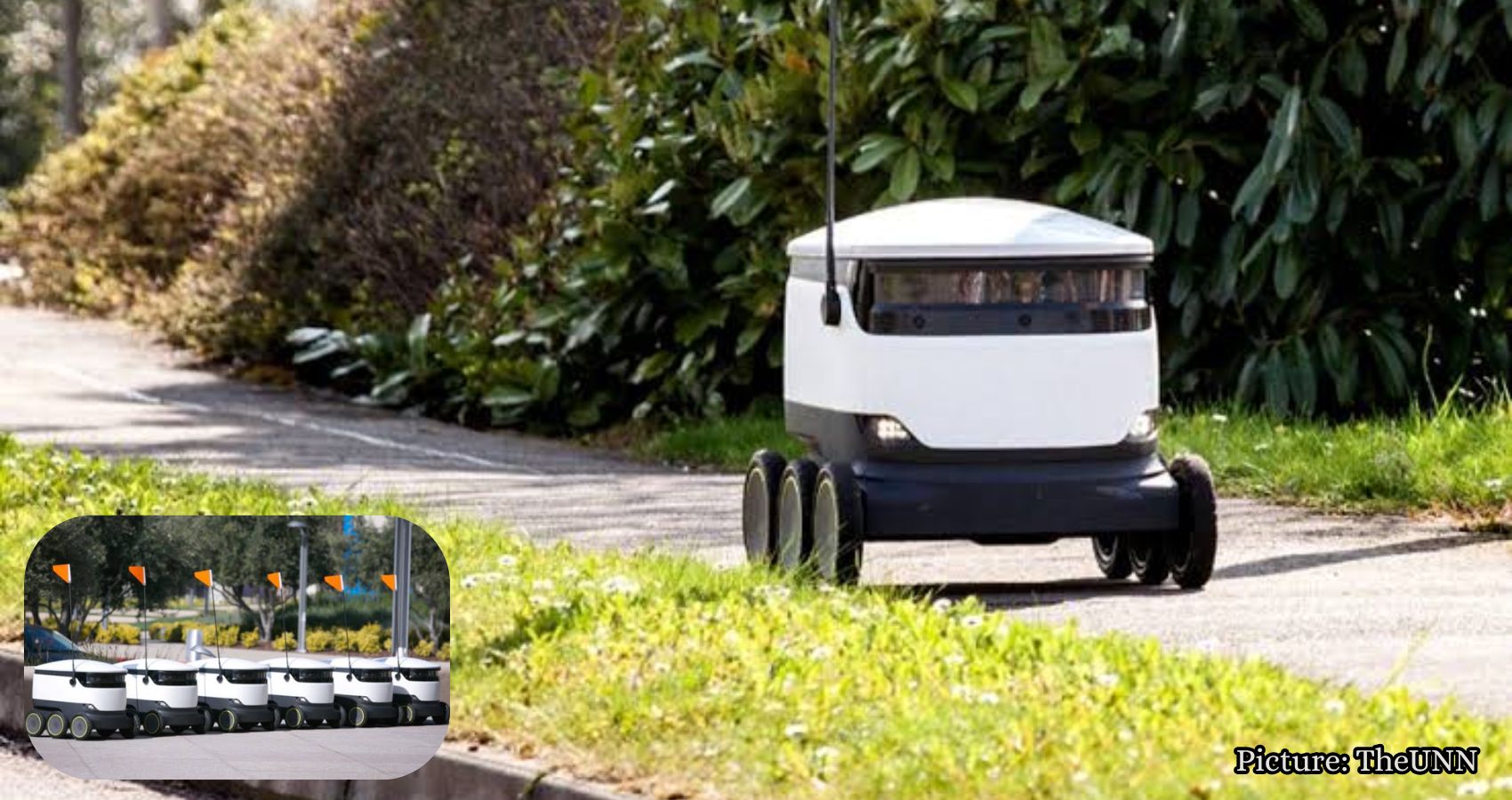
Starship Technologies is transitioning its delivery robots from U.S. college campuses to urban grocery and food delivery, facing new challenges on crowded city sidewalks.
Starship Technologies is making a significant shift in its operations by redeploying over 1,200 delivery robots from U.S. college campuses to grocery and hot food delivery services in cities across the United States and Europe. This transition marks the end of the robots’ presence on university grounds, where they became a familiar sight delivering everything from lattes to late-night snacks.
The decision to move away from college campuses comes as Starship aims to focus on its grocery delivery operations, which are projected to grow tenfold over the next two years. The company cites increasing demand from major retailers in both the U.S. and Europe as a driving force behind this change. In Finland, Starship’s robots already complete approximately one in five grocery deliveries, providing a successful model that the company hopes to replicate in other markets.
Starship’s robots gained popularity on college campuses, where students formed attachments to these autonomous machines. They served as both a convenient delivery option and a quirky mascot for students, who often found themselves hungry at odd hours and without access to a full kitchen. The robots became particularly valuable during the pandemic, as contactless delivery options grew in importance.
As Starship prepares to transition its fleet, the company has assured its university partners that it will continue to provide service through the 2026–2027 academic year, implementing plans to minimize disruption. This means that the withdrawal from campuses will not be abrupt; instead, it will be a gradual process as the company shifts its focus to urban delivery.
For students who have come to appreciate the convenience of these robots, this change may feel like the end of an era. However, for Starship, the pivot represents a move toward a market with potentially stronger economic returns. According to Starship CEO and co-founder Ahti Heinla, the company’s robots can deliver groceries at a cost that is $3 to $4 lower per delivery compared to traditional courier services, a compelling proposition for retailers looking to reduce last-mile delivery costs.
Despite the potential benefits, the transition to city sidewalks presents new challenges. Delivery robots will need to navigate crowded urban environments, sharing space with pedestrians, strollers, and individuals using wheelchairs. This requires careful design choices, as a robot that blocks a curb ramp or unexpectedly halts in a busy area can quickly become a nuisance rather than a helpful service.
There have already been instances of delivery robots encountering difficulties, such as getting stuck or causing accessibility issues. Cities like Chicago have seen pushback regarding sidewalk delivery robots, highlighting the need for Starship to address safety and operational concerns if it hopes to gain acceptance in urban areas. The same robots that were charming on college campuses may be perceived as obstacles in bustling city streets.
Transitioning from campus food delivery to grocery delivery introduces additional complexities. College orders typically involve lighter items like sandwiches and snacks, while grocery deliveries may include heavier products and require more frequent routes. Customers expect reliability and efficiency, which will be crucial for Starship’s success in this new market.
Starship claims that the global food delivery market is currently valued at $650 billion and is in need of more autonomous delivery solutions. With over 10 million deliveries completed, the company has established a significant lead in the sidewalk robot sector. However, public acceptance remains a critical factor. While some may appreciate a robot delivering groceries during inclement weather, others may become frustrated if the same robot obstructs sidewalks during peak hours.
The future of delivery robots hinges on their ability to coexist with pedestrians without causing inconvenience. Companies must prioritize designs that respect the diverse needs of urban residents, ensuring that robots do not impede access for individuals with disabilities or those carrying heavy items.
As Starship’s delivery robots begin to appear more frequently in grocery stores, restaurants, and densely populated neighborhoods, it will be important for the public to observe their behavior. Residents should take note of how these robots interact with pedestrians and whether they adhere to local regulations regarding personal delivery devices.
If a robot causes a problem, it is essential to document the incident safely and report it to local authorities or the delivery company. Concrete examples will help officials understand the challenges posed by these robots and inform future regulations.
Privacy concerns also accompany the deployment of delivery robots, which utilize sensors and cameras for navigation. Companies must provide transparency about data collection practices, including how long data is retained and whether it can be accessed by law enforcement.
Starship’s exit from college campuses signifies a pivotal moment in the evolution of autonomous delivery services. As the company shifts its focus to urban environments, the success of its robots will depend on their ability to integrate seamlessly into the daily lives of city residents. If they can deliver convenience without creating additional obstacles, they may become a valuable addition to urban logistics. However, if they contribute to sidewalk congestion and safety issues, public resistance is likely to grow.
As cities adapt to the presence of delivery robots, the question remains: will these machines enhance urban life, or will they become a source of frustration? The answer will ultimately depend on how well they can navigate the complexities of city sidewalks while respecting the needs of all pedestrians.
Starship Technologies was founded in Tallinn, Estonia, in 2014 by Ahti Heinla and Janus Friis. The company’s core engineering and AI development team remains based in Estonia, underscoring the importance of innovation in this rapidly evolving sector. The shift from college campuses to urban delivery highlights the broader trends in the delivery robot industry and the challenges that lie ahead.
As the landscape of autonomous delivery continues to change, it will be crucial for companies like Starship to foster trust and collaboration with the communities they serve. The future of delivery robots will depend on their ability to operate effectively and respectfully in shared public spaces.
According to CyberGuy, the success of delivery robots will ultimately hinge on their acceptance by the public and their ability to coexist with pedestrians in urban environments.