
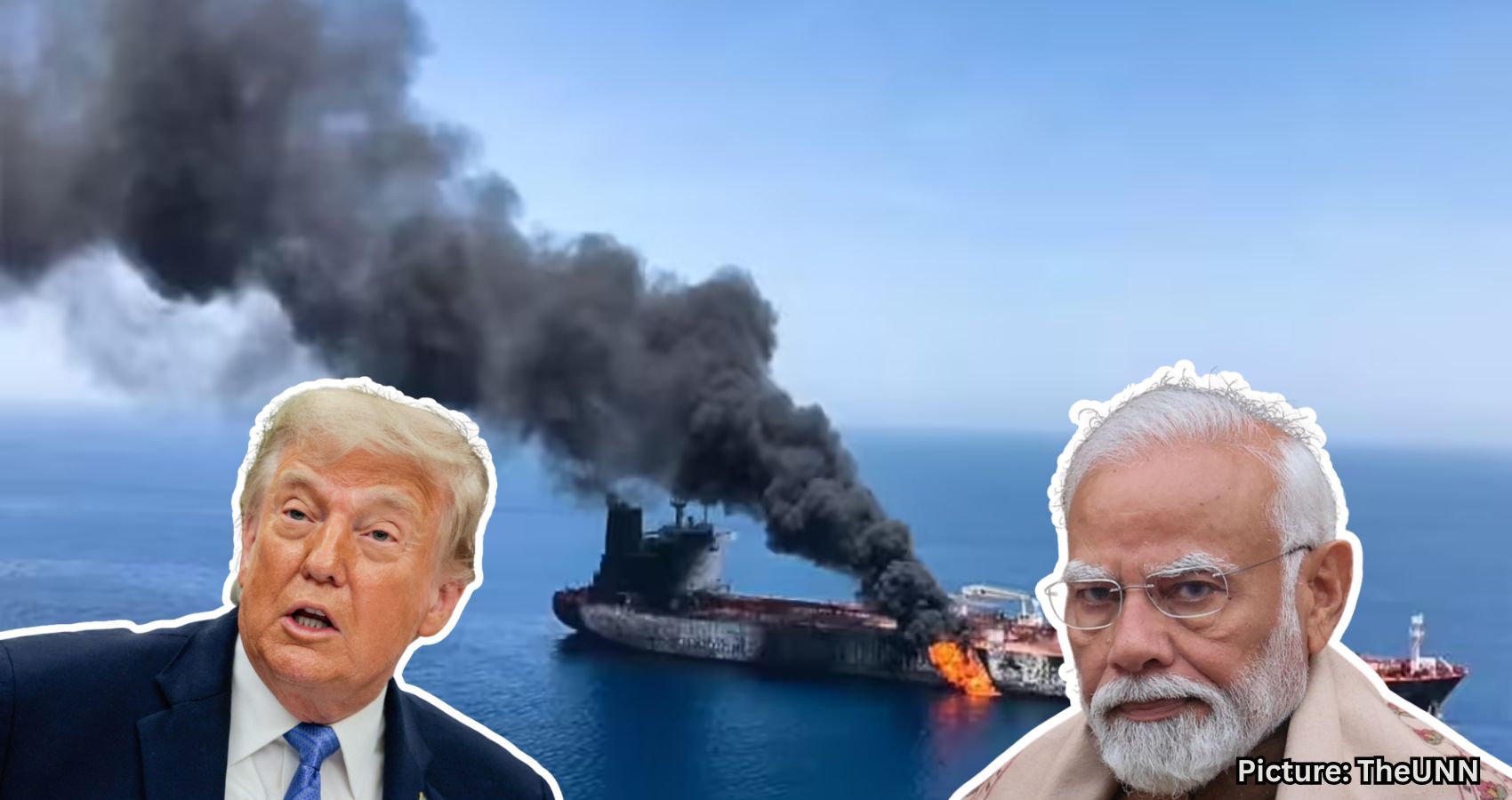
Three Indian sailors were confirmed dead following a U.S. military strike on the tanker MT Settebello in the Gulf of Oman, raising concerns over maritime safety amid rising tensions in the region.
Three Indian sailors were confirmed dead after the U.S. military struck the tanker MT Settebello in the Gulf of Oman on Wednesday, according to reports from AP News. The vessel was carrying 24 Indian crew members at the time of the incident, with 21 of them successfully rescued.
India’s Shipping Minister, Sarbananda Sonowal, announced on social media platform X that the bodies of the deceased sailors would be repatriated to India shortly.
According to India’s Ministry of Ports, Shipping and Waterways, the sailors who lost their lives were identified as Aditya Sharma, a cadet; Shivanand Chaurashiya, a fitter; and Patnala Suresh, a chief engineer.
In a statement released by the U.S. Central Command (Centcom), it was reported that one of its aircraft fired “precision munitions” into the tanker’s engine room after the crew “repeatedly failed” to comply with instructions from U.S. forces.
Earlier in the week, U.S. forces also targeted the Palau-flagged oil tanker Marivex in the Gulf of Oman. Indian authorities confirmed that all 24 crew members aboard were rescued by the Omani military before the vessel sank.
On Thursday, India’s Ministry of External Affairs reported that the Guinea-Bissau-flagged MT Jalveer also came under attack near Oman’s Shinas port. Additional Secretary Aseem Mahajan stated that the Royal Navy of Oman was assisting with the evacuation, and all 20 crew members were confirmed safe.
In response to the strike on the Settebello, the Ministry of External Affairs spokesperson Randhir Jaiswal indicated that India lodged a strong protest with the United States. “We called in the American chargé d’affaires and informed them of our deepest concerns about the ongoing incidents of attacks,” Jaiswal said.
Although the vessels involved were foreign-flagged, the majority of their crew members were Indian nationals, raising further concerns about the implications of such military actions.
Rajesh Sharma, the father of deceased sailor Aditya Sharma, expressed his grief and confusion over the incident. He revealed that his son was expected to return home in May, but his assignment had been extended. “Who is responsible for the deaths of the three Indian sailors? The circumstances that led to the deaths must be investigated,” he stated.
The strikes occurred amid heightened tensions between the United States and Iran. The U.S. has imposed a blockade on Iranian ports following Iran’s effective closure of the Strait of Hormuz, a crucial shipping route that carries approximately 20% of the world’s oil and gas supplies.
According to Centcom, U.S. forces conducted additional self-defense strikes against multiple targets in Iran on June 10, following orders from the Commander in Chief.
India has consistently maintained that the targeting of commercial shipping and civilian infrastructure in the region must cease. Manoj Yadav, general secretary of the Forward Seamen’s Union of India (FSUI), stated that the union has begun reaching out to the families of the deceased sailors. He expressed disbelief that U.S. authorities were unaware of the nationalities of those aboard the vessels. “If the ships failed to heed their instructions, detaining them was a viable alternative,” Yadav remarked.
The ongoing tensions between the U.S. and Iran have escalated, with both nations exchanging strikes for a second consecutive day, despite a ceasefire that was reached in April.
According to India’s shipping ministry, there are currently 562 Indian seafarers on Indian-flagged vessels in the region, including 329 in the Persian Gulf and 233 in the Gulf of Oman. Additional Secretary Mukesh Mangal noted that there are “more than 18,000 Indian seafarers in total in the whole Gulf region.”
On Wednesday, U.S. President Donald Trump issued a warning that Iran would face severe consequences if it delayed signing a peace agreement, accusing Tehran of taking advantage of American negotiations.
The current conflict escalated on February 28 after U.S. and Israeli strikes in Iran resulted in the death of the country’s supreme leader. In retaliation, Iran launched attacks on Israel and U.S.-aligned states in the Gulf, leading to a broader regional conflict.
As the situation develops, the implications for maritime safety and international relations remain a pressing concern.
According to AP News, the incident highlights the precarious nature of shipping in a region fraught with geopolitical tensions.