
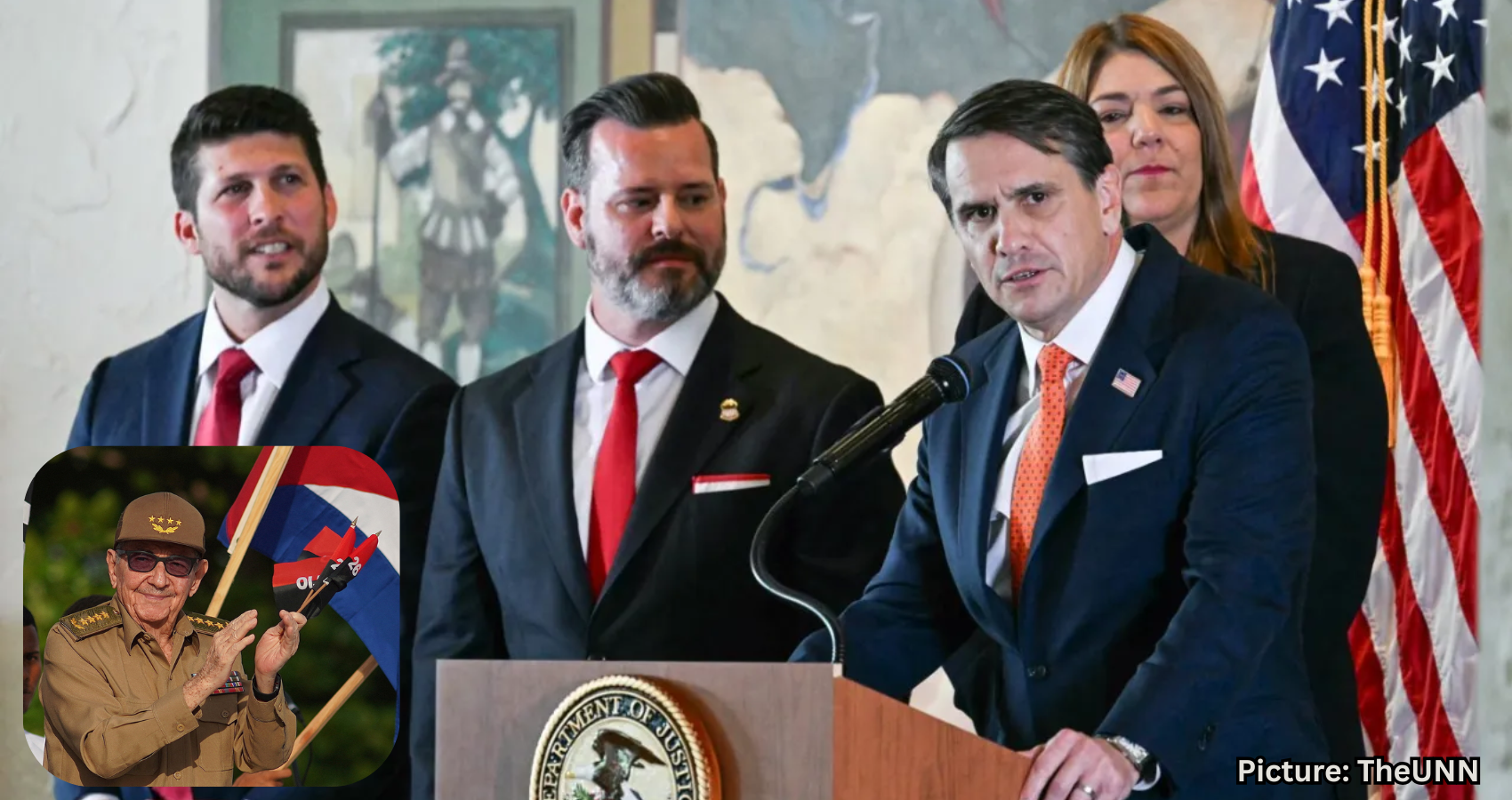
Former Cuban leader Raúl Castro made his first public appearance since being indicted for murder related to a 1996 incident involving the shoot-down of planes operated by a Cuban exile group.
Raúl Castro, the former leader of Cuba, made his first public appearance on Friday since the Trump administration charged him with murder in connection to the 1996 shoot-down of planes operated by the Cuban exile group Brothers to the Rescue. Castro appeared on state television during a celebration hosted by the Interior Ministry in Havana, as reported by Reuters.
This appearance comes just weeks after the U.S. Department of Justice unsealed an indictment accusing Castro of conspiracy to kill U.S. nationals, destruction of aircraft, and four counts of murder. The charges stem from a tragic incident that occurred nearly 30 years ago, when Cuban military aircraft allegedly shot down two unarmed civilian planes, resulting in the deaths of four men: Carlos Costa, Armando Alejandre Jr., Mario de la Peña, and Pablo Morales.
Castro, who recently celebrated his 95th birthday, had not been seen publicly since May Day celebrations in Havana, which took place just days before the indictment was made public. Prior to that, he had largely remained out of the public eye for several months, making only a brief appearance in January at a ceremony honoring 32 Cuban soldiers who were killed during a U.S. military operation that led to the capture of Venezuelan President Nicolás Maduro.
The indictment alleges that the aircraft operated by Brothers to the Rescue were flying outside Cuban territory when they were shot down. This legal action coincides with heightened tensions in the Caribbean and a series of statements from former President Donald Trump and his associates suggesting potential regime change in Cuba.
Trump expressed support for the indictment, stating that Cuban Americans whose families suffered under the Castro regime had awaited accountability for decades. “We have big news on Cuba, as you know, with the indictment of Castro,” he said. “A lot of people have suffered very big, very, very, at levels that few people would understand.” He also indicated that tensions with Cuba would not escalate following the indictment, asserting, “There won’t be escalation. We won’t have to.”
The decision to indict Castro has drawn comparisons to the pressure campaign Trump previously employed against Maduro. Christine Balling, a Cuba expert at the Institute of World Politics and a former advisor to U.S. Special Operations Command South, noted that the indictment symbolically positions Castro similarly to Maduro. The U.S. has previously indicted Maduro on narco-terrorism charges and has tightened sanctions on Venezuela’s oil sector while supporting opposition efforts to remove him from power.
Balling remarked, “I don’t think that we are necessarily going to conduct the same operation. Raúl Castro is 94 years old. It might not be worth the trouble.” Nonetheless, she emphasized that the indictment sends a clear message of U.S. support for the downfall of the Castro regime.
As the situation continues to develop, the implications of the indictment and Castro’s public appearance remain to be seen, particularly in the context of U.S.-Cuba relations and the broader geopolitical landscape in the Caribbean.
According to Reuters, the unfolding events highlight the ongoing complexities of U.S. foreign policy towards Cuba and the legacy of the Castro regime.