
The Architecture of Inequity: How India’s Goodwill was codified into concession
Summary of the Treaty and the Asymmetric Burdens
Pradeep Kumar Saxena
NEW DELHI — As the Indus Waters Treaty (IWT) enters its sixty-sixth year of operation, a comprehensive analysis of the agreement’s history and current implementation reveals a growing consensus among Indian policy experts that the pact represents a unique case of “architecture of inequity.” Signed on September 19, 1960, by Prime Minister Jawaharlal Nehru and President Ayub Khan, the treaty was intended to provide a permanent solution to the water-sharing disputes arising from the 1947 Partition. However, recent events—including the Pahalgam security incident in April 2025—have accelerated a move toward a “long-overdue reckoning” regarding the treaty’s asymmetric obligations and the perceived lack of reciprocity from Pakistan.
The Architecture of Inequity: A Legacy of Sacrifice
The roots of the current tension lie in the 1960 negotiations, which analysts now characterize as a period where Indian rationality was met with Pakistani intransigence. The geographic reality of 1947 placed India as the upper riparian state, controlling the headwaters, while Pakistan’s agricultural heartland was downstream. Seeking regional stability, India entered into a highly concessionary pact facilitated by the World Bank.
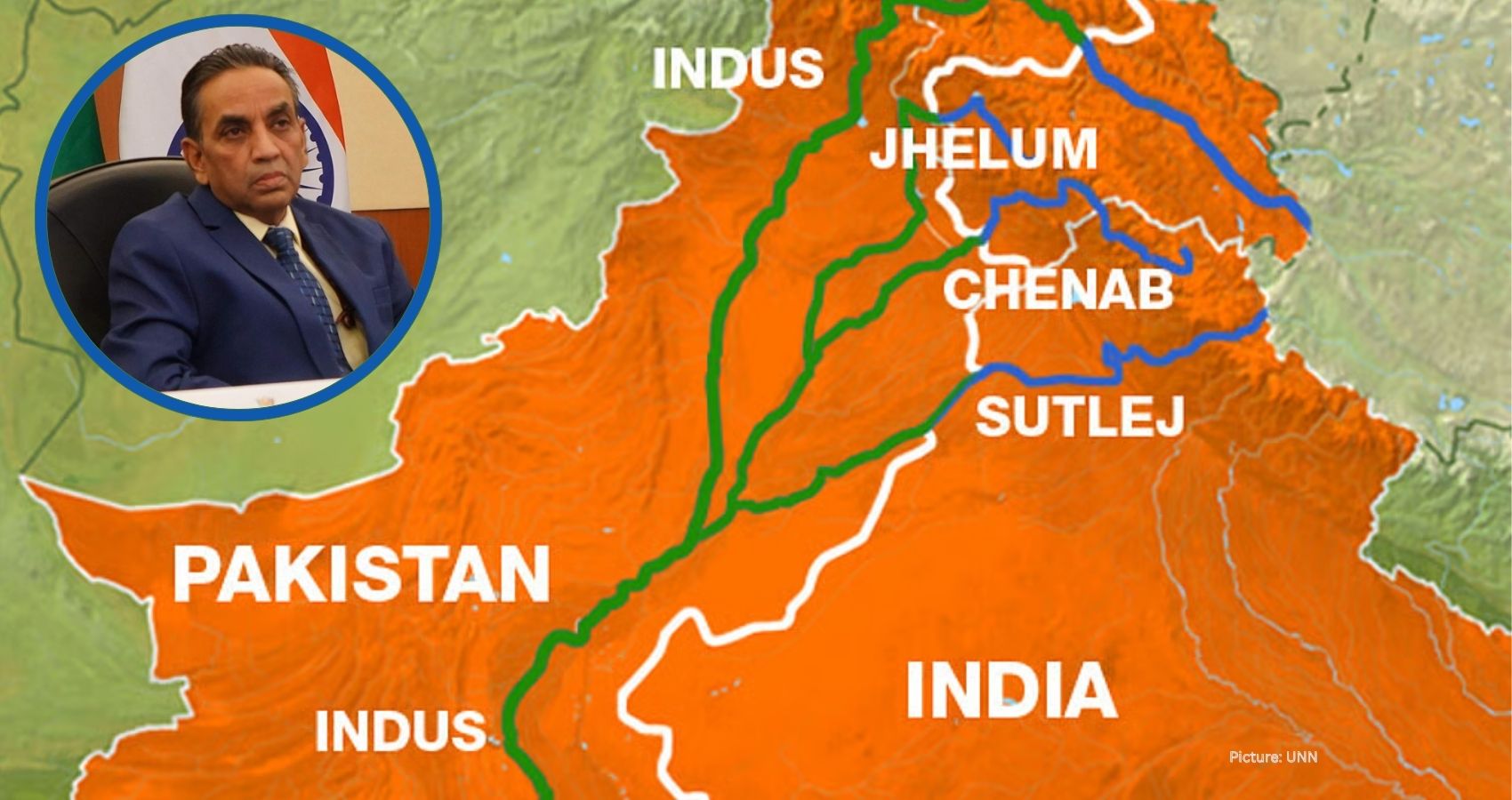
Under the final treaty, the Indus River System was divided into “Eastern” (Sutlej, Beas, Ravi) and “Western” (Indus, Jhelum, Chenab) rivers. India received exclusive rights to the Eastern rivers, which carry an annual flow of approximately 33 million acre-feet (MAF). Pakistan, however, was granted the rights to the Western rivers, which carry a significantly larger flow of 135 MAF. This resulted in an 80-20 volumetric split in favor of Pakistan.
Perhaps the most striking financial anomaly of the era was India’s agreement to pay £62 million (approximately $2.5 billion in 2026 value) to Pakistan. This payment was intended to fund replacement infrastructure in Pakistan-occupied territories—a rare historical precedent where an upstream state paid a downstream state to accept a majority of the water resources. Experts note that India essentially subsidized the creation of a system that it would then be restricted from utilizing for its own development.
Systematic Obstruction and the ‘Water War’ Narrative
Part II of the evolving crisis centers on the “weaponization” of the treaty’s technical provisions. Since 1960, Pakistan has consistently utilized the treaty’s dispute resolution mechanisms as a strategic tool to delay Indian infrastructure. Nearly every significant hydropower project proposed on the Western rivers—even those permitted under “run-of-river” clauses—has faced formal objections.
Major projects including Baglihar, Kishenganga, Pakal Dul, and Tulbul have been subjected to prolonged legal challenges and international arbitration. In many instances, Pakistani technical experts have acknowledged that Indian projects could offer flood moderation benefits to downstream areas, yet formal opposition remains a constant. This pattern suggests that objections are often motivated by a desire to prevent Indian development in Jammu and Kashmir rather than genuine concerns over treaty compliance.
Simultaneously, Pakistan has successfully deployed a “water war” narrative on the international stage. Despite India’s scrupulous adherence to the treaty during the wars of 1965, 1971, and 1999, Pakistani diplomatic channels have frequently portrayed India as a “water aggressor.” This narrative has been used to generate international pressure and constrain India’s ability to assert its legitimate rights under the very treaty it has honored.
Economic Consequences and Energy Security
The impact of these restrictions has been particularly acute in Jammu and Kashmir. The Union Territory sits atop massive, untapped hydropower potential, yet development is constrained by rigid design criteria regarding “pondage” and storage capacity. Local populations have increasingly come to view the IWT not as a framework for cooperation, but as an instrument of economic marginalization that prevents them from utilizing the natural resources flowing through their land.
Furthermore, the agricultural potential of Rajasthan and parts of Punjab remains unrealized. Vast tracts of land that could have been transformed through advanced irrigation remain arid, leading to an incalculable loss in agricultural productivity over the last sixty years. For India, the inability to optimally develop the hydropower of the Western rivers also has direct implications for national energy security and the transition to renewable energy sources.
The Case for Reform: A Two-Way Street
The Indian government’s current stance is rooted in the principle that international agreements cannot be selectively honored. The treaty was premised on a “spirit of goodwill and friendship”—a context that many argue has been eroded by Pakistan’s documented use of state-sponsored terrorism.
From the 2001 Parliament attack to the 2008 Mumbai attacks and the recent 2025 Pahalgam incident, India’s continued compliance with the IWT is being questioned against a backdrop of “Pakistani bad faith.” The argument is straightforward: a state cannot breach foundational norms of inter-state conduct while simultaneously demanding its partner fulfill lopsided treaty obligations.
Conclusion: The Long-Overdue Reckoning
While the Indus Waters Treaty is often celebrated as a triumph of international diplomacy, critics argue this characterization misrepresents the reality of a negotiation process where Indian goodwill was systematically exploited. India surrendered 80 percent of the water, paid billions in modern currency, and accepted one-sided operational restrictions, only to receive decades of developmental obstruction in return.
The current push to re-evaluate the treaty is framed by New Delhi not as an act of aggression, but as a correction of an asymmetric arrangement. As the diplomatic environment grows increasingly complex in 2026, the consensus is shifting toward the idea that there is no wrong time to make a right decision regarding national interests and resource sovereignty.