
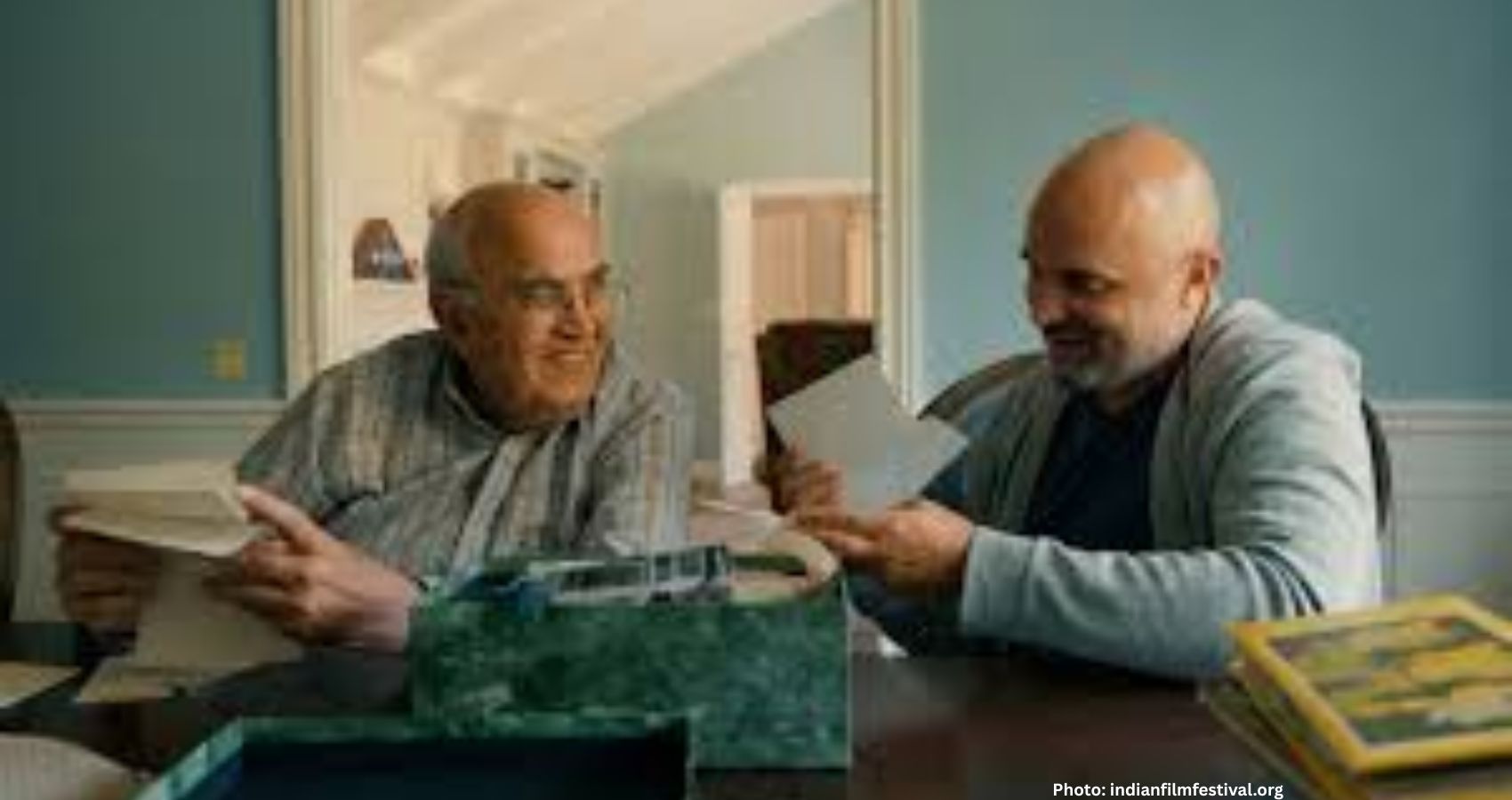
Fathers play a pivotal role in the documentary *Breaking the Code*, which explores the life of tech pioneer Kanwal Rekhi through the lens of his son, filmmaker Ben Rekhi.
Fathers loom large in the documentary *Breaking the Code*, directed by filmmaker Ben Rekhi. The film is narrated through the perspective of a son who idolizes his father, Kanwal Rekhi, chronicling his journey from Kanpur, India, to becoming a tech pioneer and mentor to many entrepreneurs in Silicon Valley. As the co-founder of Excelan, Rekhi made history as the first Indian-American entrepreneur to take a venture-backed company public on the Nasdaq. He also co-founded TiE (The Indus Entrepreneurs), a non-profit organization dedicated to mentoring South Asian startups.
This documentary delves into not only Kanwal Rekhi’s life but also the influence of his father, who cast a long shadow over him, compelling him to prove his worth. Additionally, it touches on the struggles faced by Ben’s mother, the late Ann Holt Rekhi, and her experiences with her stepfather’s abuse, which haunted her throughout her life.
In this intimate narrative of love, grief, and familial bonds, Ben Rekhi employs archival materials and reenactments to explore the intricate relationship between success and a meaningful life.
*Breaking the Code* has already garnered the Audience Choice Award at the recently concluded Indian Film Festival of Los Angeles (IFFLA) and complements Kanwal Rekhi’s biography, *The Groundbreaker: Entrepreneurship, the American Dream, and the Rise of Modern India*.
The documentary is set to screen at the AMC Kabuki on May 9, 2026, during CAAMFest, the Center for Asian American Media Film Festival.
In anticipation of the screening, Ben Rekhi and Kanwal Rekhi spoke with Alka Raghuram from India Currents. The interview has been edited for clarity and brevity.
Alka Raghuram: It’s such a rare gift to have our children tell our stories. What was the process like, given your intimate relationship?
Ben Rekhi: I was aware of my dad’s achievements as a child, but their significance didn’t truly resonate with me until I became an adult. Dad has a funny story about when I was at NYU and would come home saying, “Dad, is there another Kanwal Rekhi out there? Because everyone here seems to know you.” Initially, I hesitated to create something so personal because it felt vulnerable to discuss family and the challenges we faced, not just the successes.
About six years ago, we attended the Super Bowl to see the 49ers play in Miami, near Fort Lauderdale, where my parents had married. We visited the church where they wed and the restaurant where he proposed. I felt compelled to record those moments, even if just on my phone. That was some of the first footage we captured, and it organically led us to consider a book as well.
Alka R: Mr. Rekhi, at the beginning of the documentary, you express uncertainty about its purpose. Do you feel differently now?
Kanwal Rekhi: Yes, the documentary turned out beautifully. It encompasses a broader narrative than just my story. Initially, I wasn’t very engaged, but Ben encouraged me to write the book, which drew me in. He helped me find a ghostwriter, and after nearly two years, the book was completed. I became more involved in the process. I’m not one to self-congratulate, so that was uncomfortable at first. However, I realized the importance of sharing the story of an immigrant who achieved great success.
Alka R: It’s a very moving and compelling story. Being vulnerable on camera is no easy feat. Kudos to both of you for that.
Ben Rekhi: From the outset, my motivation was to tell an inspirational story that not only captures the Indian-American experience but also the immigrant experience of pursuing the American dream. It encompasses themes of sacrifice, migration, love, hope, grief, and loss—universal human experiences. In today’s climate, where immigrants are often vilified, this film highlights the story of an immigrant who created jobs and generated wealth for communities across the country and the world. It’s a narrative that is frequently overlooked, and we hope it resonates through the film.
Alka R: The film touches on the personal sacrifices made, including the process of “de-Indianization” you mention, Mr. Rekhi, which I interpret as assimilation for a greater purpose. Can you elaborate on that?
Kanwal Rekhi: When we arrived, communication was challenging. There was no internet, no email, and no video conferencing. Letters took three to four months to arrive, and there were few Indian resources available. We had to adapt quickly to a new culture, which was a drastic change. It took six years before I returned to India for the first time, during which I got married here.
Ben Rekhi: Dad, you mentioned that your father didn’t believe in you when you came here. Did that drive you to prove people wrong?
Kanwal Rekhi: Absolutely. Many people today may not relate to that struggle, as the Indian brand is now well established. However, those who arrived earlier had to combat stereotypes for years. When I started at Michigan Tech, there was a prevailing notion that Indians couldn’t keep up academically. It was a time when openly racist attitudes were common.
Alka R: Fathers play a significant role in the film. For Mr. Rekhi, your father, an army man, didn’t understand your path as an engineer. And for you, Ben, as a storyteller, your journey is quite different from your father’s. How did you navigate forging your own path?
Ben Rekhi: I would argue that there are similarities between our paths. Entrepreneurs and filmmakers share a commonality in generating ideas and selling them to audiences and markets. My father faced significant challenges, and while he was supportive, he also had to cultivate his own path due to his father’s lack of belief in him. He has a powerful quote: “Our fathers fought wars so we can start businesses, so our children can write poetry.” This speaks to the instinct of each generation to improve life for the next. Growing up biracial, I experienced different cultural perspectives early on. My sister and I are the only ones in our family who are not fully Punjabi. It wasn’t until my teenage years, during a trip to India, that I began to understand my connection to that culture. Navigating these dual identities can lead to an identity crisis, as you often feel like you don’t belong in either place. This film also explores that reconciliation process.
Alka R: During the making of the film, did you gain a new understanding of both your fathers?
Kanwal Rekhi: Yes, I began to appreciate the immense responsibility my father bore at 33 when he brought our large family from Pakistan to India. I realized he had a macro view of family care, which left little room for personal connection. By the time I returned to India after marriage, I had achieved things he could never have imagined for me, and his attitude towards me had changed.
Ben Rekhi: Indian parents can be quite stoic, while cinema allows for emotional expression. It was important to delve into the challenges my father faced, such as the decision to cut his hair and lose his turban, which were crucial for his survival here. I also explored my parents’ relationship; my mother had a troubled upbringing and struggled with depression, while my father faced neglect. They became each other’s support in a challenging world, a realization that only dawned on me later in the filmmaking process.
The documentary *Breaking the Code* is scheduled to screen at CAAMFest from May 7 to May 10, 2026. Tickets range from $13 to $80. For more information, visit CAAMFest.com.
The Center for Asian American Media (CAAM) is a non-profit organization dedicated to showcasing the diversity of Asian American experiences through film, television, and digital media. India Currents is a media partner of CAAMFest.