
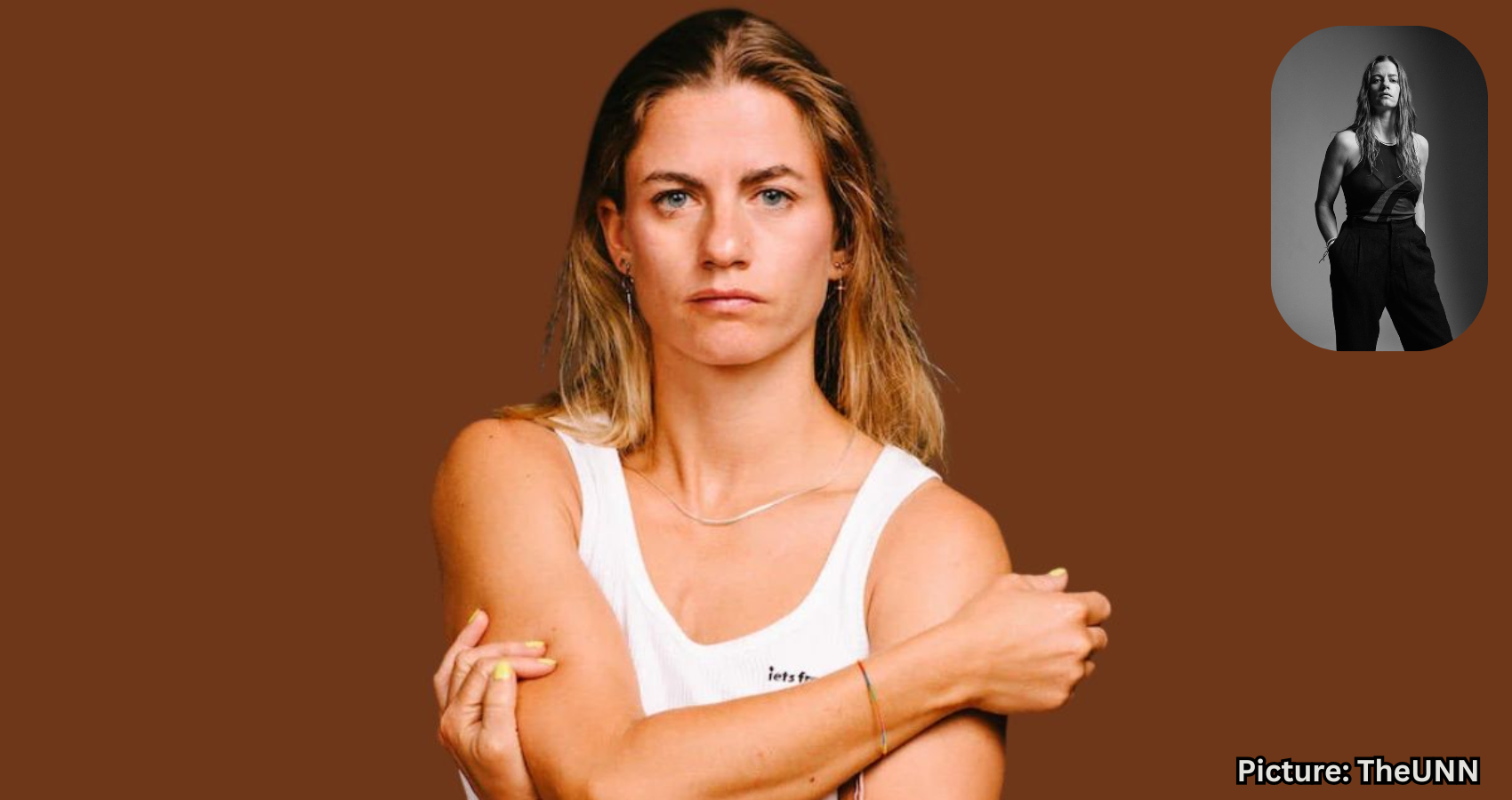
A performance by Austrian artist Florentina Holzinger at the Venice Biennale 2026 has sparked significant online discussion, featuring her hanging naked in a giant bell to symbolize climate change warnings.
A performance by Austrian artist and choreographer Florentina Holzinger at the Venice Biennale 2026 has gone viral, drawing attention for its provocative nature. The installation, titled Seaworld Venice, features Holzinger hanging upside down, nude, inside a large bronze bell suspended above the entrance of the Austrian Pavilion. As she moves, her body strikes the bell, producing loud sounds intended to serve as a stark warning about climate change, particularly the threats of flooding and environmental disaster.
Holzinger is renowned for her controversial and physically demanding performances that often feature all-female casts and explore themes related to feminism, body politics, and environmental issues. For this year’s Biennale, her work is designed as a dramatic commentary on the impending climate catastrophe and the future risks facing Venice, a city already vulnerable to rising sea levels. The bell used in the installation reportedly originated from the bottom of a nearby river and bears the Latin inscription “TEMPORA O MORES,” which reflects a lament for moral decline and a yearning for past values.
The performance has ignited a massive reaction on social media, with videos of Holzinger’s act circulating widely. Many users have expressed strong opinions about the nudity and unconventional presentation style. Some comments have mocked or criticized the installation, questioning the connection between climate activism and nudity, while others have made inappropriate remarks directed at the performer. Despite the mixed reactions, Holzinger’s work has garnered significant global attention, making it one of the most discussed exhibits at the Biennale.
The controversy surrounding the Biennale has been further fueled by protests against Russia’s participation in the event, marking its return for the first time since the onset of the Ukraine war in 2022. During press preview events, members of the Ukrainian feminist activist group Femen and the Russian protest collective Pussy Riot staged demonstrations outside the Russian pavilion. The protesters, donning pink balaclavas and appearing topless, released pink smoke bombs while voicing their opposition to Russia’s involvement in the exhibition.
Russia’s inclusion in the Venice Biennale 2026 has drawn sharp criticism from political leaders in Italy and officials from the European Union. Reports indicate that the EU has threatened to withdraw nearly two million euros in funding associated with the event. Additionally, the Biennale jury recently resigned, stating they would not present awards to countries led by individuals facing arrest warrants from the International Criminal Court, including Russia and Israel.
Although Russia has officially returned to the Biennale, the Russian pavilion will reportedly remain closed to the general public throughout the exhibition, which runs from May 9 to November 22. Instead of a traditional public exhibit, organizers have announced that musical performances related to the Russian presentation, titled The Tree is Rooted in the Sky, will be recorded during press preview days and later displayed on giant outdoor screens.
Pietrangelo Buttafuoco, the Biennale President, defended the decision to include Russia despite the backlash. He stated, “If the Biennale were to start selecting not works but affiliations, not visions but passports, it would cease to be what it has always been: the place where the world comes together, and all the more so when the world is torn apart.” He emphasized that organizers should refrain from responding to international conflicts with automatic cultural boycotts.
Holzinger’s performance and the surrounding controversies highlight the complex interplay between art, activism, and global politics at one of the world’s most prestigious art events. As discussions continue, both her installation and the broader implications of the Biennale’s inclusivity remain at the forefront of cultural discourse.
According to The Sunday Guardian.