
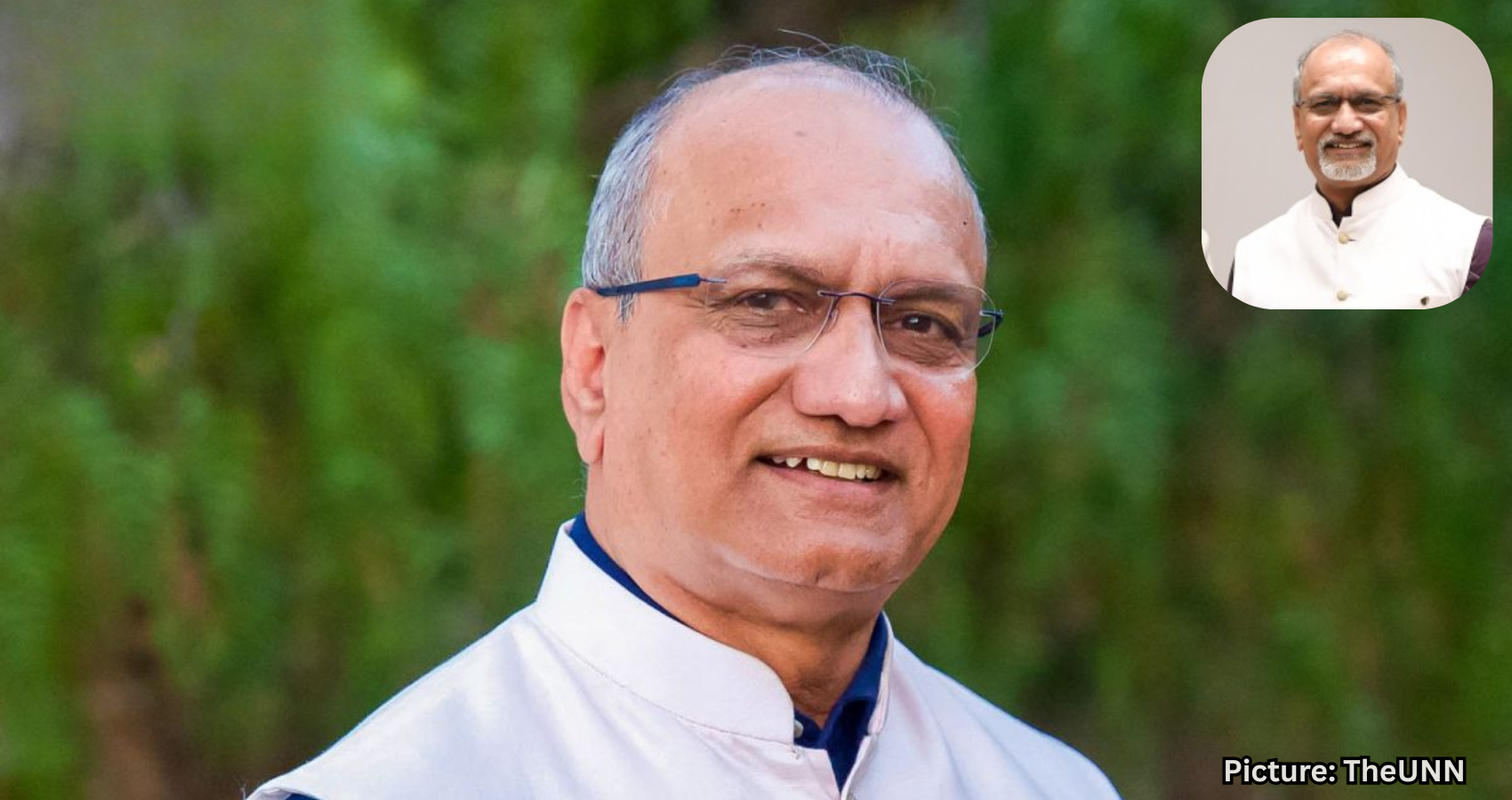
Dr. Ajay Kela of the Wadhwani Foundation discusses the importance of creating dignified jobs and the transformative potential of the Indian diaspora in an exclusive interview.
In an era where economies are under pressure to create jobs at scale, Dr. Ajay Kela is at the forefront of structured efforts to address this challenge. As President and CEO of the Wadhwani Foundation, Kela emphasizes execution and the importance of building pathways for individuals to access meaningful, family-sustaining work, rather than merely discussing policy.
Kela’s journey embodies a broader ethos of giving back. Like the Foundation’s founder, Romesh Wadhwani, Kela built a successful career abroad before returning to apply his expertise to a larger development mission. His leadership is focused on the Foundation’s ambitious goal of enabling five million dignified jobs and equipping 25 million people with job-ready skills by 2030.
Under Kela’s guidance, the Wadhwani Foundation has expanded its efforts across various fronts. It supports startups and small businesses through the Wadhwani Entrepreneur Network, prepares youth for employment through skilling initiatives, translates research into real-world innovations, and collaborates with governments to facilitate AI-led digital transformation. The Foundation’s focus is not only on creating opportunities but also on ensuring that growth reaches those who need it the most.
In an exclusive conversation with The American Bazaar, Kela discussed the intricacies of building impactful programs, the role of technology in bridging opportunity gaps, and the importance of job creation for long-term growth.
The American Bazaar: How do you define and measure “dignified family wage jobs” in different economic contexts across India?
Dr. Ajay Kela: We have always believed that meaningful philanthropy doesn’t just give people a fish; it teaches them how to fish. For us at the Wadhwani Foundation, a job is not merely an economic outcome; it also embodies dignity. It represents the transition from mere survival to building a future for oneself and one’s family.
That’s why we care deeply about not just the quantity of jobs, but also their quality. A dignified family wage job should cover essentials such as housing, education, and healthcare, while also allowing for aspirations. The specific financial threshold varies by region, even within India, but the underlying principle remains the same: are we enabling individuals to move from survival to stability, and from stability to growth?
We don’t treat job creation as a standalone metric. Our approach encompasses the entire ecosystem, helping businesses grow and create jobs, preparing individuals with the necessary skills, and connecting talent to opportunities. We measure success not by the number of programs delivered, but by the genuine lives changed.
With rapid technological advancements, how do you ensure that skilling programs remain relevant and future-proof?
This was a significant concern for us, which is why we shifted our focus from static curricula to dynamic systems. In this way, static content becomes obsolete, while dynamic systems can adapt.
We leverage AI to continuously update content, personalize learning pathways, and align training with real-time employer demand. By maintaining close ties with employers and industries, we ensure that our teachings reflect market needs. We also collaborate with governments to support large-scale skilling initiatives and incorporate on-ground learnings into program design and policy. This feedback loop is essential.
At the core of our philosophy is the belief that future-proofing is about creating systems that can adapt continuously, making relevance a permanent principle.
Was there a defining moment that prompted your shift from corporate success to social impact?
It was a series of experiences rooted in my own childhood. Growing up in a family of six in a 350-square-foot apartment, I was fortunate to receive a sponsored education in the United States. That journey transformed the lives of my entire family—my children, my nephews, my nieces. I witnessed firsthand how a single change in circumstances could unlock opportunities across generations.
This realization was echoed in the lives of those around me. For instance, my driver, Deepak, was bright and hardworking. I encouraged him to pursue online networking certificates. While I worked, he utilized a loaned laptop in the parking lot to complete courses. A few job referrals later, his trajectory changed entirely. His children are now as well-placed as my own.
Similarly, my cook, Chandu, was talented but limited to one household. I encouraged him to cater community dinners during festivals. Starting small, he quickly gained recognition and now caters weddings in Bombay for up to 5,000 guests. His children, named after my own, are thriving today.
When the opportunity arose to create a ripple effect of change at the Wadhwani Foundation, it was an easy decision. What began as small nudges to those around me has evolved into systematic change benefiting tens of millions across multiple countries. This mission is what keeps me motivated, even after 15 years.
What has been your most personally rewarding moment at the Foundation?
Honestly, it’s not just one moment; it’s the accumulation of experiences. Over the past 15 years, what has remained constant is a profound sense of purpose. Witnessing potential translate into livelihoods, and those livelihoods create opportunities for others is what makes this work unique.
That said, one moment stands out: attending YUGM 2025—the national launch of the Wadhwani Innovation Network—alongside prestigious institutions like IIT Bombay and IIT Delhi. Hearing Prime Minister Modi speak about the Foundation and Dr. Wadhwani’s contributions for 10-15 minutes during his keynote address was particularly memorable.
However, more than any single event, what resonates with me is the understanding that this work is not just about immediate outcomes; it’s about creating pathways that will matter for decades to come. Being part of that is a rare privilege.
How can the Indian diaspora transition from transactional giving to transformational impact?
The diaspora’s most valuable assets extend beyond financial contributions. They encompass knowledge, networks, credibility, and institutional instincts.
While donations are important and play a critical role, the larger opportunity lies in building sustainable structures that outlast any single contribution. This includes mentorship ecosystems, research platforms, and institutions that continue to generate opportunities long after the initial investment.
The shift is from giving back to building forward. At the Wadhwani Foundation, this philosophy is deeply ingrained. The Foundation is funded solely through our founder’s personal philanthropy. Dr. Romesh Wadhwani has pledged 80% of his wealth to this mission, allowing us to focus on long-term impact rather than short-term optics.
The most meaningful legacy the diaspora can leave is the establishment of institutions—entities that will continue to expand opportunities for generations who may never know your name but whose lives will be shaped by what you helped create.
Emerging economies often lack quality data infrastructure. How does the Foundation develop AI tools for these markets?
We are an AI-first organization, but we have learned that AI alone is not a panacea. Our founder, Dr. Romesh Wadhwani, was applying AI across his companies long before it became a buzzword. This early experience informs our approach: technology is a force multiplier, not a magic wand.
In markets like India and other emerging economies, AI cannot wait for perfect datasets. It must be designed to accommodate real-world complexities, including multiple languages, inconsistent connectivity, and fragmented data. We utilize established LLM frameworks as a foundation, but our unique approach involves continuously training and refining commercial LLMs with our on-the-ground program data, making them sharper and more context-aware over time.
Importantly, we never deploy AI in isolation. It is always integrated within human systems; educators, employers, mentors, and domain experts are accessible both offline and online through our GenieAI platform. This integration is what makes it effective.
The recent India AI Impact Summit reinforced our belief that India possesses the capability. What it requires is AI designed to be inclusive, practical, and rooted in real-world applications. That is precisely what we are building.
How has your experience as an immigrant in America influenced your leadership style and approach to building institutions?
It confirmed my long-held belief that success is less about individual talent and more about the surrounding ecosystem. As an immigrant, I acutely feel the impact of access to education, mentorship, networks, and institutions—and the absence of these factors when they are lacking.
This experience shapes how I lead and how I envision building institutions. The recurring question is: how do we make opportunities less accidental and more accessible and equitable, allowing talent to find its way forward?
Young Indians today are leaving in record numbers for education and opportunities. As someone who has made that journey, what message do you have for them?
Global exposure is invaluable; it sharpens perspectives, builds networks, and raises the bar for what you believe is possible. As the world of work becomes increasingly interconnected, global exposure aligns you with what is necessary to excel.
However, it is also true that the India of today is not the India many left behind. The scale of opportunity being created now is unprecedented. With the right technology, systems, and support, it is increasingly feasible to build world-class institutions, companies, and careers without leaving.
My message is straightforward: pursue growth where you can, but seriously consider how you can bring that growth back and what you can help create. The most exciting chapter of India’s story is still being written.
The Wadhwani Foundation operates across four pillars—Entrepreneurship, Skilling, Innovation & Research, and Government Digital Transformation. How do these pillars interact in practice?
These four pillars function within an integrated system. Skilling prepares individuals for jobs, entrepreneurship creates those jobs, innovation and research develop future industries, and government digital transformation ensures access at scale.
Together, they create a complete pathway: from learning to earning to creating. If we remove any one element from this equation, we are left with merely a program. However, by maintaining integration, we cultivate an ecosystem.
This systems-level thinking enables us to move beyond isolated interventions and drive impactful change at scale across India and other emerging economies, reaching tens of millions of beneficiaries through our combined efforts.
According to The American Bazaar, Dr. Ajay Kela’s insights highlight the critical role of technology and community engagement in fostering sustainable job creation and social impact.