
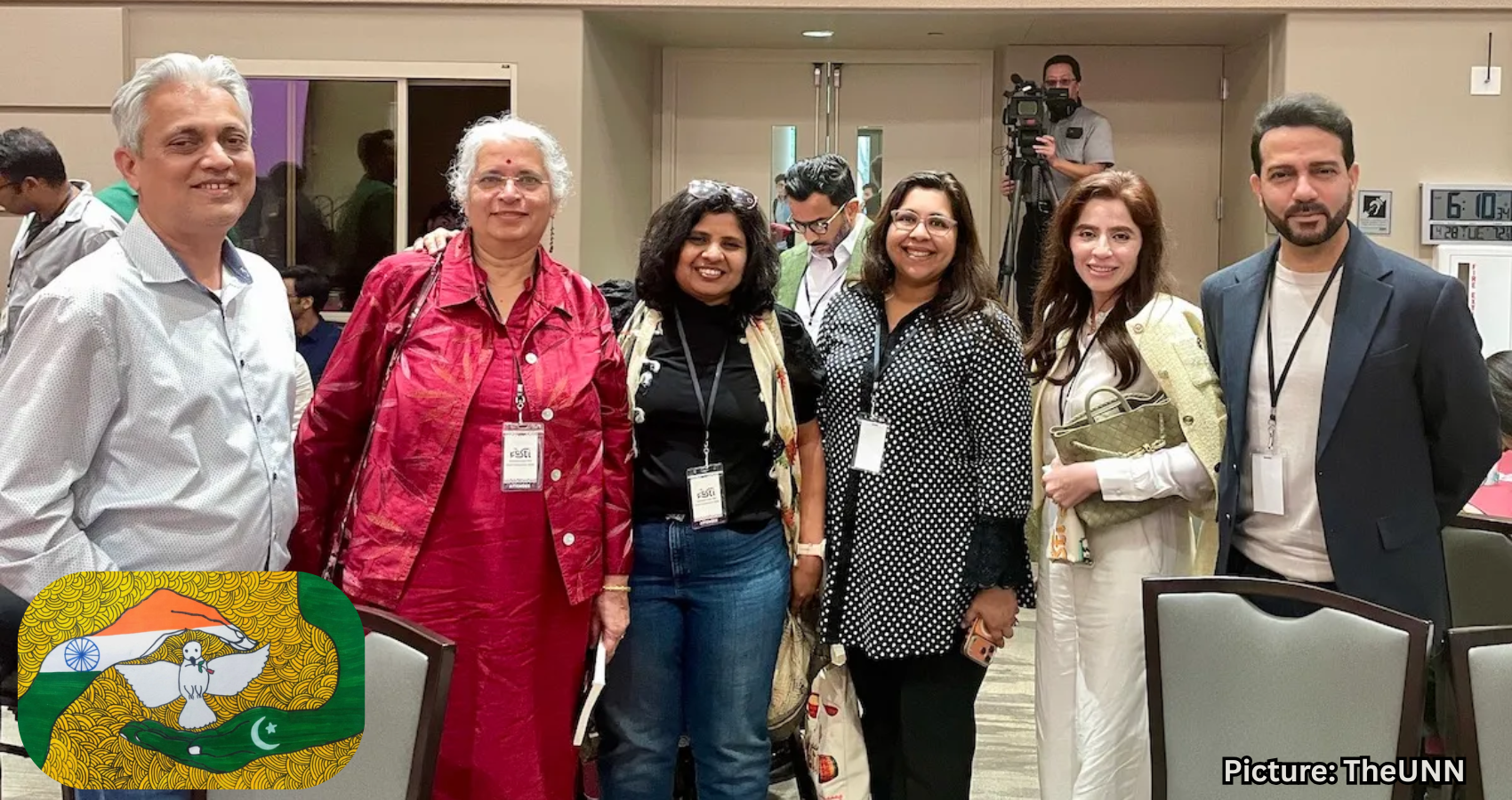
The Dosti Project aims to foster friendships between India and Pakistan, reigniting hope for cultural connections amidst a complex historical backdrop.
In the early 1990s, as a graduate student at Stanford University, I encountered an unexpected moment of connection that would shape my understanding of cultural ties between India and Pakistan. A fellow student, a year my junior, approached me to buy my used books. Despite our different backgrounds—me, an Indian, and him, a Pakistani—we shared a common ethos of thrift and resourcefulness.
When he arrived to collect the books, I was taken aback when he joined my conversation with my mother in fluent Sindhi. My family had migrated to India during the 1947 Partition, leaving behind our ancestral home in Sindh, which became part of Pakistan. My parents and grandparents often recounted their experiences of displacement, transitioning from a life of comfort to becoming refugees in a new land.
My grandfather, a civil engineer, played a crucial role in rebuilding lives after the Partition. He constructed small refugee quarters in Rajinder Nagar, having previously worked on significant projects like the Sukkur Barrage in Sindh. I had always believed that the Sindhi diaspora was largely in India, unaware that many Sindhis, including Muslims, continued to reside in Pakistan.
In 2020, while hosting multilingual poets in Silicon Valley as the founder of Poetry of Diaspora, I was introduced to the profound poetry of Shah Abdul Latif. This exploration allowed me to reconnect with cultural roots that had been severed due to migration. I discovered that my ancestral land was rich in Sufi traditions, where music and dance are integral to worship. Even today, Hindus and Muslims in Udero, Sindh, share a shrine dedicated to Udero Lal, known as Lal Sai to Hindus and Sheikh Tahir to Muslims.
This spirit of shared heritage is mirrored in the friendships formed by three Stanford undergraduate students in 2026: Luv Jawahrani, a fellow Sindhi from India, and Aimen Ejaz and Ahmad Zafar from Pakistan. They recognized their common cultural roots—similar food, music, attire, language, and even a shared love for cricket—and launched the Dosti Project, aimed at fostering friendships between Indians and Pakistanis.
While individuals from both nations have successfully built partnerships and friendships abroad, the three friends grew up amidst a political landscape marked by conflict and tension. The Dosti Project operates on the belief that if these communities can cultivate trust in cosmopolitan hubs like Silicon Valley, Dubai, Toronto, and London, they can also foster a sense of “dosti” back home.
The relationship between India and Pakistan often swings between hostility and warmth, yet cross-border friendships, artistic collaborations, and cultural exchanges continue to flourish. The Dosti Project provides a platform for individuals on both sides to seek common ground and build connections.
This initiative evokes memories of the India-Pakistan Friendship Society established in the 1990s, inspired by Gandhian principles and founded by Mahendra and Meera Mehta. Their daughter, Kala Mehta, recalls gatherings that brought together over 200 artists from both nations.
The Dosti Conference, held at Stanford from March 31 to April 1, 2026, featured an impressive array of speakers, including diplomats, tech leaders, venture capitalists, and even former Prime Ministers of Ireland and Scotland. The students behind the Dosti Project demonstrated remarkable leadership by creating a space for open dialogue on challenging subjects, promoting peace-building, understanding, and empathy.
Among the notable speakers were Sal Khan of Khan Academy, Emmy and Oscar-winning filmmaker Sharmeen Obaid-Chinoy, and Vivek Ranadive, owner of the NBA team Sacramento Kings. They shared personal stories that resonated with many South Asians, highlighting the influence of family and societal expectations.
Sal Khan recounted his mother’s concerns when he left his job in 2009 to start a nonprofit with no prior experience. Similarly, Tabarak Rehman shared how his father joined him on a 1,600-kilometer run across Pakistan, reflecting the protective instincts of parents. Former Irish Prime Minister Leo Varadkar discussed the potential for an India-Pakistan alliance, drawing parallels with the historical tensions between Ireland and the United Kingdom, which have since evolved into a cooperative relationship.
Scottish Prime Minister Humza Yousaf emphasized the importance of investing in education and opportunities for the youth of both nations, rather than military expenditures. He sang a few lines from the iconic song “Yeh Dosti Hum Nahin Chhodenge,” underscoring the enduring value of friendship.
The Dosti Project reignites hope for the many connections that exist between India and Pakistan. A poignant reminder from the conference highlighted that one of India’s most beloved patriotic songs, “Sare jahan se accha hindustan humara,” was penned by a Muslim poet, Iqbal. This sentiment resonates with the Sufi anthem from Sehwan, Sindh, often attributed to Amir Khusrow, and remains cherished across borders through performances by renowned artists from Pakistan, India, and Bangladesh.
As the Dosti Project continues to foster dialogue and understanding, it stands as a testament to the enduring bonds that can transcend political divides, encouraging a future where friendship prevails.
According to India Currents.