
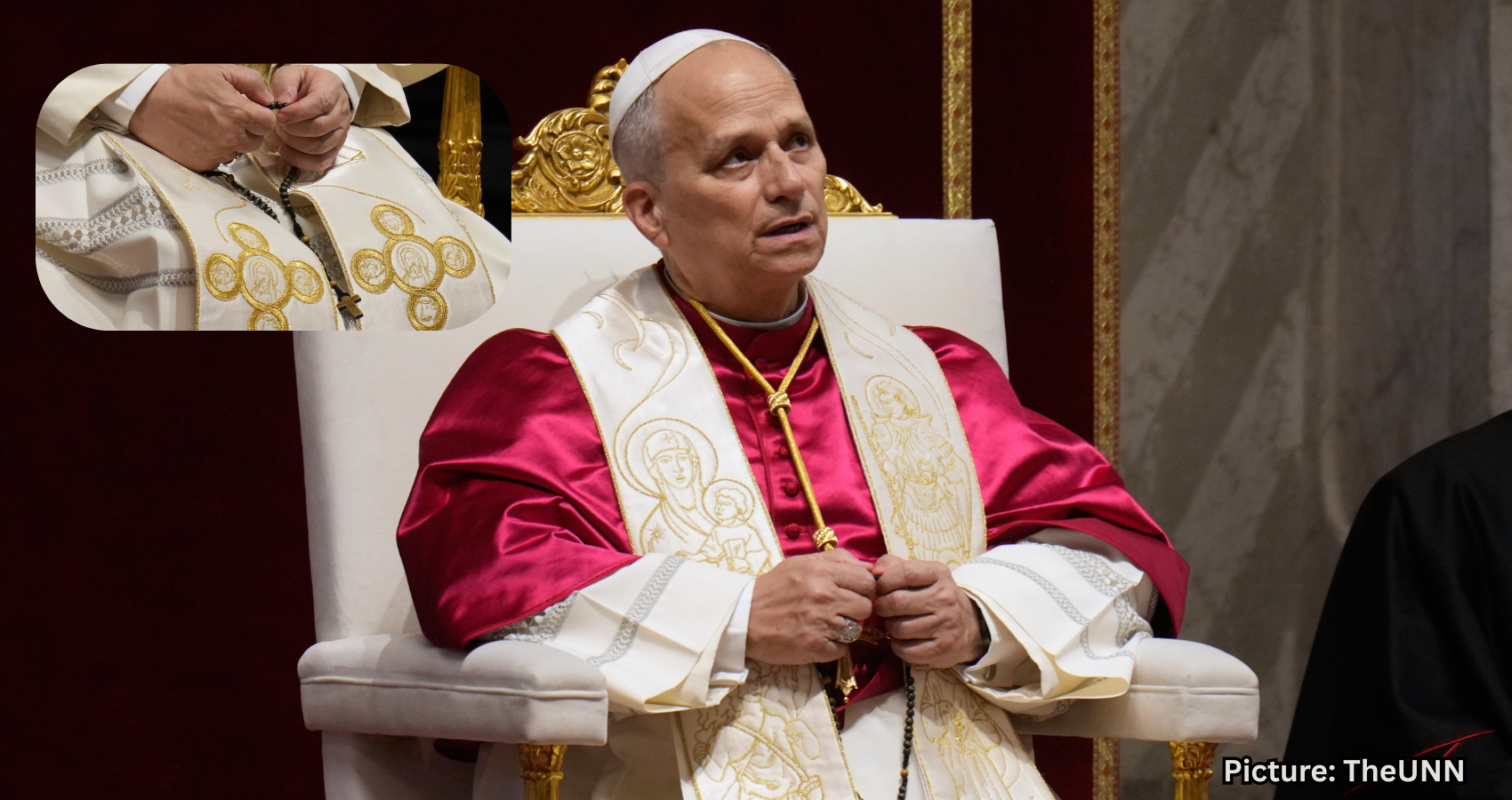
Pope Leo XIV has condemned the ‘delusion of omnipotence’ fueling the U.S.-Israeli conflict, urging political leaders to prioritize peace during a prayer service at St. Peter’s Basilica.
Pope Leo XIV has sharply criticized the “delusion of omnipotence” that he believes is exacerbating the ongoing U.S.-Israeli conflict, calling for political leaders to prioritize peace through dialogue rather than military might. His remarks were made during an evening prayer service at St. Peter’s Basilica, coinciding with newly resumed negotiations between the United States and Iran in Pakistan and the continuation of a fragile ceasefire.
As the first U.S.-born pope in history, Leo’s message resonated with an audience that included Cardinal Dominique Joseph Mathieu, the archbishop of Tehran, and Laura Hochla, the deputy chief of mission at the U.S. Embassy in Rome. Although Leo did not explicitly mention the United States or President Donald Trump, the implications of his message appeared to be directed at Trump and other U.S. officials who have emphasized military superiority and justified the conflict in religious terms.
During the service, Leo declared, “Enough of the idolatry of self and money! Enough of the display of power! Enough of war!” His impassioned plea for peace struck a chord with attendees and reflected a growing urgency regarding the humanitarian crisis stemming from the ongoing conflict. In the early months of the war, Pope Leo had shown restraint in his public statements, offering more muted calls for peace and dialogue. However, his position has evolved significantly since Palm Sunday, when he began articulating stronger criticisms of the violence.
Recently, he characterized Trump’s threats to annihilate Iranian civilization as “truly unacceptable,” reiterating the need for constructive dialogue over aggression. His remarks underscore a broader concern that military actions and rhetoric may exacerbate tensions rather than resolve them.
During the evening vigil, which included Scripture readings and the meditative recitation of the Rosary, Pope Leo encouraged all individuals of goodwill to engage in prayer for peace and to urge their political leaders to pursue nonviolent resolutions. The service in Rome was part of a global initiative, with similar prayer gatherings occurring across the United States and around the world. “Praying for peace is a way to break the demonic cycle of evil,” the pope emphasized, advocating for a world characterized not by conflict but by the principles of the Kingdom of God, devoid of “swords, drones or unjust profit.”
His remarks reflect a deep-seated concern over the prevailing mindset that equates military power with moral righteousness. Leo articulated a vision of society where the focus shifts from displays of strength to one of compassion and understanding, particularly in the context of escalating geopolitical tensions.
Pope Leo’s comments come at a time when various leaders have invoked religious justifications for their military actions. In the United States, officials, including Defense Secretary Pete Hegseth, have framed the conflict in terms of Christian duty, portraying America as a nation engaged in a righteous battle against its adversaries. This rhetoric has raised alarms among many religious leaders, including Pope Leo, who reject the notion that God blesses war or that any religious faith can be used to justify violence.
Leo has been clear in his assertion that God does not endorse war, especially those that lead to civilian casualties and suffering. During the service, he presided over the proceedings from a white throne beside the altar, dressed in his formal red cape and liturgical stole, holding a Rosary as he led the congregation in prayer. The atmosphere was one of solemn reflection as priests and nuns participated in the prayers, emphasizing unity in the face of global conflict.
The Vatican has expressed particular concern regarding the consequences of Israel’s military actions against Hezbollah in Lebanon, especially in relation to the safety and well-being of Christian communities in the region. The pope’s calls for peace reflect a broader desire for stability and compassion during a time of escalating violence and suffering.
Pope Leo’s remarks on Saturday highlight the complexities of the U.S.-Israeli-Iranian conflict and underscore the role of religious leaders in advocating for peace and reconciliation amidst ongoing violence. As the situation continues to evolve, Pope Leo’s emphasis on dialogue and the rejection of perceived omnipotence may resonate with those advocating for a more peaceful resolution to the present crisis.
In summary, the pope’s address serves as a critical reminder of the moral imperatives that accompany discussions of war and peace. His call for leaders to engage in meaningful dialogue rather than succumb to the allure of military power reflects a growing consensus among many religious figures who seek to promote peace in an increasingly polarized world. The implications of his message extend beyond the immediate conflict, urging a reevaluation of how power dynamics are framed within the discourse of international relations, according to GlobalNet News.