
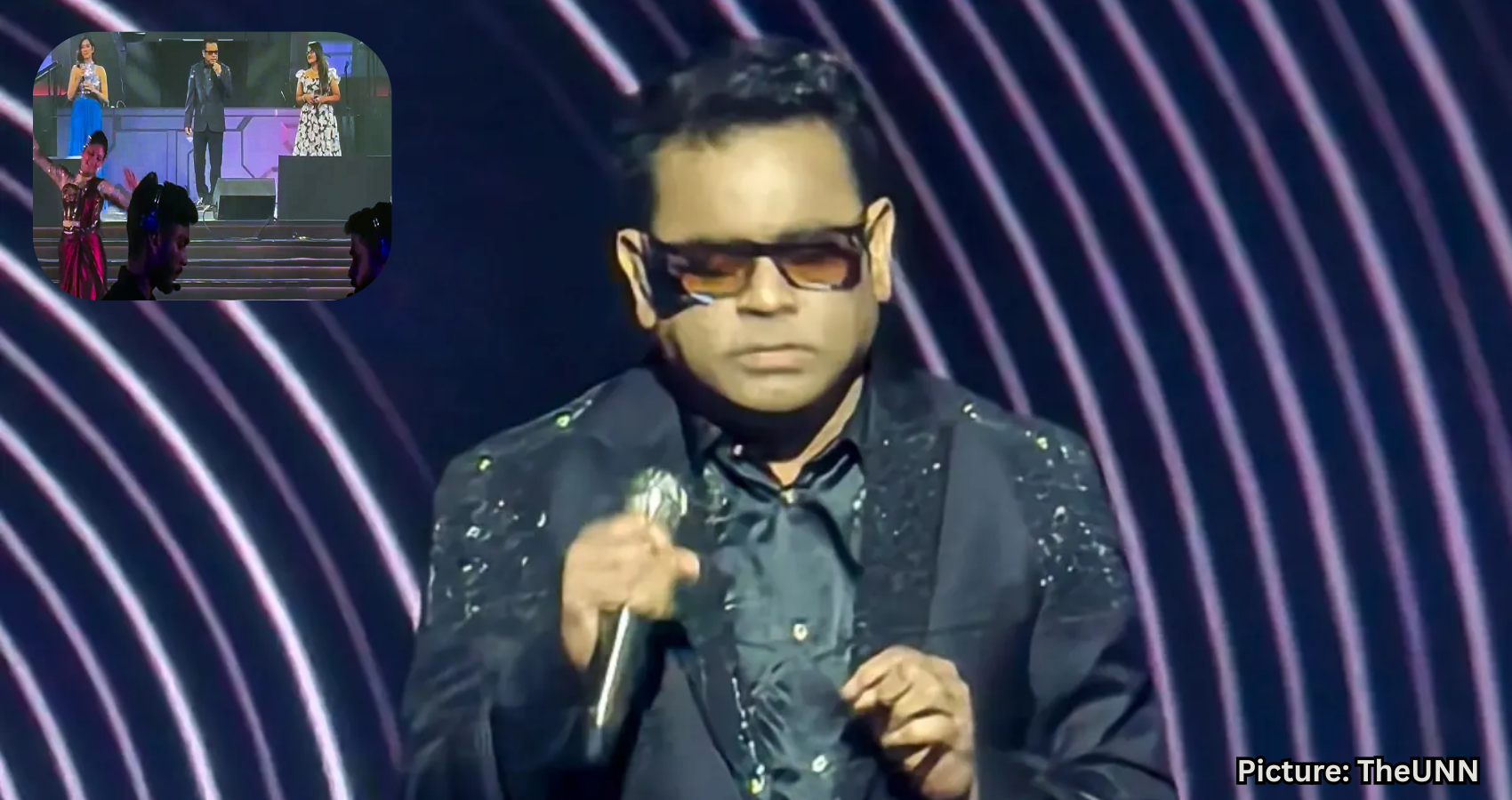
Oscar-winning composer AR Rahman headlined the 250th US Independence Day celebration in New Delhi, showcasing cultural diplomacy amid a critical Quad security summit.
NEW DELHI — In a remarkable display of cultural diplomacy, Oscar-winning composer and music maestro AR Rahman delivered a stirring performance at the 250th US Independence Day celebrations hosted by the US Embassy in New Delhi on May 24, 2026. This historic semi-quincentennial gala brought together an influential assembly of senior international diplomats, political leaders, and global business executives to celebrate the growing economic and security partnership between India and the United States. The high-profile event coincided with a significant four-day official visit by US Secretary of State Marco Rubio, just ahead of the highly anticipated 11th Quadrilateral Security Dialogue (Quad) Foreign Ministers’ Meeting. Rahman’s performance, highlighted by his internationally acclaimed anthem “Jai Ho,” served as a powerful symbolic bridge, balancing bilateral commercial optimism with deep geopolitical anxieties regarding escalating tensions across the Indo-Pacific and West Asia.
The United States Embassy in India transformed its diplomatic grounds into a grand stage on Sunday evening, marking a historic celebration of the 250th anniversary of American independence. The United States, which formally declared its independence from Great Britain on July 4, 1776, utilized this landmark event to underscore the depth, scope, and strategic evolution of the modern India-US partnership.
The gala served as a cultural anchor for Secretary Rubio’s comprehensive diplomatic mission to India. The evening brought together a carefully curated gathering of senior diplomats, policymakers, corporate leaders, and prominent cultural figures.
Among the distinguished attendees were India’s External Affairs Minister Dr. S. Jaishankar, Secretary Rubio, and the newly appointed US Ambassador to India, Sergio Gor. The atmosphere in the reception hall blended the festive spirit of an anniversary gala with the focused energy of a high-stakes diplomatic summit, as officials engaged in informal sidebar conversations ahead of formal security negotiations.
The centerpiece of the evening’s cultural showcase was an electrifying concert by world-renowned Indian composer AR Rahman. Accompanied by an ensemble of master musicians, Rahman curated a setlist designed to evoke themes of unity, resilience, and cross-border collaboration. The highlight of the performance was his iconic anthem “Jai Ho,” the Oscar and Grammy-winning track that originally captured global attention in 2009.
As the familiar, driving rhythms of “Jai Ho” began, the formal diplomatic posture of the room noticeably shifted, culminating in a standing ovation from the crowd. For the attendees, the track symbolized the profound cultural synthesis defining the modern relationship between the world’s oldest democracy and its largest democracy.
In addition to the main anthem, Rahman treated guests to a carefully arranged medley of his most celebrated cinematic compositions, including the haunting melodies of “Dil Se,” the energetic beats of “Muqabla,” and the sweeping arrangements of “Fanaa.” The performance drew enthusiastic applause from both Indian leaders and the visiting American delegation, showcasing the soft-power capabilities that underpin traditional statecraft.
The evening’s formal addresses directly confronted the evolving geopolitical philosophies guiding Washington and New Delhi. US Ambassador Sergio Gor, who assumed his office in New Delhi on January 14, 2026, delivered a speech aimed at clarifying the strategic direction of the second Trump administration’s foreign policy. Gor addressed the crowd with an authoritative yet warm demeanor, seeking to assuage regional concerns over American isolationism.
“America first does not mean America alone,” Ambassador Gor stated emphatically, addressing the room of international dignitaries. “And every week, we identify opportunities that are win-win situations for both of our nations. I’m especially proud that this spring our embassy brought a record-breaking delegation, which will continue over the weeks and months ahead, as we continue our work here in India.”
Gor’s remarks underscored a pragmatic shift in trade and economic relations, particularly as both nations actively negotiate complex bilateral trade deals. Observers noted that the “record-breaking delegation” referenced by the Ambassador points toward aggressive joint ventures in critical industrial sectors designed to decouple key supply chains from regional adversaries.
While the evening was defined by music and celebration, the political reality of the gathering remained firmly rooted in the urgent security challenges facing the global community. The semi-quincentennial gala took place just 48 hours prior to the 11th Quad Foreign Ministers’ Meeting, scheduled for May 26, 2026, under the formal chairmanship of EAM Dr. S. Jaishankar.
The security dialogue brought together Secretary Rubio, Indian EAM Jaishankar, Australian Foreign Minister Penny Wong, and Japanese Foreign Minister Toshimitsu Motegi. The timing of the cultural event allowed the ministers to establish a strong personal rapport before tackling a dense and sensitive security agenda.
The context surrounding these high-level meetings is increasingly volatile. The Quad nations are meeting to address an escalating matrix of security friction points. Chief among these is the deteriorating situation in West Asia, where volatile maritime corridors face unprecedented disruptions, directly impacting global trade and energy security.
Furthermore, the four maritime democracies are intensely focused on the Indo-Pacific theater. Leaders are attempting to build structural resilience against unilateral actions, coercion, and destabilizing efforts to alter the status quo by force in the East and South China Seas.
The transition from the cultural harmony of Rahman’s concert to concrete diplomatic outcomes became apparent in the days following the event. The goodwill reinforced during the Independence Day gala set the stage for major policy announcements during the formal Quad summit on Tuesday.
The four nations leveraged the momentum to launch the Indo-Pacific Maritime Surveillance Collaboration (IPMSC). This initiative will actively integrate real-time surveillance capabilities across the Indian Ocean Region to enhance maritime domain awareness and protect vital sea lanes, through which over 60 percent of global maritime commerce flows.
Additionally, the diplomatic talks yielded a major structural breakthrough: the signing of the bilateral Strategic Critical Minerals Cooperation Framework at Hyderabad House. This agreement coordinates massive investments in the mining, processing, and recycling of critical minerals—a direct policy move aimed at ending market vulnerabilities and reducing supply chain reliance on any single nation.
Ultimately, the 250th Independence Day celebration in New Delhi demonstrated that while military exercises and economic frameworks form the hardware of international relations, soft-power cultural exchanges remain the essential software that keeps complex global alliances connected, according to Source Name.