
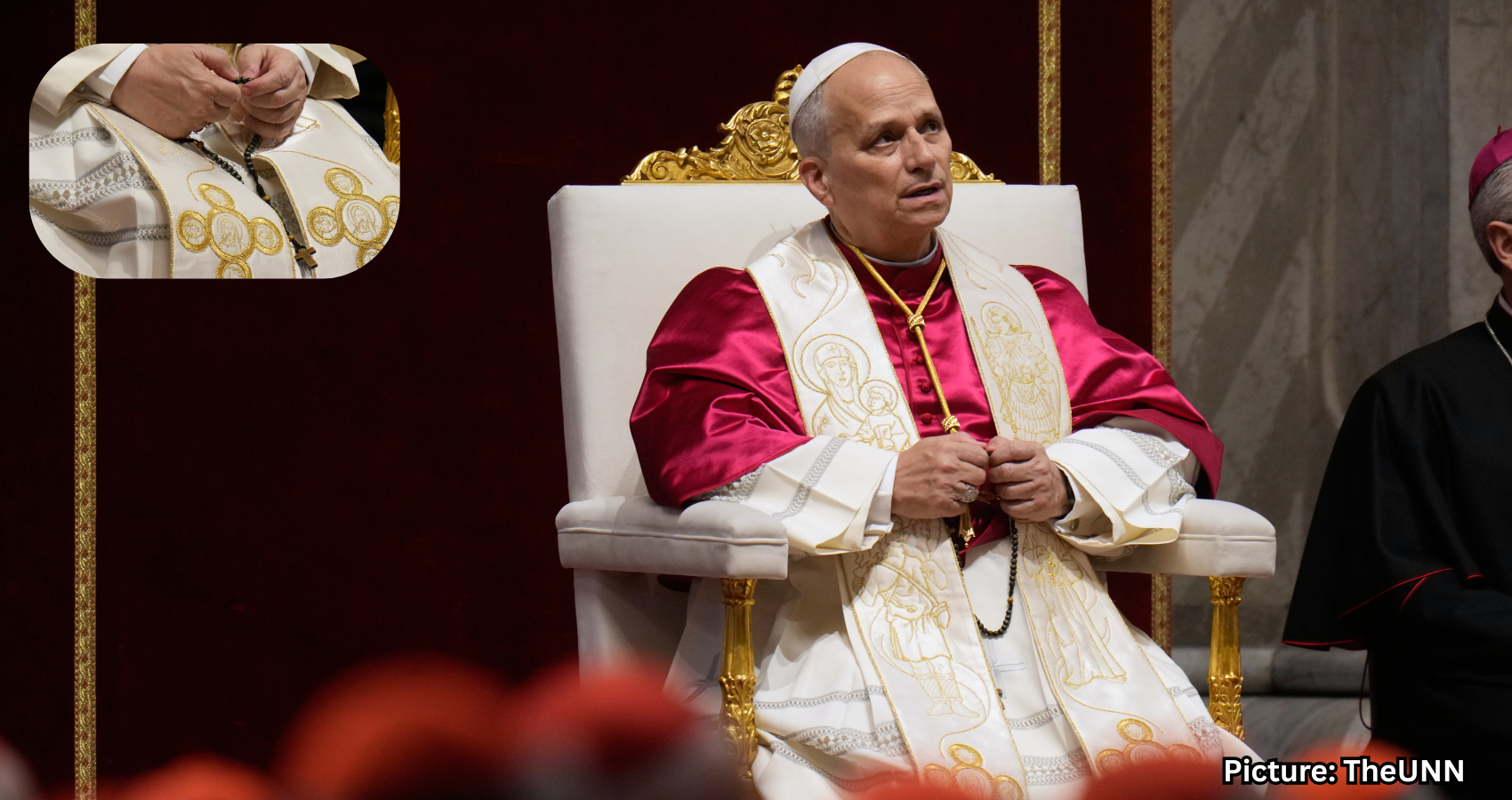
Pope Leo condemns the “delusion of omnipotence” driving the war in Iran, calling for peace during a vigil at St. Peter’s Basilica.
Pope Leo expressed deep concern over the “delusion of omnipotence” that he believes is fueling the ongoing war in Iran. His remarks came during a vigil for peace held at St. Peter’s Basilica on Saturday.
In his prayer service, Pope Leo emphasized the importance of connecting human limitations with the infinite possibilities of God. “In prayer, our limited human possibilities are joined to the infinite possibilities of God,” he stated. “Thoughts, words, and deeds then break the demonic cycle of evil and are placed at the service of the Kingdom of God.”
The pontiff described this Kingdom as one devoid of violence, stating, “A Kingdom in which there is no sword, no drone, no vengeance, no trivialization of evil, no unjust profit, but only dignity, understanding, and forgiveness.” He warned that the delusion of omnipotence is becoming increasingly unpredictable and aggressive, posing a significant threat to peace.
During the vigil and in posts on social media platform X, Pope Leo reiterated that war creates division, while hope and faith have the power to unite humanity. “Enough of the idolatry of self and money. Enough of the display of power. Enough of war,” he declared. “True strength is shown in serving life.”
Among those present at the vigil was Belgian Cardinal Dominique Joseph Mathieu, the archbishop of Tehran. The pope’s remarks coincided with the beginning of face-to-face talks between Vice President JD Vance and a U.S. delegation with Iranian officials, occurring amid a fragile ceasefire.
Pope Leo’s statements marked some of his strongest criticisms yet regarding U.S. foreign policy towards Iran. Earlier in the week, he labeled President Donald Trump’s threats against Iran as “truly unacceptable.” He remarked, “Today, as we all know, there has also been this threat against the entire people of Iran, and this is truly unacceptable.” He emphasized that these threats raise significant issues of international law and moral responsibility for the welfare of the Iranian population.
Trump had previously posted on Truth Social, warning that “a whole civilization will die tonight, never to be brought back again,” expressing his desire to avoid such a fate for Iran. Shortly thereafter, he announced a two-week ceasefire contingent upon Iran agreeing to the “COMPLETE, IMMEDIATE, and SAFE OPENING of the Strait of Hormuz.”
As high-stakes negotiations commenced in Islamabad, Trump told reporters outside the White House, “We win regardless of what happens. Maybe they make a deal, maybe they don’t.”
For over a month, Pope Leo had limited his public comments to subdued appeals for peace. However, during his Easter blessing the previous Sunday, he urged those in positions of power to choose peace over war, stating, “Let those who have the power to unleash wars choose peace.”
In his address, Pope Leo also referenced the final words of his predecessor, Pope Francis, who had warned of a “globalization of indifference” from the same balcony a year prior. “What a great thirst for death, for killing we witness each day in the many conflicts raging in different parts of the world,” he quoted Francis, highlighting the urgent need for compassion and understanding in times of conflict.
These remarks underscore the Vatican’s ongoing commitment to advocating for peace and reconciliation in the face of global tensions, particularly in regions affected by war and violence. The pope’s call for dignity and forgiveness resonates as a powerful reminder of the importance of unity in the pursuit of peace.
For further insights, see Fox News and The Associated Press.