
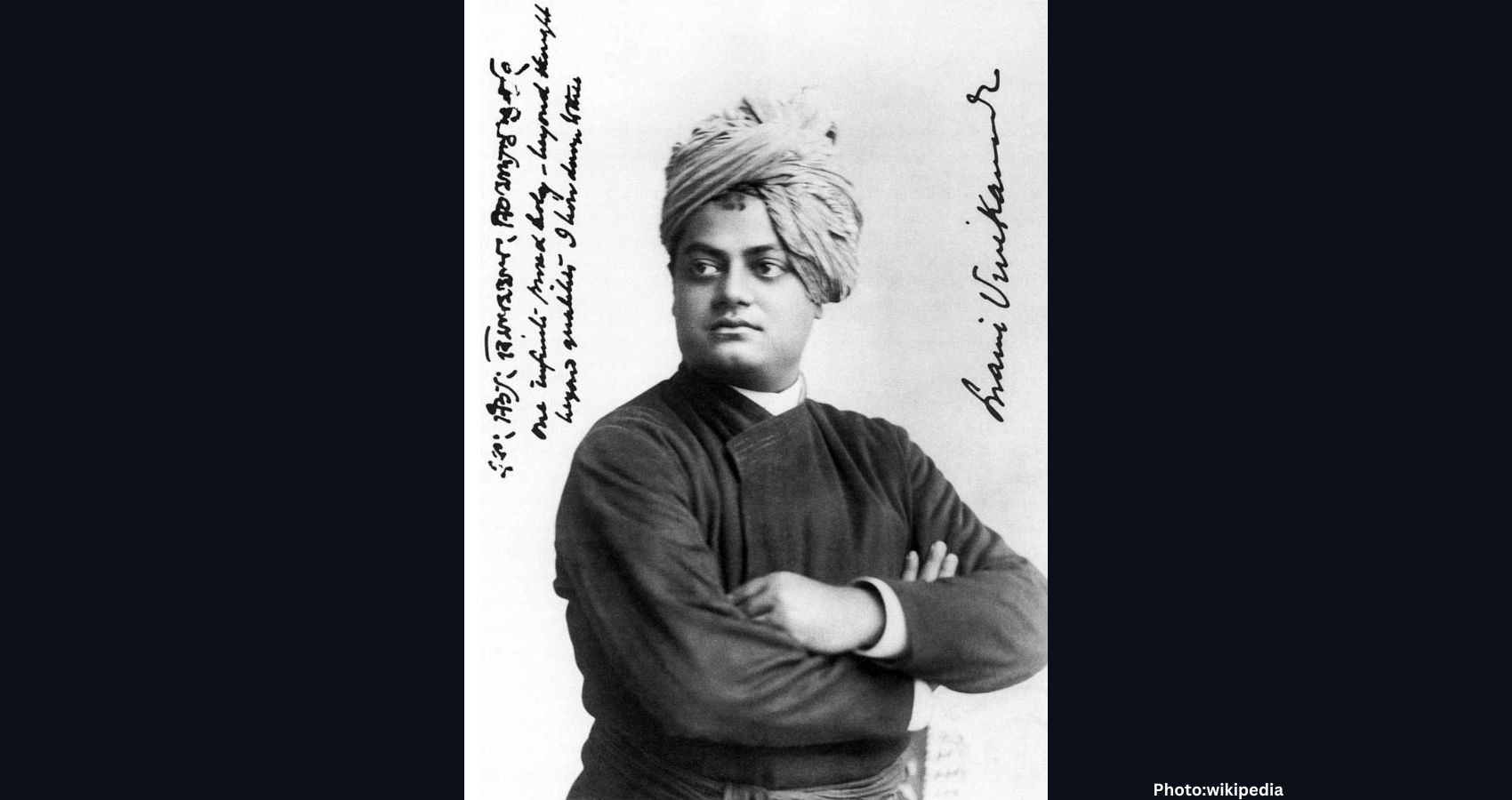
Swami Vivekananda’s historic address at the 1893 Parliament of the World’s Religions in Chicago emphasized universal acceptance and tolerance, resonating with contemporary issues of fanaticism and identity.
On September 11, 1893, Chicago experienced a warm late-summer day, setting the stage for a significant event: the Parliament of the World’s Religions, part of the World’s Columbian Exposition. This exposition celebrated four centuries since Christopher Columbus’s arrival in the Americas and attracted hundreds of thousands of visitors from various nations and established faiths.
Amid this assembly, a strikingly handsome Indian monk entered the hall. Swami Vivekananda, born Narendranath Datta in 1863, was only thirty years old and donned ochre robes. He carried little beyond his profound learning and spiritual insight. At that time, India was under British colonial rule, yet Vivekananda stood before an audience of over 7,000 delegates as the thirty-first speaker, marking his first address to such an international gathering.
He opened his speech with the words, “Sisters and brothers of America,” prompting an eruption of applause that lasted two full minutes. In that moment, Vivekananda delivered a quietly revolutionary message: he reminded the audience that humanity is one family, sharing a common home.
During his address, Swami Vivekananda spoke passionately about universal tolerance and acceptance. He asserted that all religions are merely different paths leading to the same divine truth. He expressed pride in belonging to a nation that has historically sheltered the persecuted and refugees of all faiths. He highlighted the presence of the Israelites who found refuge in India and the Zoroastrian community that continues to thrive there.
Vivekananda did not shy away from addressing the darker aspects of human nature, stating that fanaticism has “filled the earth with violence, drenched it often and often with human blood, destroyed civilization, and sent whole nations to despair.” He concluded his speech with a heartfelt plea for an end to sectarianism, bigotry, and fanaticism, receiving thunderous applause as he finished.
His brief yet impactful speech marked a turning point in his life, catapulting him from relative obscurity to international fame. The New York Herald hailed him as “the greatest figure in the Parliament of Religions.” His words resonated deeply, reflecting a modern yearning to dismantle barriers of caste, color, and creed, and to unite all people under the banner of humanity. This address laid the groundwork for interfaith collaboration in the contemporary world.
Vivekananda established a vital connection between the East and the West, appealing to educated Americans who were eager to explore ancient Indian spirituality. Recognized as a messenger of this wisdom, he continued to lecture across the United States, immersing himself in American culture. He returned for a second visit in 1899, staying at a Victorian house in South Pasadena, which is now known as Vivekananda House, a landmark in Los Angeles. Swami Vivekananda passed away on July 4, 1902, at the age of 39, less than nine years after his groundbreaking appearance at the Parliament.
Over 130 years have elapsed since that momentous day in Chicago. The world has witnessed two world wars, a Cold War, genocides, sectarian conflicts, and a pandemic, among other crises. Despite advancements in technology, including artificial intelligence and social media, the fractures Vivekananda identified remain prevalent. Today, the weaponization of identity and the polarization of beliefs continue to pose significant challenges.
The urgency of Vivekananda’s message from 1893 resonates strongly in the present day. He sought to diagnose humanity’s deepest wounds and proposed a remedy rooted in ancient Indian thought. He argued that the core issue lies in the smallness of the mind, which often confuses its limited perspective of truth with the entirety of truth. He emphasized the importance of acceptance, suggesting that understanding the sacredness of different beliefs is essential for achieving real peace.
Vivekananda’s vision of peace transcends political negotiations; it begins at the spiritual level. He called for a recognition of the Divine in every individual, urging humanity to see the commonality that binds us all. When we fail to recognize the humanity in those who differ from us, we set the stage for conflict. Vivekananda did not propose world peace as a political goal to be achieved within a century; rather, he offered it as a guiding principle—a north star directing individuals to expand their circles of belonging and communities to choose coexistence over exclusion.
What the world requires in 2026 mirrors what it needed in 1893: the courage to engage with differences rather than silence them. It calls for an acknowledgment that identity should not be wielded as a weapon. Swami Vivekananda entered that Chicago hall as a stranger from a colonized land, addressing thousands as family, and left having demonstrated the possibility of such connections. Repeating this demonstration across various contexts and borders is fundamental to achieving world peace.
Swami Vivekananda’s voice continues to resonate, urging us to listen and act in pursuit of unity and understanding.
According to Source Name.