
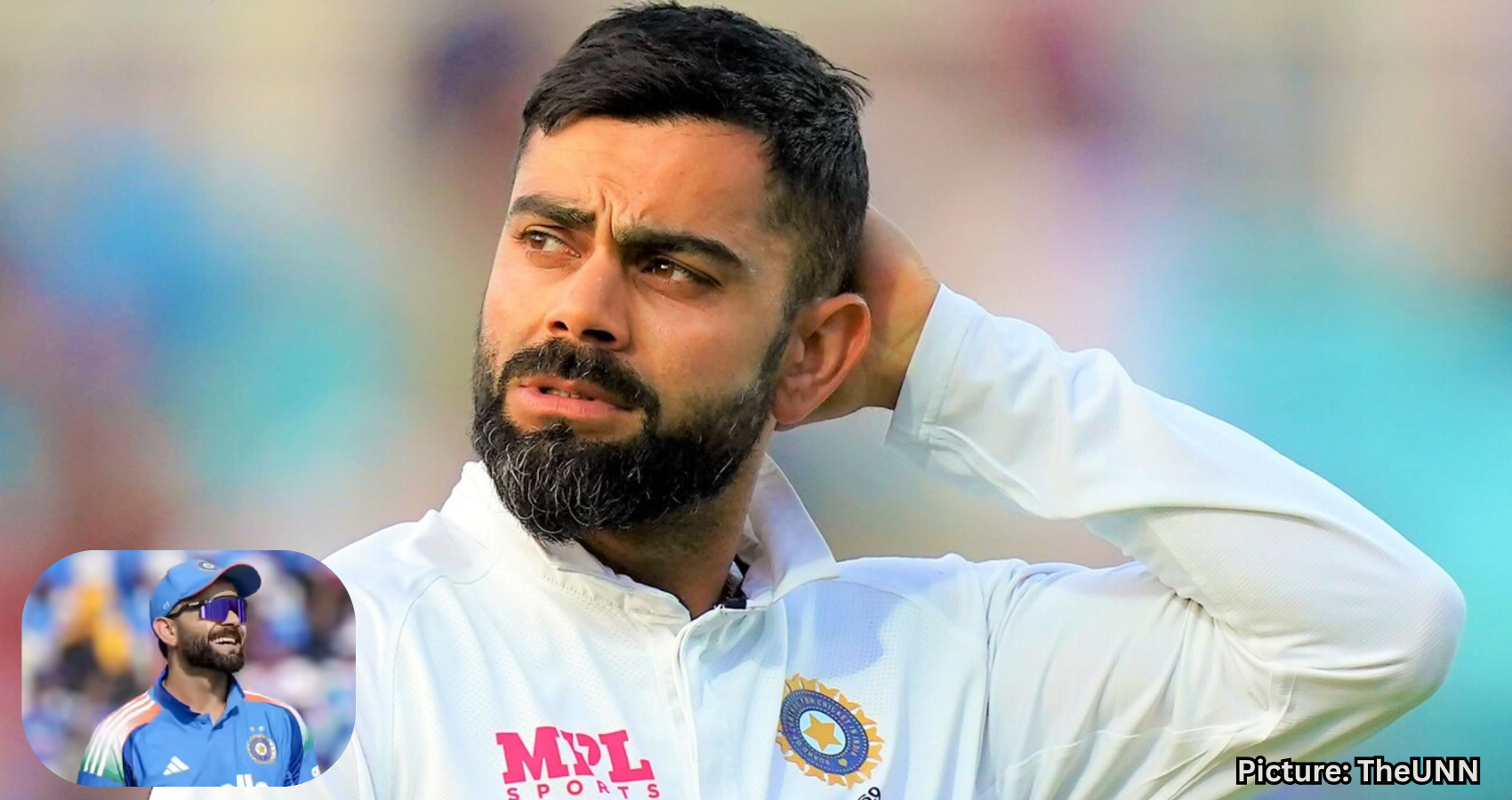
Virat Kohli reflects on his tenure as Indian Test captain, describing it as a “golden era” while addressing the factors that led to his departure from red-ball cricket.
NEW DELHI — After more than a year of relative silence following his unexpected exit from red-ball cricket, former Indian captain Virat Kohli has characterized his leadership of the national Test team as a historic “golden era.” This period, he asserts, was marked by egalitarian dynamics within the dressing room, a collective sense of ownership, and deep personal friendships among players. In a recent appearance on a Royal Challengers Bengaluru (RCB) media platform, the 37-year-old batting legend elaborated on the structural and cultural transformations that enabled India to maintain a five-year reign at the top of the International Cricket Council (ICC) Test rankings. However, his retrospective comments have sparked renewed debate in the cricketing community, particularly following his acknowledgment of a perceived lack of trust from selectors and team management that contributed to his decision to step away from the longest format of the game.
The evolution of India’s Test squad from a transitional team to a dominant force on the global stage began with a significant dismantling of traditional hierarchies in domestic cricket. During his podcast discussion with sports presenter Mayanti Langer, Kohli emphasized that the key to India’s unprecedented consistency in Test cricket was the relatively narrow age gap among the core leadership group.
Historically, Indian dressing rooms had been characterized by rigid divides between established veterans and newly capped players, which often hindered open communication and localized decision-making on the field. Kohli reflected on this, stating, “The most important thing was our average age. There was no hesitation between seniors and juniors. We were like a group of friends.”
This horizontal team structure allowed core players—including Cheteshwar Pujara, Ajinkya Rahane, Ravichandran Ashwin, Ishant Sharma, Mohammed Shami, and Ravindra Jadeja—to create a transparent operational framework as they entered their prime years. Kohli argued that this deep interpersonal comfort decentralized tactical accountability, enabling the broader playing group to act as co-architects of the team’s long-term strategy.
“It was not like a few people would take care of everything,” Kohli explained, highlighting the structural shift. “Everyone felt they had a role in building the team for the next six to eight years.”
This sense of individual ownership compelled players to innovate and self-regulate, establishing a baseline of intense fitness and tactical discipline that ultimately transformed India into one of the most formidable touring sides in modern red-ball history.
Kohli’s reflective assessment is supported by impressive statistics from his captaincy, which began under challenging circumstances during India’s December 2014 tour of Australia, following the sudden mid-series retirement of Mahendra Singh Dhoni. Over the next eight years, Kohli became India’s most statistically successful Test captain, securing 40 victories across 68 matches, with a win percentage of 58.82%.
Prior to Kohli’s leadership, Indian Test teams often faced criticism for their inability to win outside the subcontinent. However, under his guidance, India achieved a historic breakthrough during the 2018–19 tour of Australia, marking the first time an Asian nation won a Test series on Australian soil since 1947. Kohli also oversaw a record seven Test victories in SENA (South Africa, England, New Zealand, and Australia) countries, the highest ever by an Asian captain.
Despite the nostalgic reflection on this successful era, Kohli’s recent comments have drawn scrutiny from analysts and fans alike. He announced his retirement from Test cricket on May 12, 2025, after India’s early tour of Australia, finishing his career with 9,230 runs and 30 centuries across 123 matches.
While his retirement message expressed a sense of closure, Kohli’s recent remarks reveal significant friction with selectors and team leadership regarding his form in the latter stages of his career. Between February 2020 and his final match in January 2025, Kohli’s Test average fell to 30.72, a stark decline from his peak of 54.97 at the end of 2019. This drop in performance led to intense scrutiny, particularly as contemporaries like England’s Joe Root thrived.
Kohli candidly addressed the factors behind his exit, admitting to feeling alienated in an environment where veteran players were expected to justify their positions on a game-by-game basis. “Either tell me on day one I am not good enough or I am not needed,” he stated, highlighting the communication breakdowns that characterized the end of his Test career. “But if I am made to feel like I need to constantly prove my worth and my value, then I am not in that space. I couldn’t play without trust.”
This admission has resonated with former teammates. Ravichandran Ashwin, who also stepped away from international cricket during the 2024–25 transition, defended Kohli, arguing that players with a long history of success should be afforded greater institutional trust rather than facing constant pressure from selectors. “Virat said, ‘I don’t have to prove my worth to anyone,’ and that’s absolutely right,” Ashwin noted, emphasizing the mental strain on veteran athletes.
In addition to cultural aspects, Kohli discussed his tactical approach to managing bowlers, contrasting it with more rigid leadership models. He explained that his strategy involved empowering individual bowlers to dictate their own setups rather than enforcing a top-down plan. “My default way of operation was, I throw the ball to the guy and say, I have plan B, C, and D ready,” he said. “But plan A is yours, and I want you to hold that ball, knowing that I have set the field.”
This level of tactical trust encouraged young fast bowlers like Jasprit Bumrah and Mohammed Siraj to develop their own analytical approaches to the game. Kohli’s leadership has fundamentally redefined India’s approach to red-ball cricket, even as historians continue to debate his legacy, particularly in light of the absence of an ICC Test Championship title following India’s defeat in the inaugural 2021 final.
As Kohli reflects on his time as captain, it is clear that the cultural and tactical changes he introduced have left an indelible mark on Indian cricket.
According to Source Name.