
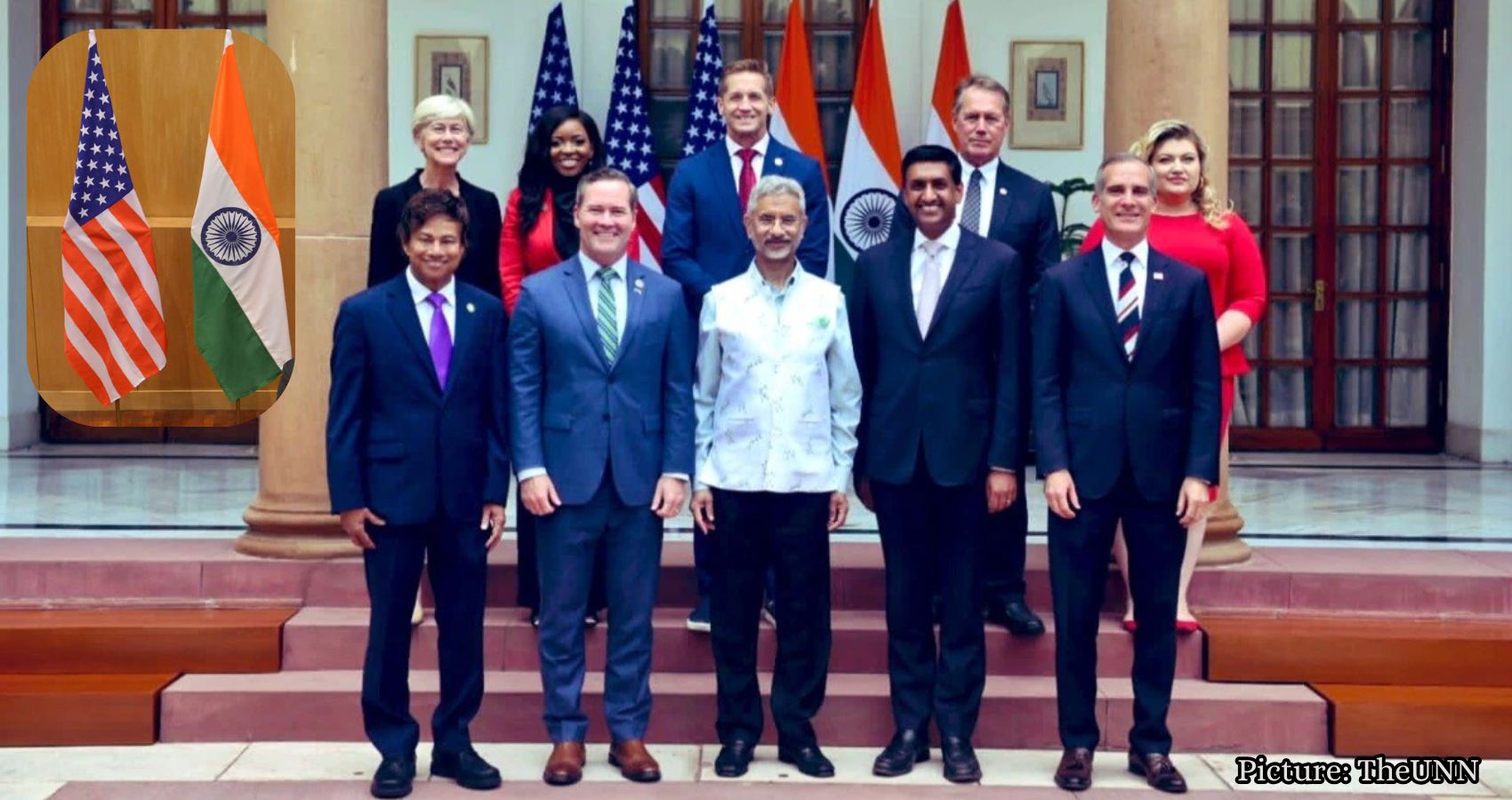
U.S. lawmakers and representatives from the United States India Relationship Council convened to discuss enhancing strategic cooperation between the U.S. and India, focusing on trade, defense, and regional security.
On August 31 and September 1, a bipartisan group of nine U.S. lawmakers met with representatives from the United States India Relationship Council (USIRC) on Capitol Hill to explore avenues for expanding cooperation between the United States and India. The discussions underscored the strategic importance of the U.S.-India relationship in the context of global trade, defense, and regional security in the Indo-Pacific.
The congressional delegation included Representatives Jonathan Jackson and Raja Krishnamoorthi of Illinois; Rich McCormick of Georgia; Young Kim, Derek Tran, Scott Peters, Jimmy Panetta, and Sydney Kamlager-Dove of California; and Suhas Subramanyam of Virginia. USIRC, a registered political action committee advocating for closer U.S.-India relations, focused its outreach on lawmakers who are, or will likely be, involved in foreign affairs committees.
During the meetings, McCormick articulated the potential benefits of a closer U.S.-India relationship, noting, “The economic and strategic potential is significant.” He emphasized the necessity of evolving the bilateral relationship from friendship to a formal alliance. This sentiment reflects a growing consensus among U.S. lawmakers regarding the importance of a robust partnership with India.
Krishnamoorthi reaffirmed his commitment to strengthening bilateral ties, while Kim, recognized as a longtime supporter of U.S.-India relations, highlighted the importance of collaboration in various sectors. Subramanyam, representing the Indian American community, urged attendees to “Get involved, Stay involved,” motivating increased political engagement within the community.
Tran expressed optimism about the future of U.S.-India relations, while Peters echoed support for enhanced cooperation. Panetta pointed out that opportunities for economic and strategic collaboration abound in several key areas, including technology and trade.
Kamlager-Dove, who serves as the ranking Democrat on the House Foreign Affairs subcommittee overseeing South and Central Asia, emphasized the critical role of the Indian American community in advocating for stronger ties between the two nations.
The discussions also addressed strategic challenges, particularly those posed by China. Participants stressed the need for dialogue and diplomacy to address differences between Washington and New Delhi while simultaneously fortifying cooperation in areas such as defense, maritime security, and resilient supply chains. The growing influence of China in the Indo-Pacific region remains a central concern for both countries, reinforcing the urgency of their partnership.
USIRC underscored that the meetings reflected broad support among participants for increased U.S.-India cooperation in the Indo-Pacific, highlighting the shared objectives of both nations in maintaining regional stability and security. The organization conveyed that fostering close ties with India is not only beneficial for the U.S. but also essential for addressing global challenges.
The U.S.-India relationship has evolved significantly over the past two decades, transitioning from a period of relative estrangement during the Cold War to a strategic partnership marked by shared democratic values and economic interests. The 2005 U.S.-India Civil Nuclear Agreement marked a significant turning point in bilateral relations, paving the way for enhanced cooperation in various sectors, including defense, trade, and technology.
In recent years, the U.S. has viewed India as a crucial counterbalance to China’s growing assertiveness in the region. The establishment of the Quadrilateral Security Dialogue (Quad) involving the U.S., India, Japan, and Australia underscores this strategic alignment. As nations in the Indo-Pacific seek to ensure stability, U.S.-India cooperation is increasingly seen as vital for addressing regional threats, including maritime security and supply chain vulnerabilities.
The discussions held on Capitol Hill signal a renewed commitment among U.S. lawmakers to strengthen ties with India amidst an evolving geopolitical landscape. As the U.S. continues to grapple with the implications of China’s rise, lawmakers are increasingly recognizing the importance of robust partnerships with allies like India. The strategic dialogues fostered by advocacy groups such as USIRC play a crucial role in shaping policymakers’ views on foreign relations.
The U.S.-India partnership is further complicated by differences in foreign policy approaches and regional priorities. While both nations aim to enhance cooperation, there are ongoing discussions regarding trade imbalances, human rights issues, and diplomatic strategies. The meetings facilitated by USIRC may serve as a platform for addressing these concerns through constructive dialogue.
As U.S. lawmakers continue to engage with Indian American advocacy groups like USIRC, the discussions signify a pivotal moment in the U.S.-India relationship. With a focus on strategic partnership and addressing mutual challenges, the outcomes of these meetings may have lasting implications for U.S. foreign policy in the Indo-Pacific region and beyond. The commitment to fostering a deeper alliance could reshape regional dynamics and enhance cooperative efforts in addressing shared security concerns, according to USIRC.