
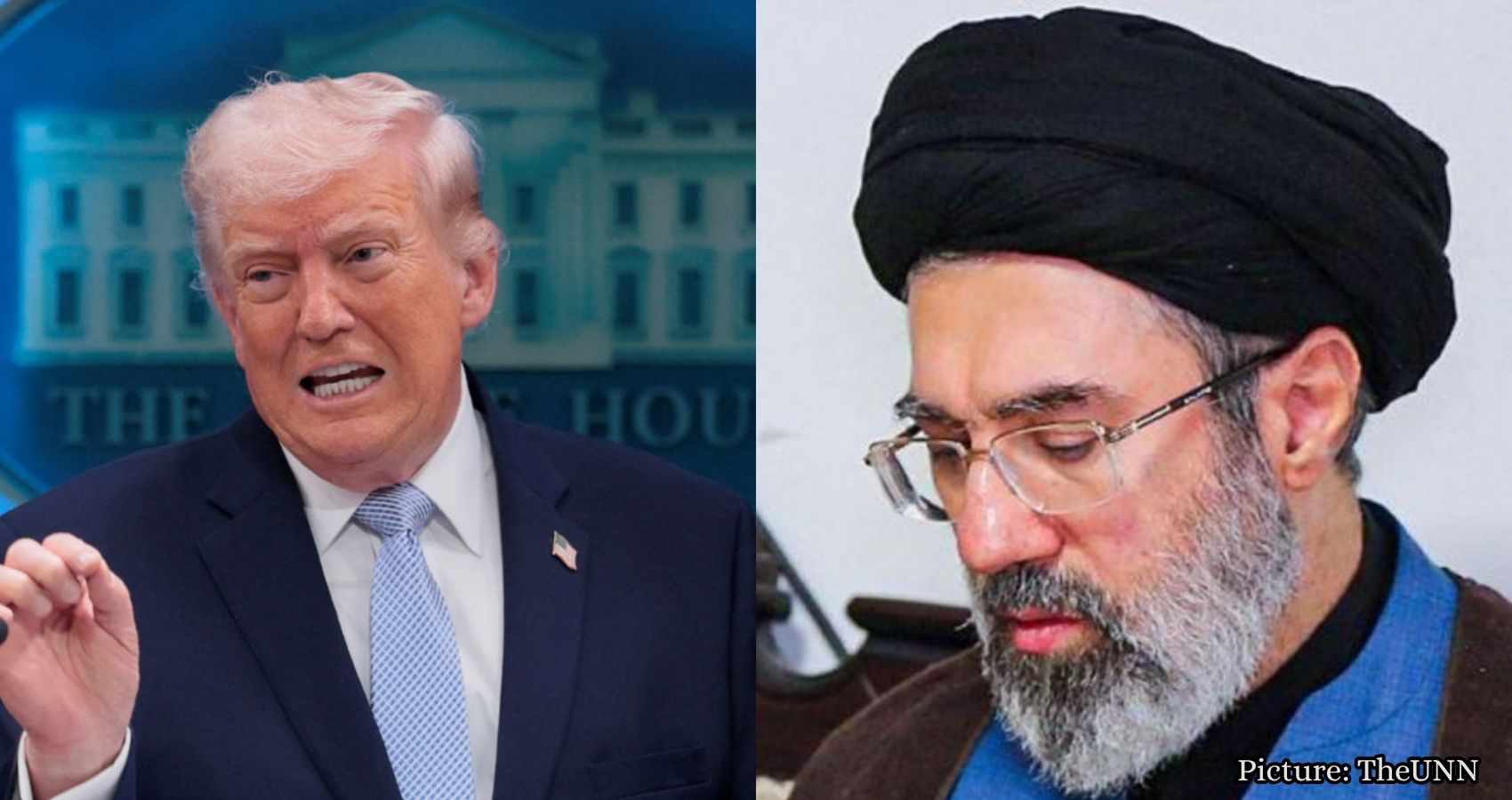
President Donald Trump met with Qatar’s prime minister as diplomatic efforts to resolve the Iran conflict continue, despite warnings that negotiations remain stalled amid ongoing tensions in the Strait of Hormuz.
ABU DHABI, United Arab Emirates — President Donald Trump held a meeting with Qatar’s Prime Minister, Sheikh Mohammed bin Abdulrahman Al-Thani, at the White House on Monday. This meeting comes as diplomatic efforts to end the ongoing conflict with Iran persist. However, Secretary of State Marco Rubio has cautioned that negotiations are far from reaching a breakthrough, especially as tensions in the Strait of Hormuz escalate.
The Strait of Hormuz has become a focal point of global economic disruption, with regional governments advocating for a diplomatic resolution to a conflict that has seen Gulf countries subjected to numerous Iranian missile and drone attacks. Speaking to reporters before departing for a G7 foreign ministers meeting in Paris, Rubio noted the lack of progress in negotiations and dismissed the terms proposed by Tehran as unrealistic.
“I wouldn’t say we’re on the verge of a breakthrough,” Rubio stated, emphasizing that while Trump favors a diplomatic settlement, Iran’s demands remain unyielding.
Iranian President Masoud Pezeshkian indicated on Monday that Tehran is open to negotiations aimed at resolving what he described as a prolonged state of neither war nor peace. “We can negotiate with dignity and resolve the issue with dignity. We favor dialogue and negotiations,” Pezeshkian said, according to Anadolu Agency.
He further noted that Supreme Leader Mojtaba Khamenei has instructed officials to bring an end to the current uncertainty, while asserting that Iran will not capitulate to coercion.
In a recent interview with CBS’ “60 Minutes,” Trump signaled that he is not seeking to escalate the conflict further, stating that he sees no reason to intensify hostilities while maintaining that the Strait of Hormuz remains open.
Mediators have proposed a two-day plan in which the United States would lift its naval blockade and release some frozen Iranian funds, while Tehran would agree to renewed nuclear inspections and reopen the Strait of Hormuz before broader negotiations could resume. However, this proposal has yet to receive acceptance from Washington, with significant differences still existing over the terms of any potential agreement.
The consequences of the diplomatic stalemate are particularly evident in the Strait of Hormuz, a vital shipping corridor that connects the Persian Gulf to the Gulf of Oman. Prior to the conflict, approximately one-fifth of global petroleum liquids consumption and liquefied natural gas trade passed through this critical waterway, according to the U.S. Energy Information Administration.
Since the onset of hostilities, Iranian attacks, shipping restrictions, and U.S. military operations have severely disrupted commercial traffic. Despite a significant American naval presence, attacks on commercial vessels have persisted. Reports indicate that tanker attacks in the Gulf and Strait of Hormuz sharply increased in October and have continued into November.
Amos Hochstein, a former senior adviser to President Joe Biden and current managing partner at TWG Global, expressed skepticism regarding claims that the strait has effectively reopened. “There has been a hot conflict in the Strait of Hormuz on almost a nightly basis. Tankers are getting fired on, tankers are getting hit,” Hochstein stated in an interview at the ADIPEC energy conference in Abu Dhabi.
He argued that the extraordinary security measures required to protect commercial vessels indicate that normal navigation has not been restored. Higher insurance premiums, the threat of additional attacks, and restrictions on maritime traffic continue to burden the global economy.
Hochstein’s assessment contrasts with the more optimistic outlook presented by U.S. Central Command. In late October, Adm. Brad Cooper, commander of CENTCOM, claimed that American forces had cleared primary shipping routes of Iranian mines and assisted thousands of commercial vessels transiting the waterway. According to a CENTCOM statement, over 3,000 commercial vessels had successfully navigated through Hormuz with American military support in the preceding six months.
However, Hochstein cautioned that military escorts do not eliminate commercial risks. He suggested that negotiations could proceed on separate tracks, with Washington focusing on Iran’s nuclear program while Gulf governments take a more active role in discussions regarding freedom of navigation and maritime security.
Dr. Angela Wilkinson, CEO of the World Energy Council, emphasized that the disruption in the Strait of Hormuz has highlighted the need to rethink global energy markets, which have traditionally prioritized efficiency over resilience. “Efficiency is not enough. We have to have resilience,” Wilkinson stated, advocating for solutions that address energy security, affordability, and sustainability simultaneously.
For the United Arab Emirates, the disruption has accelerated efforts to reduce dependence on the Strait of Hormuz. The Emirates has invested in alternative routes, particularly a pipeline to Fujairah on the Gulf of Oman, allowing some oil exports to bypass the contested shipping corridor. UAE Energy Minister Suhail Al Mazrouei noted that the country has significantly increased its oil exports since the conflict began, stating, “Before the war started on February 28th, we used to export 3.1, 3.2 million barrels a day. Now we are exporting almost 4.4.”
Hochstein commended the UAE and Saudi Arabia for anticipating the risks associated with reliance on a single maritime route, noting that while alternative pathways and infrastructure can mitigate the economic impact of disruptions, they cannot entirely replace the waterway.
The broader consequences of the conflict have reverberated through international energy markets, with increased shipping costs and supply disruptions affecting consumers far beyond the Middle East. Mohammed Baharoon, director general of the Emirati research center B’huth, argued that the confrontation over the Strait of Hormuz represents a separate economic war with implications that extend globally.
“The third war was Iran’s war on the global economy by blocking the Strait of Hormuz,” Baharoon stated, highlighting the impact on countries like the Philippines, India, and Brazil that are not directly involved in the conflict. He emphasized the need for alternative pipelines, transportation networks, and supply chains to enhance resilience.
Even if the Strait of Hormuz fully reopens, Baharoon asserted that the region will still require more routes for international trade. “We need more access, we’ll need more supply chains. And we need them to be not only durable, resilient, but also redundant,” he concluded.
Fox News Digital reached out to the White House for comment but did not receive a response before publication.
According to Fox News, the situation in the Strait of Hormuz remains critical as diplomatic efforts continue amidst ongoing tensions.