
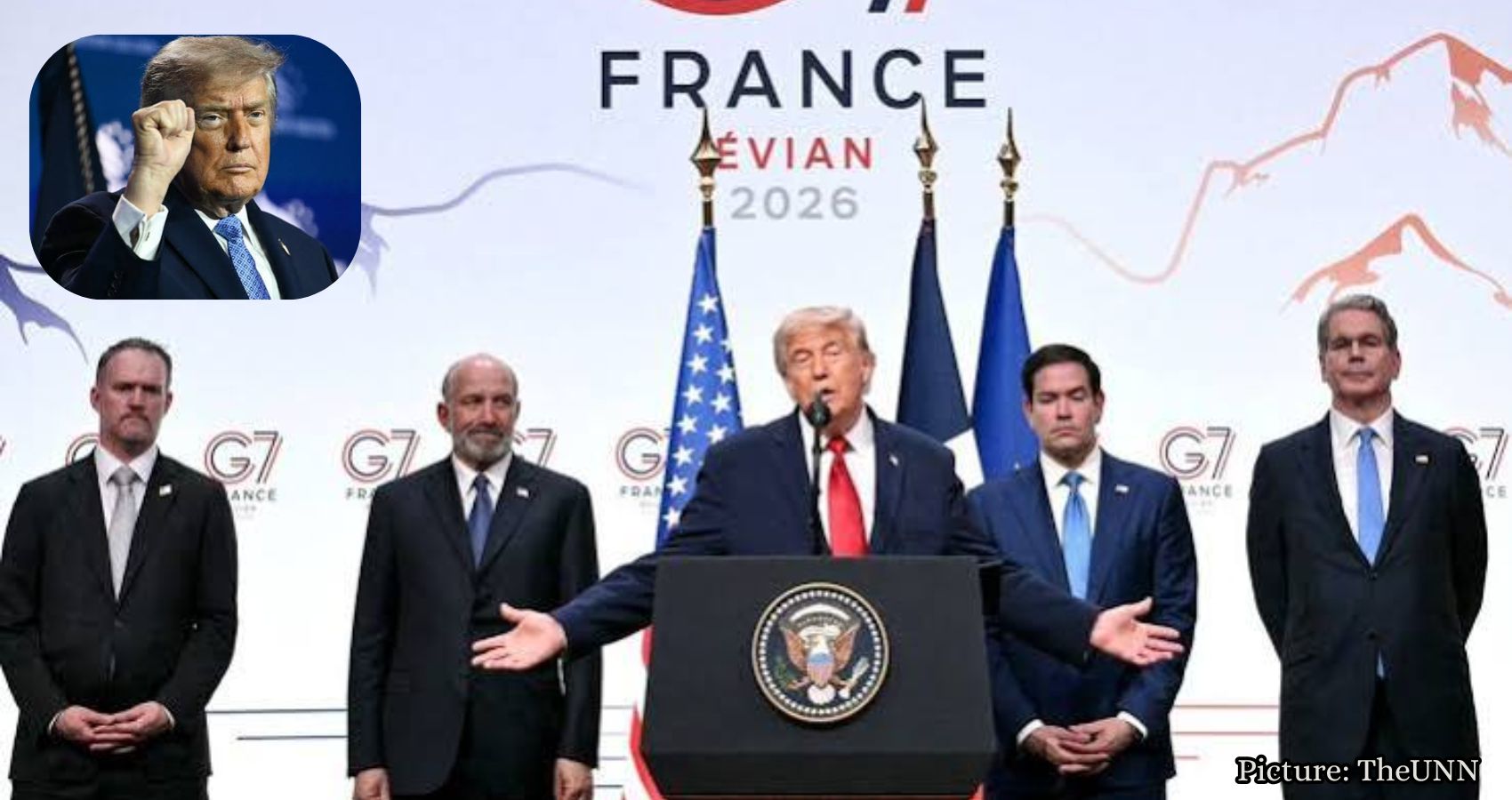
Evangelical leaders are expressing divided opinions on the Trump administration’s memorandum of understanding with Iran, raising concerns about its implications for U.S.-Israel relations amidst ongoing Middle Eastern tensions.
Influential evangelical leaders are voicing differing opinions regarding the Trump administration’s memorandum of understanding (MOU) with Iran. As tensions in the Middle East escalate, the debate intensifies over whether the agreement enhances U.S. leverage or jeopardizes Israel’s security.
President Donald Trump recently threatened to escalate military action against Iran following continued attacks in the Strait of Hormuz. These actions came after the Iranian regime launched strikes against Kuwait and Bahrain, prompting condemnation from both Gulf nations.
This division among evangelical leaders emerges at a critical juncture for Trump, who is attempting to balance military pressure on Iran with diplomatic efforts, all while maintaining the support of his political base. Proponents of the MOU argue that Trump has earned their trust by initially weakening Iran, while critics caution that any agreement providing Iran with concessions before its threat to Israel is neutralized could betray the alliance his supporters expect him to uphold.
Dr. Mike Evans, founder of the Friends of Zion Heritage Center in Jerusalem and a close evangelical ally of Trump, emphasized that many underestimate the president’s capabilities. “The facts are that Donald Trump was key to ending the Gaza war, he was key to getting hostages out of there, and he was key in breaking the back of the Iranian regime,” Evans stated.
Evans highlighted the significant number of Bible-believing Christians worldwide who identify as Zionists, asserting that while they may have differing views on Israeli political matters, they collectively recognize Israel as the biblical homeland granted by God to the Jewish people through Abraham.
During his presidential campaign, Trump engaged with Christian groups, including Evans, seeking their support on the condition that he would uphold Christian values in the U.S. and stand firmly with Israel. “He promised to do both and so far he’s exceeded all of our expectations,” Evans remarked.
Evans further asserted, “Israel is willing to shed its blood for America in the Middle East. America needs to do everything possible to support the State of Israel. We, as believers, believe that God birthed this nation. We don’t have any fear about Israel’s future.”
U.S. officials collaborated with the Israel Defense Forces to execute Operation Epic Fury in February, a 38-day initiative aimed at dismantling Iran’s military capabilities. White House spokesperson Olivia Wales described the MOU as a performance-based agreement that serves U.S. interests by ending hostilities, reopening the Strait of Hormuz to lower energy prices, and compelling Iran to abandon its nuclear ambitions.
Rev. Johnnie Moore, President of The Congress of Christian Leaders, noted that opposition to President Obama’s Iran deal was a pivotal factor in the evangelical support for Trump in 2016. “Evangelicals know, and President Trump knows, that words on paper don’t change terrorists. Accountability does. Action does,” Moore stated, asserting that Trump’s military actions have significantly weakened the Iranian regime.
Moore expressed confidence that the nuclear threat from Iran has diminished, attributing this shift to the “precise and unrelenting military action” taken by the Trump administration. He cautioned, however, that the Iranian regime is adept at deception, indicating that while evangelicals trust Trump, they remain wary of others involved in the negotiations.
Concerns have also been raised regarding recent comments from the administration about Israel. Laurie Cardoza-Moore, president of Proclaiming Justice to the Nations, expressed alarm over the agreement with Iran, emphasizing the biblical imperative to support Israel. “There is a strong feeling that Israel is being betrayed and thrown under the bus in favor of the Islamic Republic of Iran,” she stated.
Cardoza-Moore criticized Vice President Vance’s remarks, which she believes could be interpreted as undermining Israel. The vice president’s office declined to comment on the matter when approached for clarification.
Despite supporting Israel, Vance has indicated a willingness to critique the country when warranted. He condemned antisemitism earlier this year, stating, “You shouldn’t hate people because they’re white. You shouldn’t hate people because they’re Jewish. You shouldn’t hate people because they’re black.”
The Trump administration has publicly outlined the MOU, which includes provisions for immediate waivers on Iranian oil exports and a framework for at least $300 billion in economic assistance contingent on a final agreement regarding Iran’s nuclear program.
Pastor John Hagee, founder and chairman of Christians United for Israel, expressed skepticism about the MOU, suggesting that it may be ill-advised given the military gains achieved by the U.S. and Israel. “Who would not be concerned with the U.S. effectively agreeing to forever negotiations with a highly militarized radical Islamist regime, flush with cash, in pursuit of nuclear weapons?” Hagee questioned.
He underscored the importance of the U.S.-Israel alliance for both nations’ security and global stability. “From a religious perspective, we have a divine mandate to stand with Israel. From a national security perspective, we have no stronger or wiser ally anywhere in the world,” Hagee stated.
Evans predicted that Trump may extend negotiations beyond the initial 60-day period, potentially carrying them through the end of the year and beyond the midterm elections. He expressed confidence in Trump’s ability to weaken the Iranian regime economically.
Evans also emphasized the role of prayer in the Christian community’s approach to the situation, announcing plans for a large prayer event at the Western Wall involving millions of Christians.
Dr. Jürgen Bühler, president of the International Christian Embassy Jerusalem, echoed concerns about the Iranian regime’s threat, advocating for genuine regime change in Tehran. “Israel is a fellow Western democracy that deserves our full support in its fight to defend our shared freedoms and values,” he stated.
Ultimately, Bühler expressed hope that the Iranian people would rise against their oppressive rulers and abandon their destructive ambitions against Israel.
Heather Johnston, founder and president of the U.S.-Israel Education Association, remarked that the U.S.-Israel relationship has historically advanced American interests and should be strengthened, not strained, by diplomacy with Iran. “Any diplomacy with Iran should be measured against whether it advances or undermines that progress,” she concluded.
According to Fox News Digital, the ongoing discussions surrounding the MOU highlight the complexities of U.S.-Iran relations and the significant role evangelical leaders play in shaping the political landscape.