
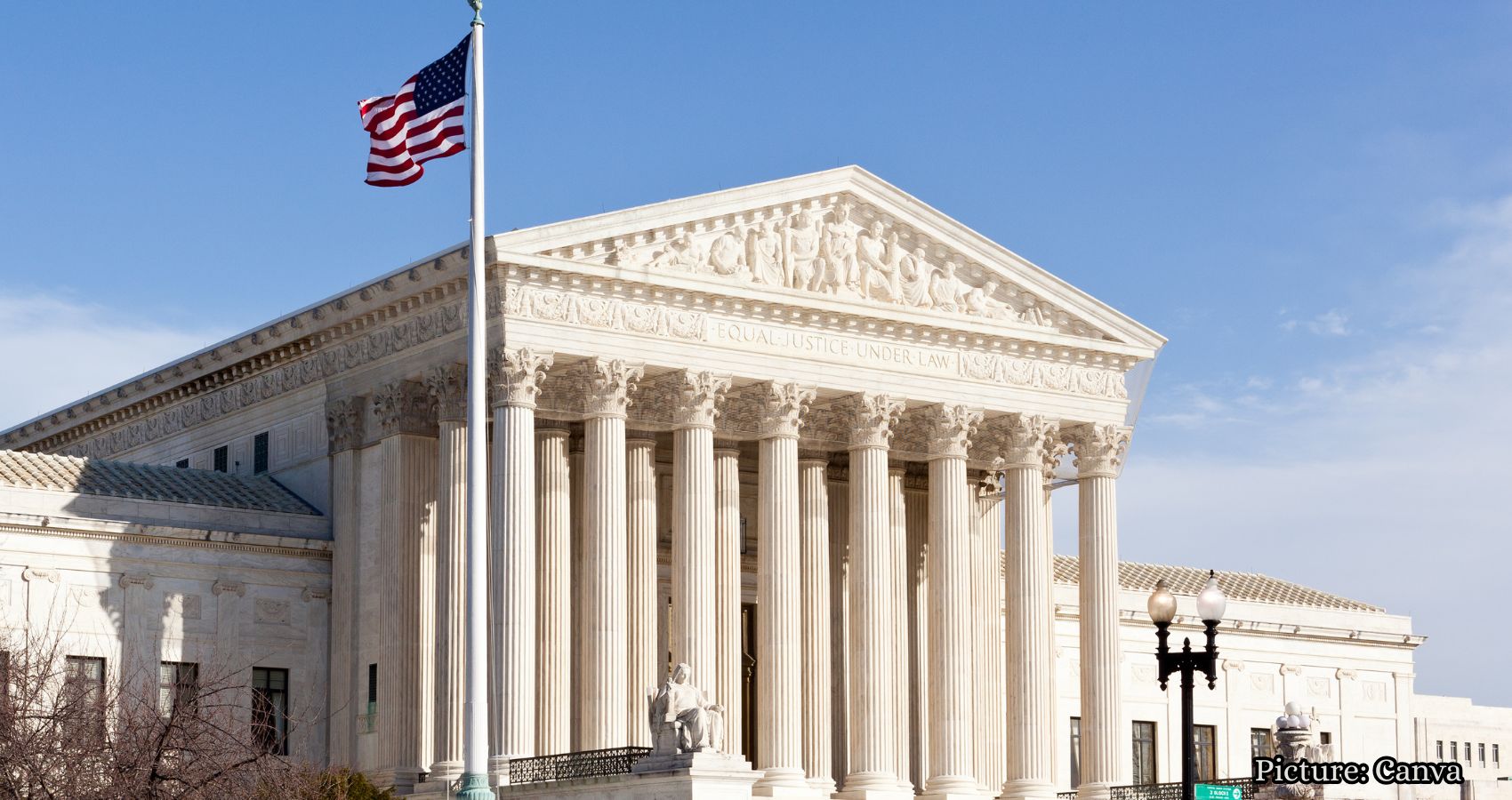
The Supreme Court’s recent ruling permits the Trump administration to block asylum seekers at the southern border, raising concerns about the implications for U.S. immigration law and humanitarian obligations.
The Supreme Court ruled today that the Trump administration has the authority to turn back asylum seekers at ports of entry along the southern border, determining that this action does not violate federal immigration law. The case, Mullin v. Al Otro Lado, focused on a now-defunct policy that allowed immigration officers at official border crossings to physically and indefinitely prevent individuals seeking safety from entering the United States. This policy was seen as a violation of the government’s legal obligation to inspect and process asylum requests.
In a dissenting opinion, Justice Sonia Sotomayor, joined by Justices Elena Kagan and Ketanji Brown Jackson, criticized the ruling, stating that it “blesses the Executive Branch’s decision to slam the door shut on all who are fleeing persecution,” despite the established asylum system mandated by Congress.
In response to the ruling, immigrant rights advocates are set to gather for a virtual media briefing at 3:00 PM ET/12:00 PM PT to discuss its implications.
Erika Pinheiro, Executive Director of Al Otro Lado, expressed strong disapproval of the ruling, stating, “We believe that today’s ruling violates international law, as well as the express intent of Congress, which enshrined the rights and obligations of the Refugee Convention into U.S. federal law over 40 years ago.” Pinheiro emphasized that the United States has historically allowed individuals and families fleeing persecution, torture, and death to seek protection at its borders, and this decision undermines that legacy.
The policy, often referred to as “metering” by government officials, diverged from both international and federal asylum law. It effectively denied thousands the right to seek asylum, forcing many to remain in dangerous conditions in Mexico or return to the threats they had fled.
In 2017, Al Otro Lado, a binational organization that provides legal and humanitarian assistance to migrants, along with a group of asylum seekers, initiated a class action lawsuit challenging the policy. Courts ruled against the policy in both 2022 and 2024. Although the turnback policy has not been enforced since 2021, the Trump administration sought to overturn the Ninth Circuit Court of Appeals’ ruling that deemed it unlawful.
Kelsi Corkran, Supreme Court Director of the Institute for Constitutional Advocacy and Protection, who argued the case, remarked, “As explained by Justice Sotomayor’s dissent, the Court’s decision to greenlight the government’s turnback policy is an affront to congressional authority over immigration matters with devastating humanitarian consequences.” Corkran urged Congress to enact legislation that would correct the Court’s ruling and ensure that asylum seekers are not forced back into life-threatening situations.
The ruling effectively overturns immigration laws that have mandated government officials to inspect all individuals presenting themselves at designated ports of entry for over a century. Since Congress established asylum in U.S. law more than 45 years ago, the port inspection requirement has been crucial in preventing the return of vulnerable individuals to danger without the opportunity to seek protection.
Melissa Crow, Director of Litigation at the Center for Gender & Refugee Studies (CGRS), stated, “This ruling should sound the alarm for anyone who cares about human rights and the rule of law.” She noted that the majority opinion suggests that the president may unilaterally override established laws and infringe on individuals’ legal rights for political gain. Crow emphasized that the turnback policy not only delayed entry for many seeking safety but, for some, it resulted in a denial of entry that could lead to dire consequences.
Angelo Guisado, Senior Staff Attorney at the Center for Constitutional Rights, expressed deep concern for the thousands of asylum seekers affected by the ruling, stating, “My heart is with the thousands of desperate and endangered asylum seekers across the U.S.-Mexico border whose rights the U.S. has erased with the stroke of a pen.”
Sarah Rich, Senior Attorney at Democracy Forward, criticized the ruling, stating, “On the 250th anniversary year of the United States, our federal executive branch is abandoning its obligations to asylum seekers fleeing perilous circumstances in fear for their lives.” Rich called on Americans to demand that the government protect families abandoned by the Court’s decision.
Rebecca Cassler, senior litigation attorney at the American Immigration Council, argued that the ruling does not provide real solutions to the immigration system’s challenges. “Blocking people from seeking asylum at official ports of entry will do nothing to fix our broken immigration system; it only makes things more chaotic and dangerous for vulnerable families,” she said. Cassler emphasized the need for a fair and efficient asylum system that treats individuals with dignity.
For more information about the case, visit the campaign website, No Turning Back.
Al Otro Lado is dedicated to providing holistic legal and humanitarian support to refugees, deportees, and other migrants in the U.S. and Tijuana. Their multidisciplinary approach includes individual representation, human rights monitoring, medical-legal partnerships, and impact litigation to protect the rights of immigrants and asylum seekers.
The American Immigration Council aims to strengthen America by shaping perceptions and actions towards immigrants and immigration, advocating for a fair and just immigration system that opens doors to those in need of protection.
The Center for Constitutional Rights works with communities under threat to fight for justice through litigation and advocacy, addressing issues such as structural racism and governmental overreach since 1966.
The Center for Gender & Refugee Studies defends the rights of refugees seeking asylum in the U.S., focusing on challenging cases and promoting policies that ensure safety and justice.
The Democracy Forward Foundation advances democracy and social progress through litigation and public education, advocating for policies that protect the rights of marginalized communities.
The Institute for Constitutional Advocacy and Protection is a non-partisan organization within Georgetown Law that engages in litigation and public education to defend constitutional rights and democratic processes.
This article is based on information from the American Immigration Council.